
Level 1 sweep and inspection to the NFPA 211 annual standard - flue, crown, cap, and flashing checked and photographed
Chimney sweep logs do not sweep chimneys. They loosen some creosote - which then falls where a brush and vacuum still have to collect it.
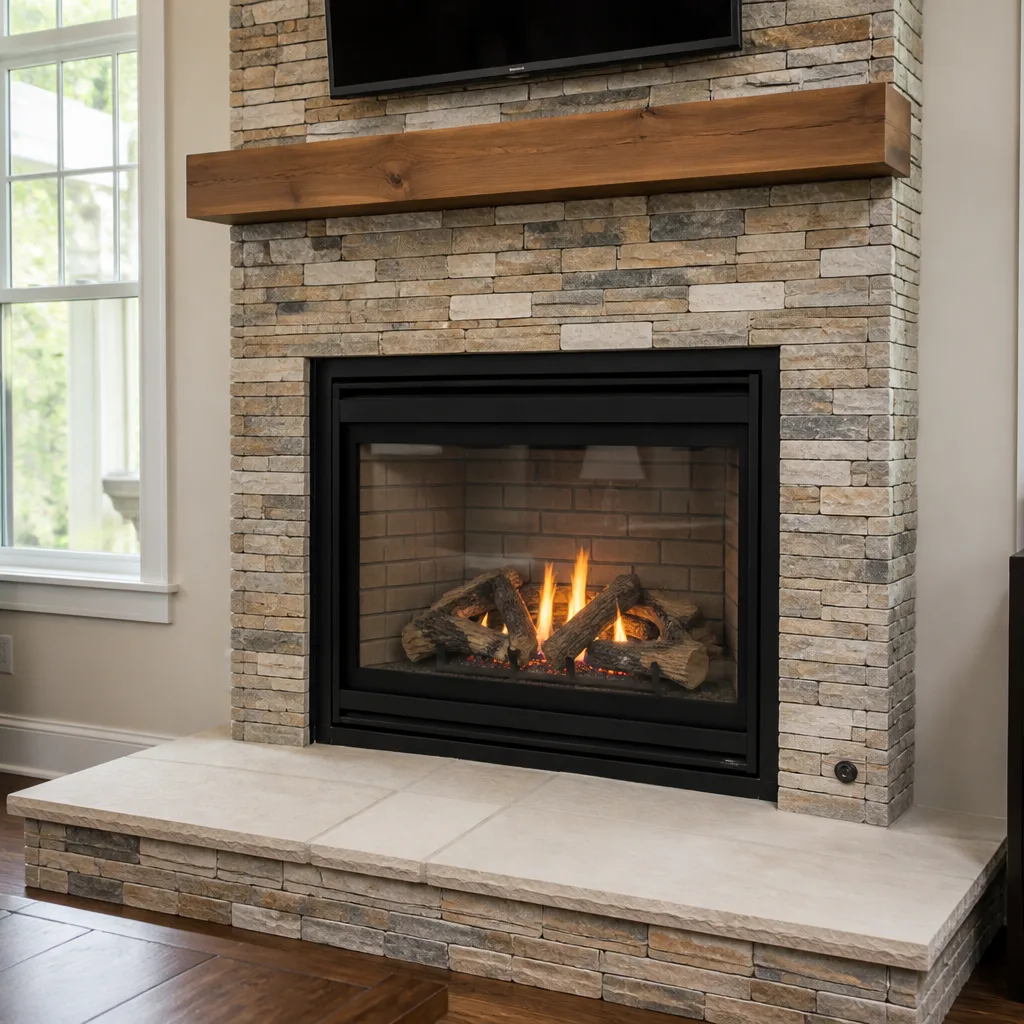
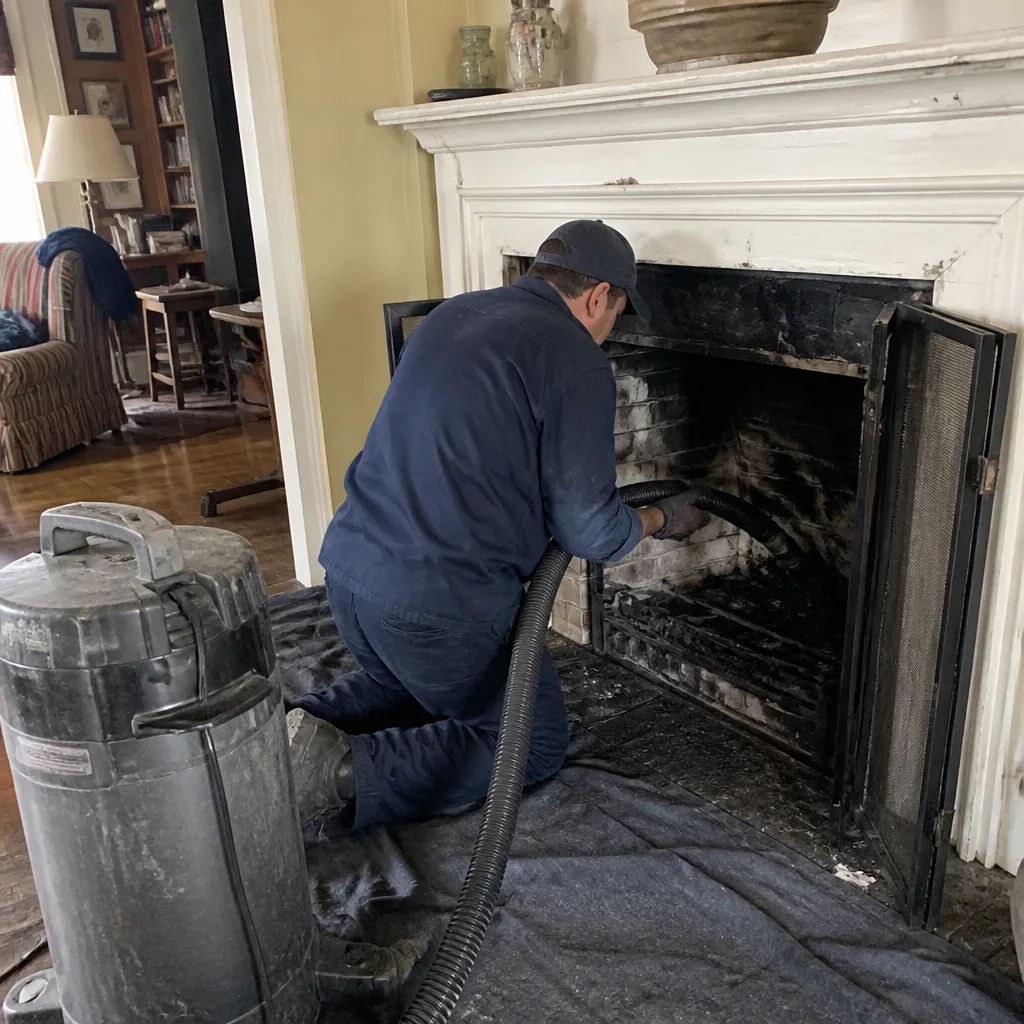 Before
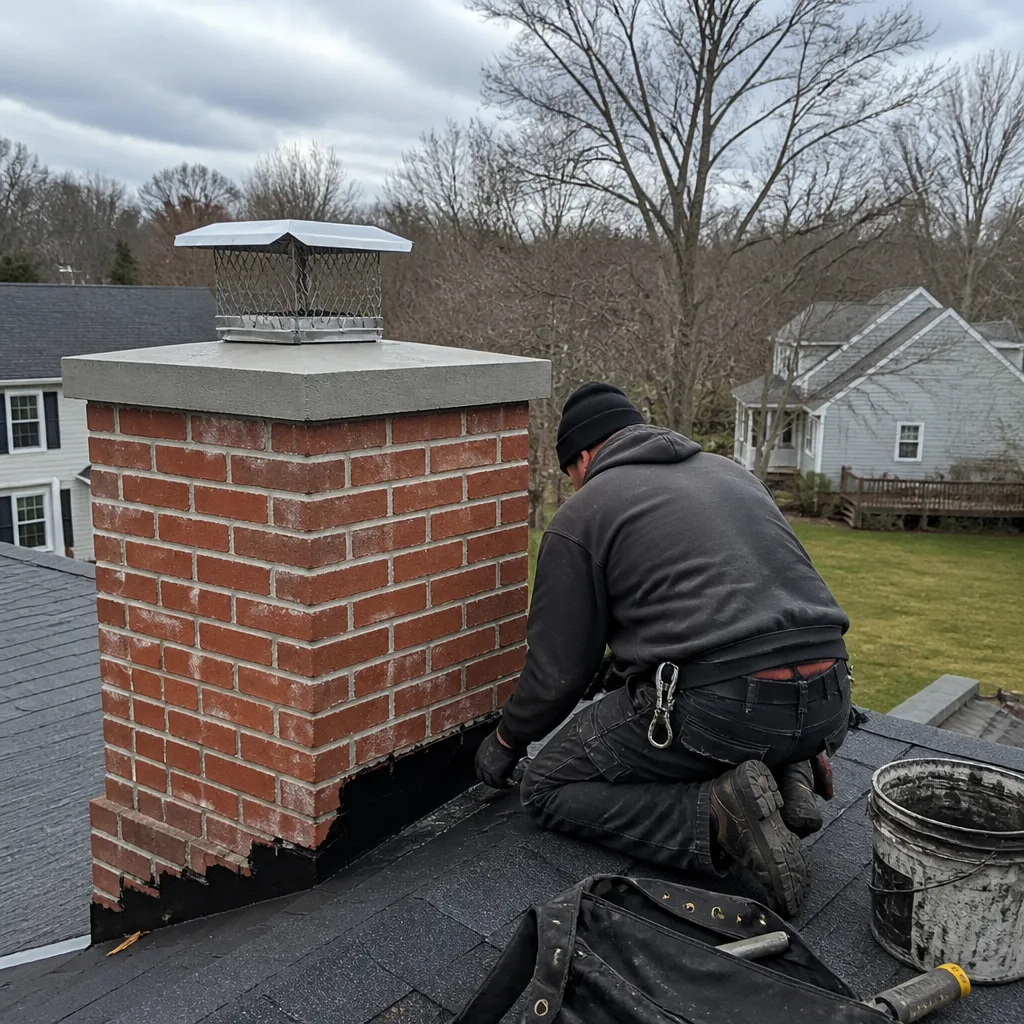 After
After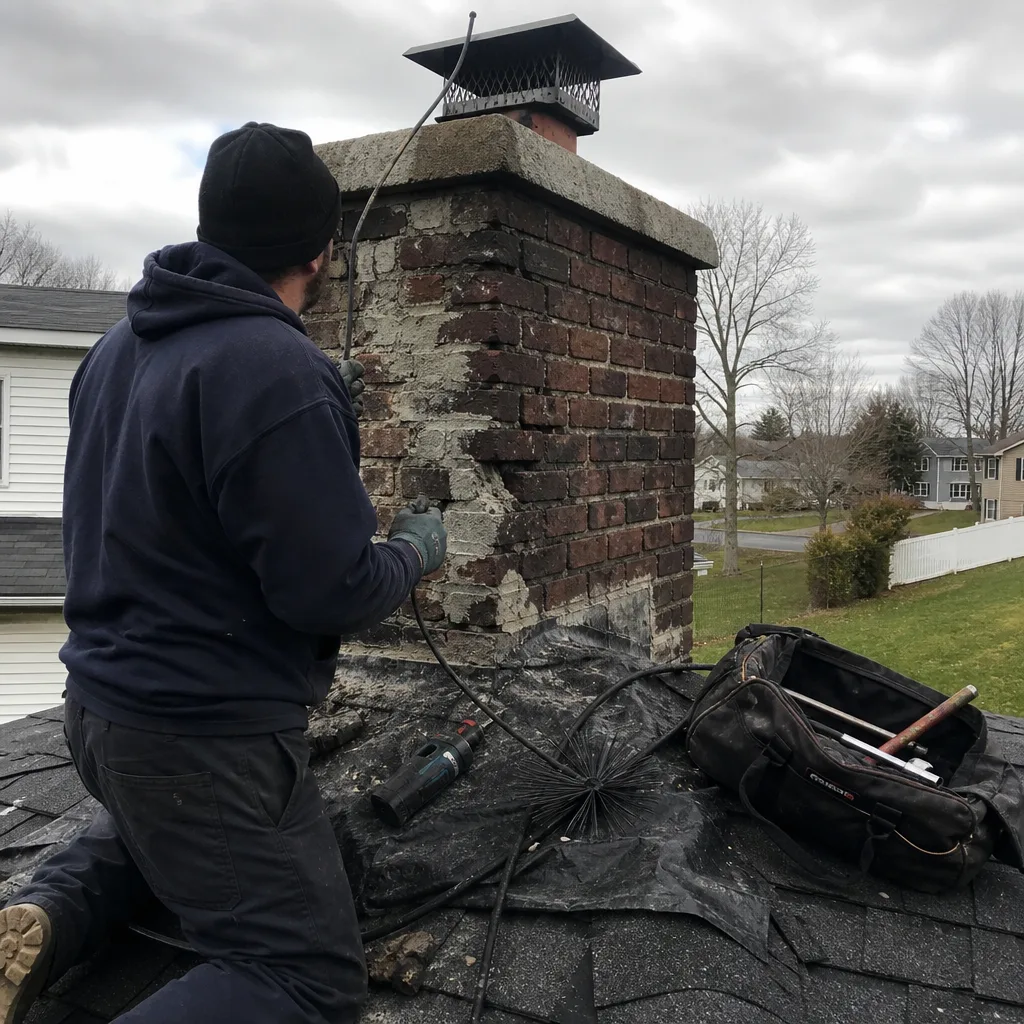 Before
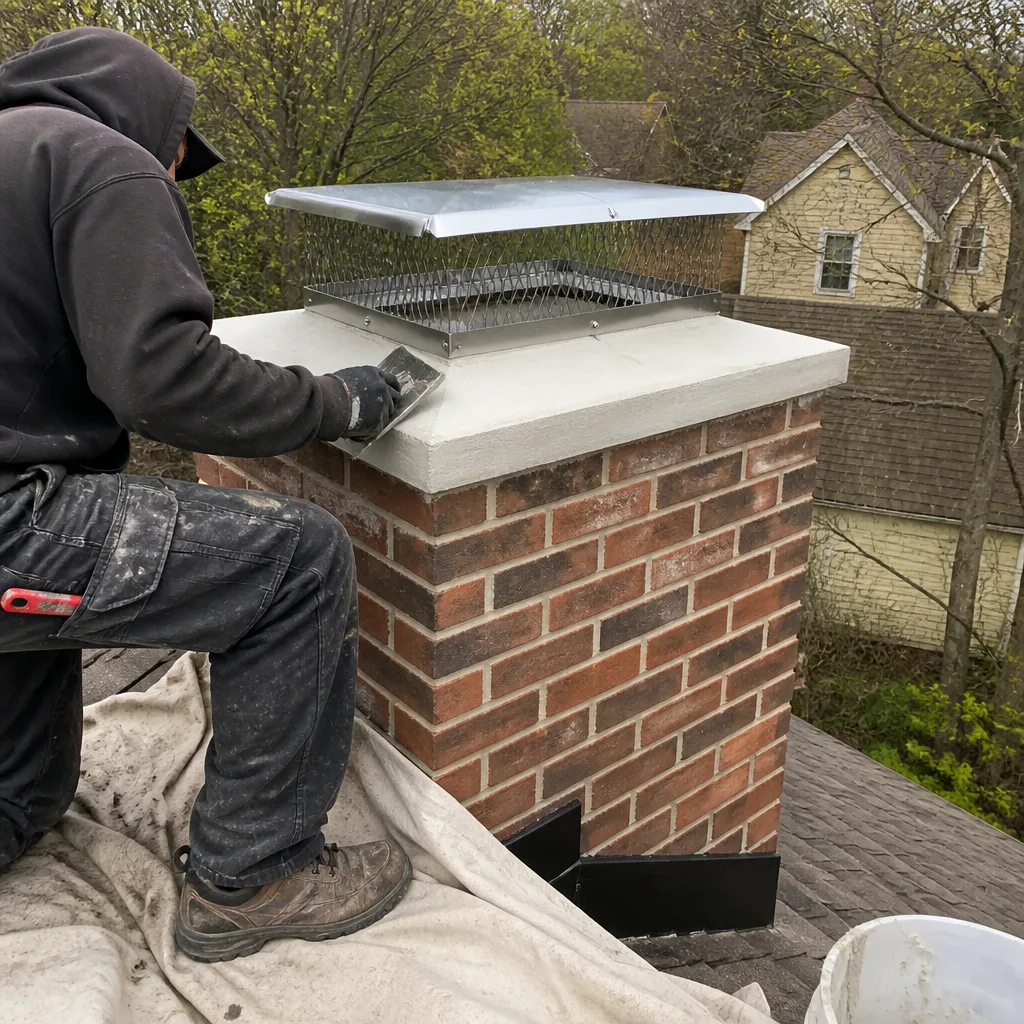 After
After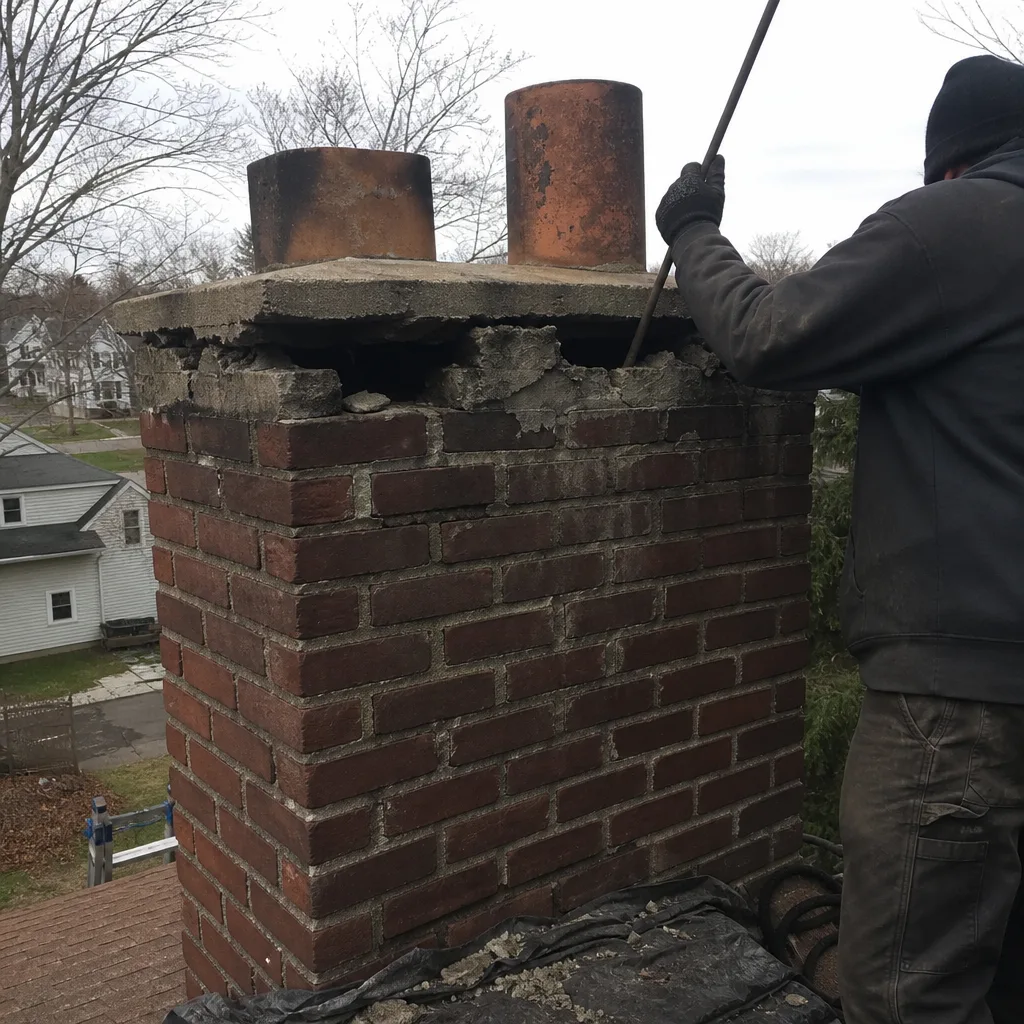 Before
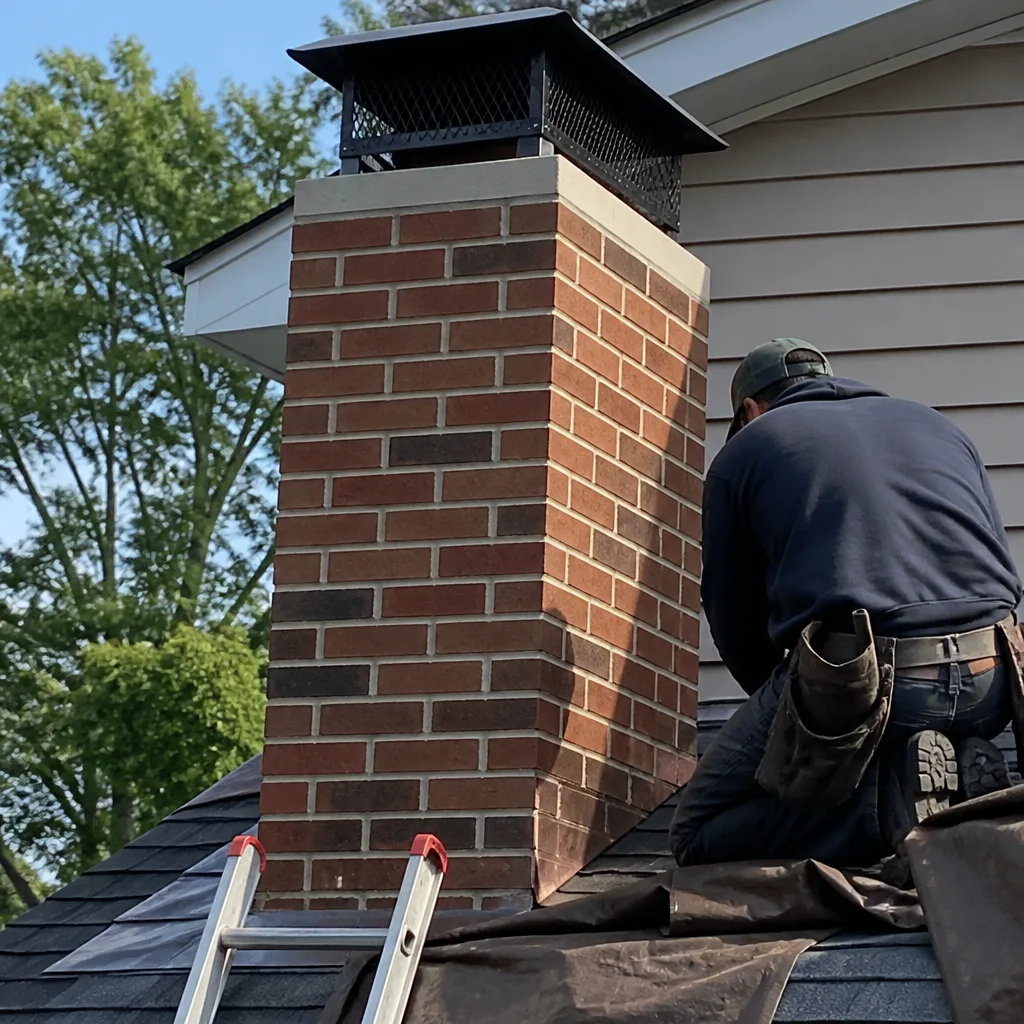 After
AfterGelco Crown Repair: The Bristol Owner’s Guide
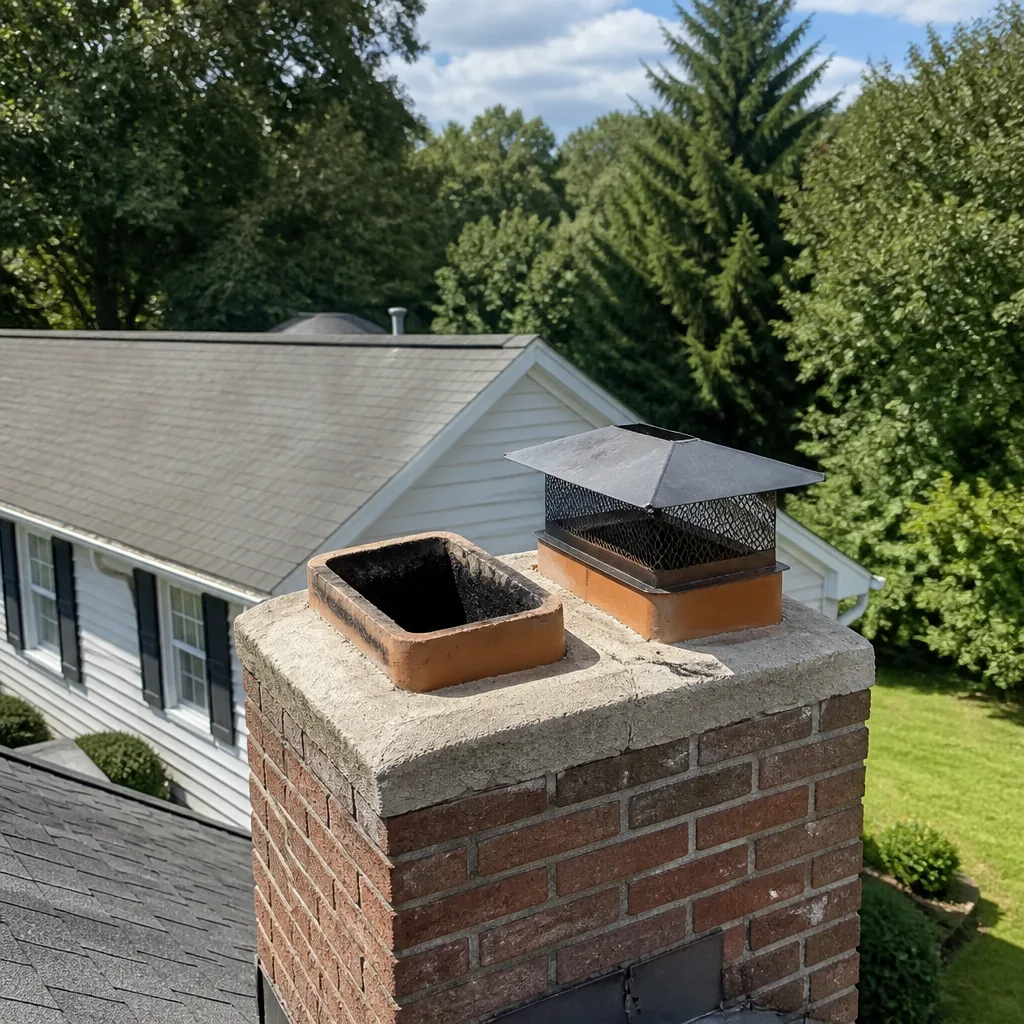
If your Gelco chimney crown is cracked, spalling, or letting water run down the flue, we can fix it. Top Hat Chimney stocks Gelco-compatible crown repair materials and installs them throughout Bristol, CT, with most residential crown jobs running $400 to $900 done right. The quick answer: if you can see daylight through a crack from the ground or your roofline, that crown has stopped doing its job and water is getting where it doesn’t belong.
Most Bristol homeowners find out the hard way. You’ll spot water staining on the ceiling near the fireplace, or a sweep will show you camera footage of a crown that looks like a dry lakebed. Gelco crowns are tough, but Connecticut winters don’t pull punches. Freeze-thaw cycles up here work on concrete like a chisel, and a five-year-old crown that was poured too thin or mixed too wet will start letting go long before its time.
Which Gelco Models This Applies To
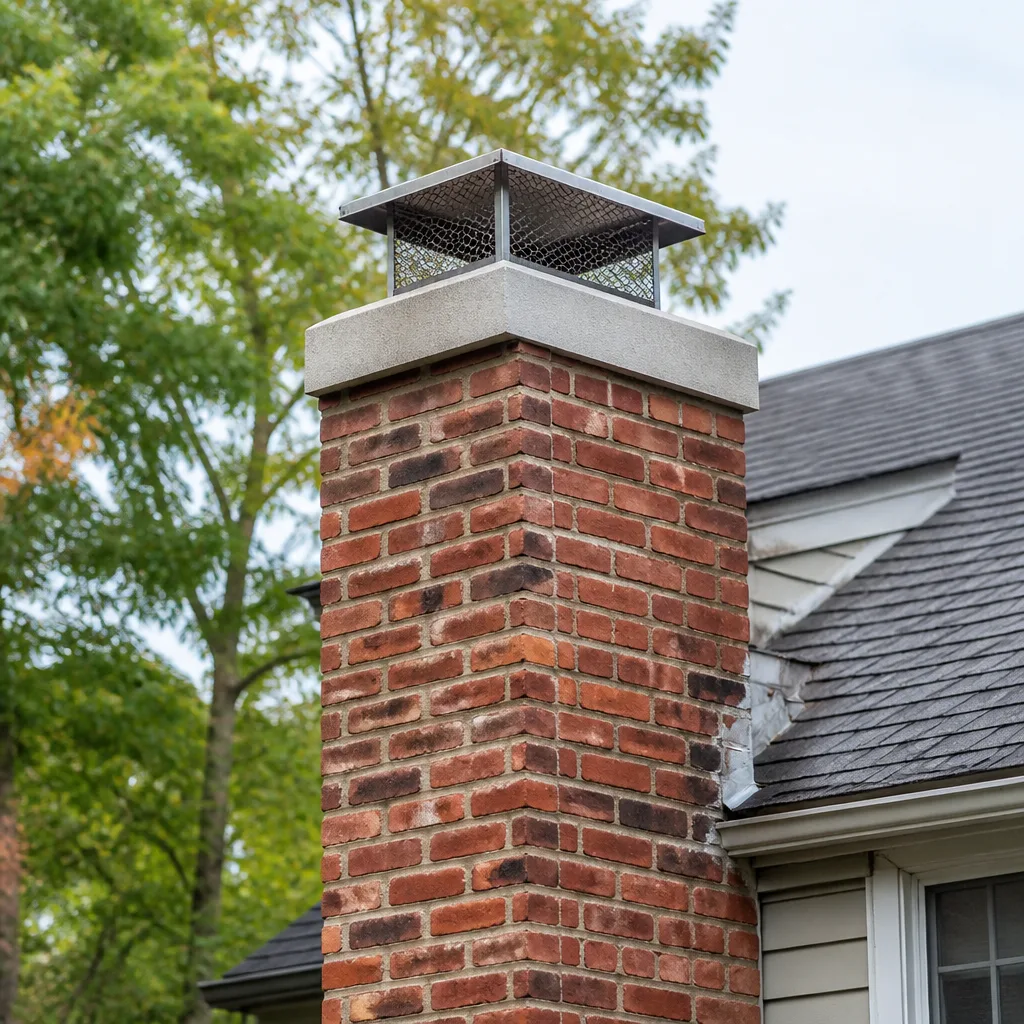
Gelco manufactures cast-in-place and precast chimney crowns used across their residential cap and chase systems. The crown is the concrete or masonry cap that sits on top of the chimney, sealing the gap around the flue tiles. If your chimney has a Gelco cap or Gelco chase pan, there’s a good chance the crown underneath was poured to Gelco’s spec during the original build or a prior rebuild.
Here’s the thing people get wrong: the crown and the cap are not the same part. The cap is the metal or stone lid that keeps rain and animals out of the flue opening. The crown is the sloped mortar or concrete surface underneath it, shedding water away from the flue. A failing crown will quietly destroy the masonry below even if the cap still looks fine. Gelco crowns generally spec a minimum two-inch overhang and a minimum four-inch thickness at the flue, with a slope away from the opening. When we open up a crown in Bristol and find a flat, thin pour with no overhang, we know it was never done to Gelco’s standard in the first place. That’s a common gotcha on older homes near Lake Compounce and Memorial Boulevard.
We’re an independent service company, not a Gelco dealer, but we match their crown geometry and material requirements on every repair. For the crown repair itself, the honest truth is that there’s no magic OEM secret. What matters is the mix, the slope, and the expansion joint around the flue tiles. We use a polymer-modified mortar rated for exterior freeze-thaw cycling, which is exactly what a concrete crown in Hartford County needs. Aftermarket crown repair products, like CrownCoat or chimney saver sealants, have their place on hairline cracks under an eighth of an inch. They are not the right fix for a crown that’s actively crumbling. We’ll tell you which one your chimney actually needs before you spend a dollar.
Signs Your Gelco Crown Repair Is Failing
- Cracks wider than a credit card. Hairline cracks are cosmetic and can be sealed. Anything wide enough to slide a card into means water is already migrating into the masonry below. In Bristol, that water freezes and expands, and the crack grows every winter.
- Spalling or flaking concrete on the crown surface. This is what freeze-thaw damage looks like. The top layer of the crown starts shedding small chunks and granules. You’ll often see them in the gutter or on the roof shingles right below the chimney.
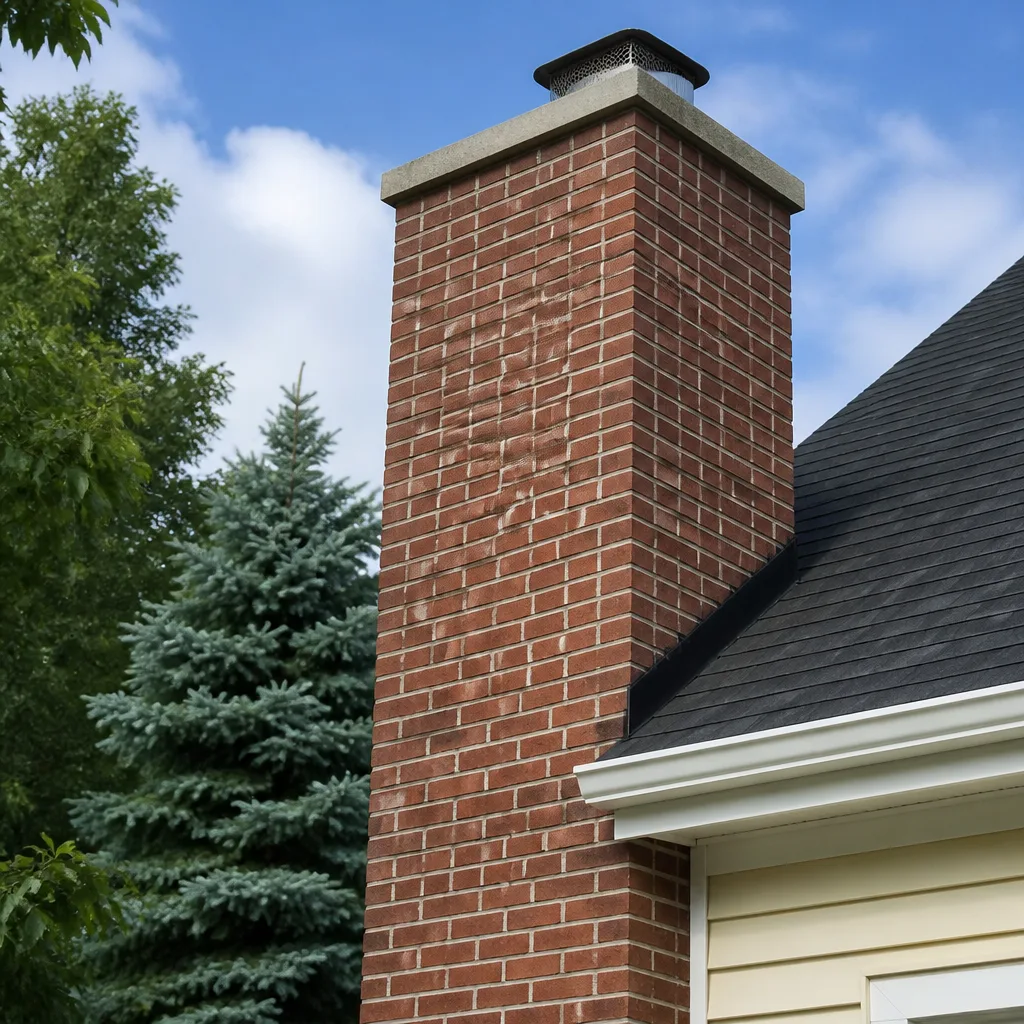
- White efflorescence staining on the chimney exterior or in the firebox. That white powdery deposit is salt being pulled out of the masonry by water. It’s the chimney telling you water has already saturated the brick or block behind the crown.
- Water in the firebox after heavy rain or snow melt. If you open the damper after a storm and the floor of the firebox is wet or has new rust stains on the grate, the crown or the flashing is the usual culprit. Bricks do not sweat. Water is getting in from above.
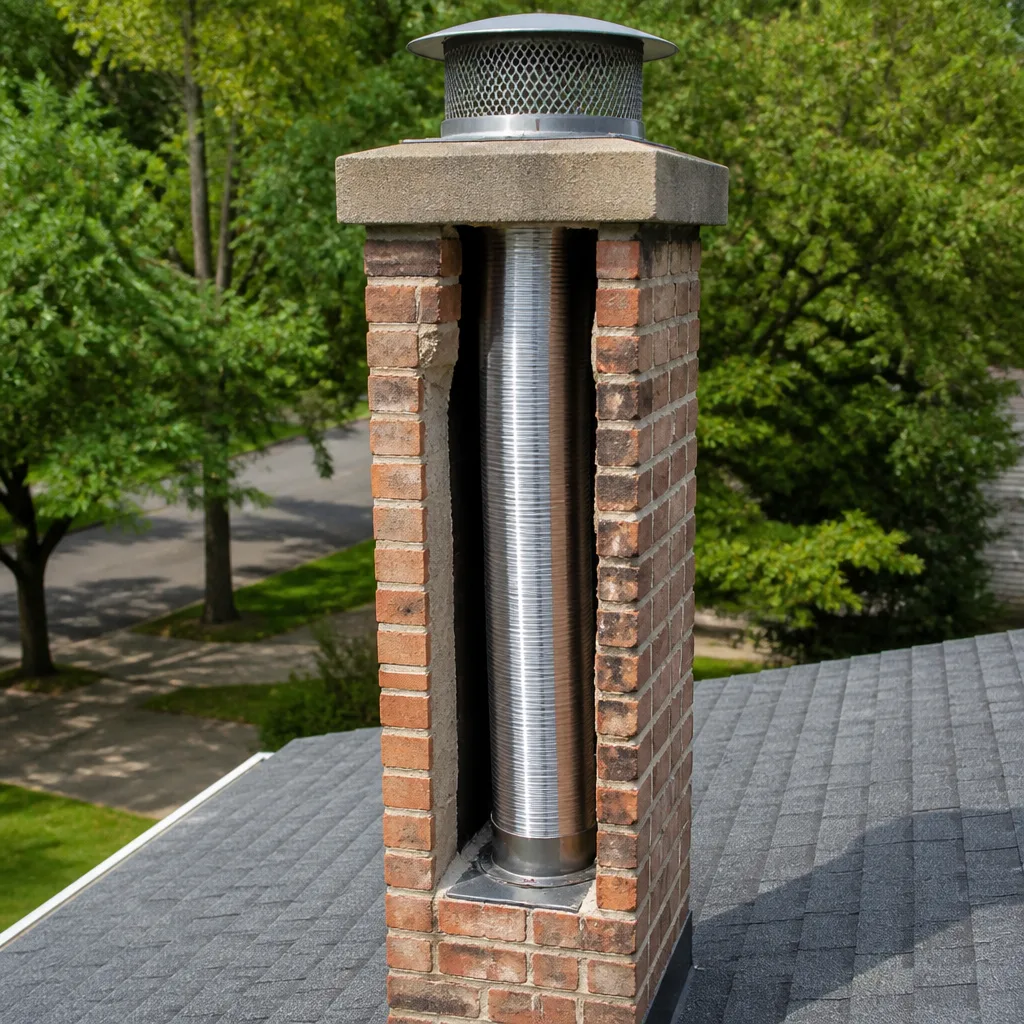
- The flue tiles have shifted or the mortar joint around them is gone. Gelco crowns depend on an expansion joint between the flue tiles and the crown material. When that joint fails, the tiles and the crown grind against each other, and the tile liner can crack. That’s how a $400 crown repair becomes a $2,500 liner replacement.
Replacement Cost & What’s Included
A full Gelco-compatible crown rebuild in Bristol with the old crown removed, new expansion joints installed, and a proper sloped pour runs between $400 and $900 for a standard single-flue chimney. If the crown is oversized, multiple flues are involved, or the top courses of brick need rebuilding at the same time, the number climbs. If we are also installing a Gelco cap or replacing a rusted chase pan, that’s quoted separately. The phone number you hear is the number on the invoice. We don’t play the bait-and-switch game that the national outfits in Hartford built their reputations on.
What’s included has to be stated plainly, because the word “rebuild” gets thrown around loosely. Our crown job means removing the old cracked material down to sound masonry, installing a proper expansion joint around each flue, forming the correct slope away from the opening, and pouring a polymer-modified crown that can back up Connecticut winters. We include a sweep of the flue while we’re up there, and every completed job carries the 90-Day Done Right Promise in writing. If it’s not right, one call brings Wendell back. No argument, no invoice.
DIY or Call Us?
Here’s the honest split. If you want to inspect from the ground with binoculars, knock a small chip off the crown with a broom handle from a ladder, or check for efflorescence on the brick, go ahead. That’s useful information, and it’ll help you describe what you’re seeing when you call. What you should not do is climb onto a Bristol roof in late fall with a bucket of patch cement and try to fix a structural crown yourself. This work requires you to be at the edge of a sloped roof, leaning over a chimney, with two hands on a chisel or a grinder. A fall from that position doesn’t end well. People call us after a patch job fails one winter later, and the repair always costs more than a proper crown would have cost the first time.
If the crack is hairline and the crown is under five years old, a sealant application might be all you need. We’ll tell you that on the phone, not from a sales script. If it’s structural, we fix it right the first time. Call us at (860) 743-7743 and describe what you’re seeing. If it can wait, we’ll tell you it can wait.
FAQs
A properly poured Gelco-compatible crown in Bristol should last 15 to 25 years before needing real work, but the freeze-thaw cycles and roof exposure around here mean the expansion joint around the flue usually needs resealing every five to seven years. We’ll check it during your annual sweep and keep it sealed before water gets in.
Yes, if the crack is hairline and the crown is structurally sound, a polymer sealant will buy you years. If the crown is spalling, crumbling, or has cracks wider than an eighth of an inch, the repair will fail and you’ll be back here next spring. We’ll show you the camera footage and give you a plain-English verdict before anyone picks up a tool.
A standard single-flue crown rebuild usually takes a four to five-hour visit, and we can often complete it the same day we inspect it. The mortar needs to cure before heavy weather hits, so we schedule around the forecast when we can. Call (860) 743-7743 and we’ll give you a real arrival window.
We keep the polymer-modified mortar, expansion joint forms, and sealants on the truck, and we work with Gelco, DuraFlex, and HeatShield components for caps, pans, and liners. If you need a new Gelco cap to go on top of the repaired crown, we’ll bring it with us or order it and finish the job on the second visit. No three-week ghosting.
If your Gelco chimney crown is cracked, flaking, or letting water into your Bristol home, call Top Hat Chimney at (860) 743-7743 for a free estimate. If it needs doing, we will do it right. If it does not, I will tell you that instead.
Written by Wendell Pike, Owner, Top Hat Chimney at Top Hat Chimney, serving Bristol and nearby areas.