
Level 1 sweep and inspection to the NFPA 211 annual standard - flue, crown, cap, and flashing checked and photographed
Chimney sweep logs do not sweep chimneys. They loosen some creosote - which then falls where a brush and vacuum still have to collect it.
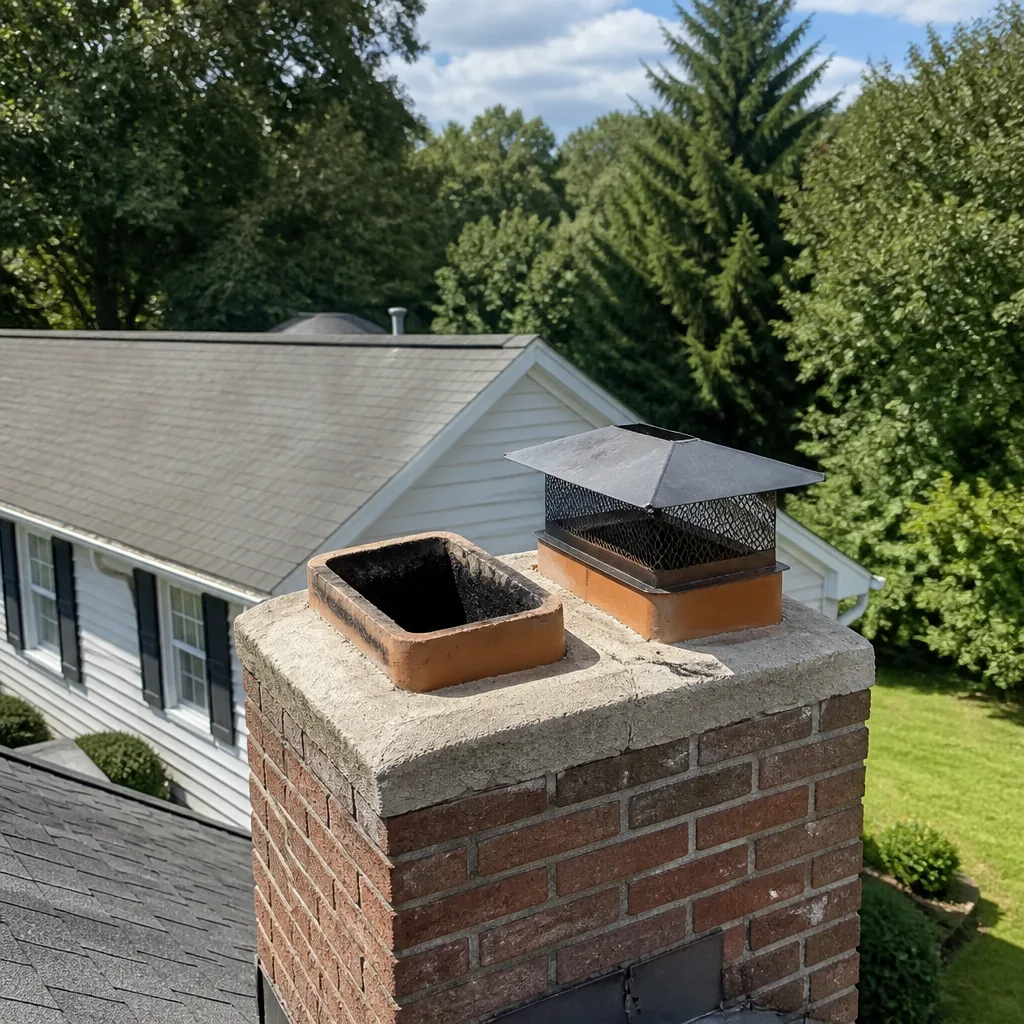
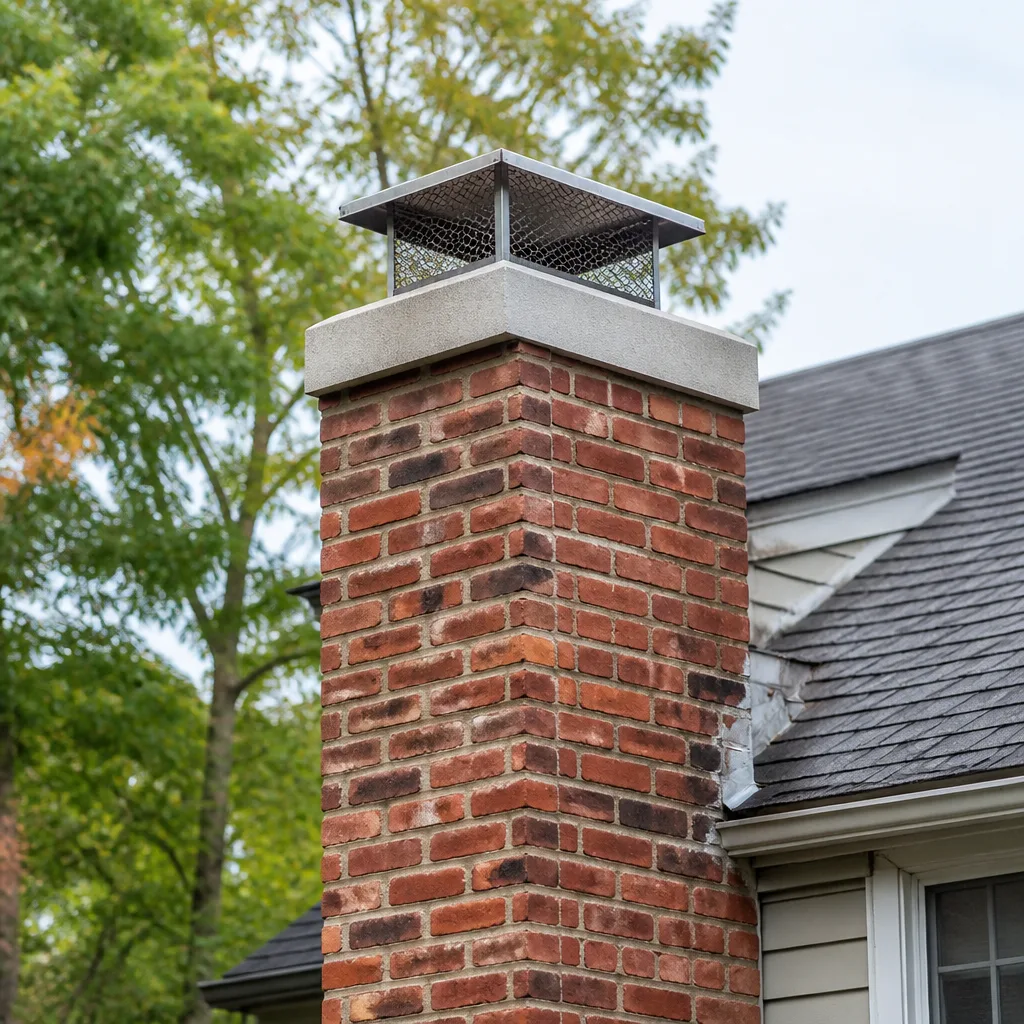
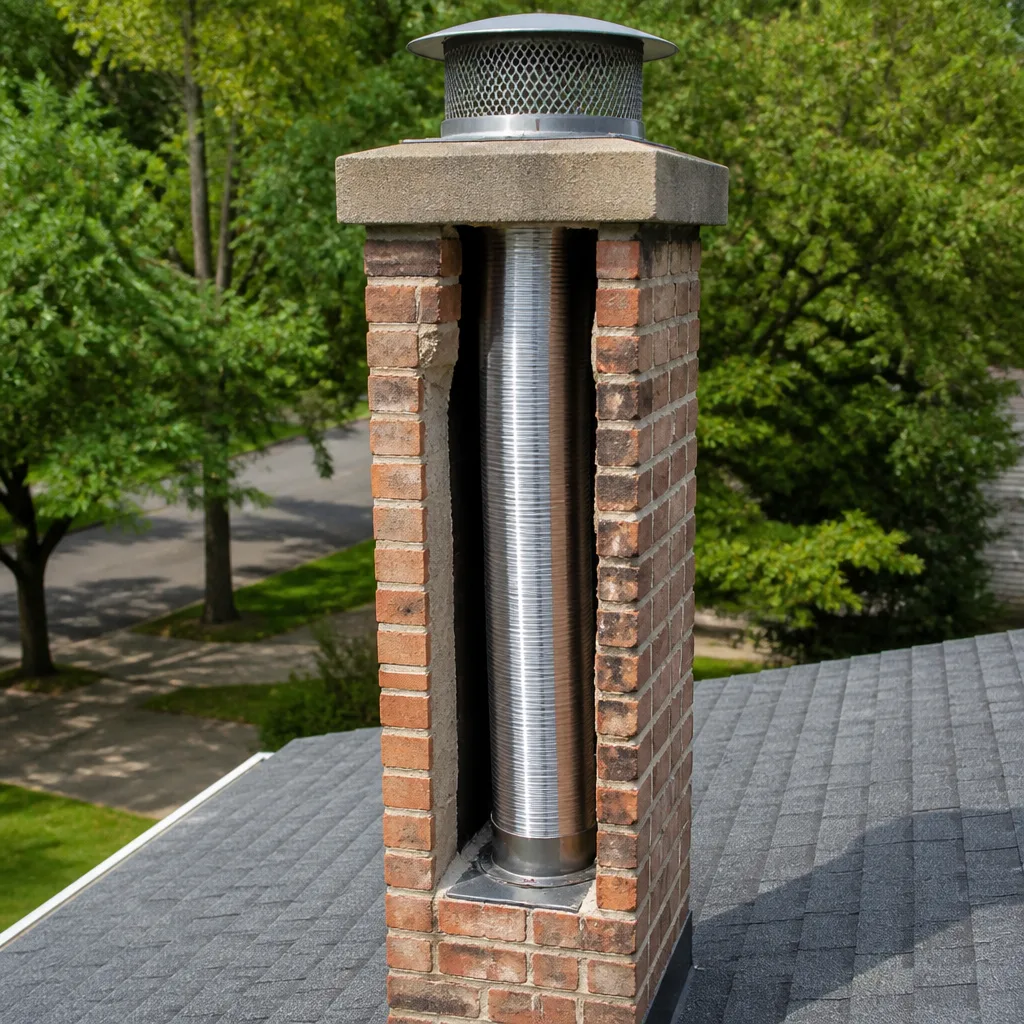
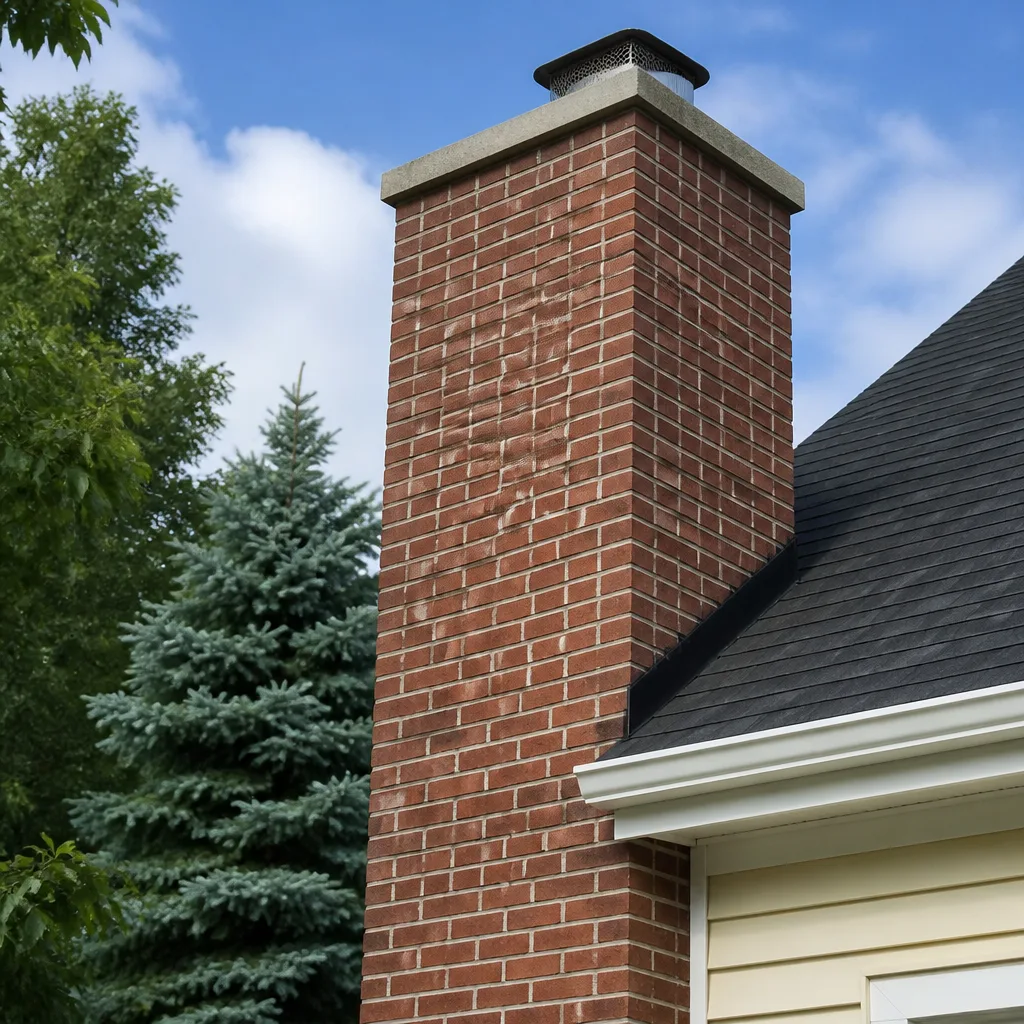
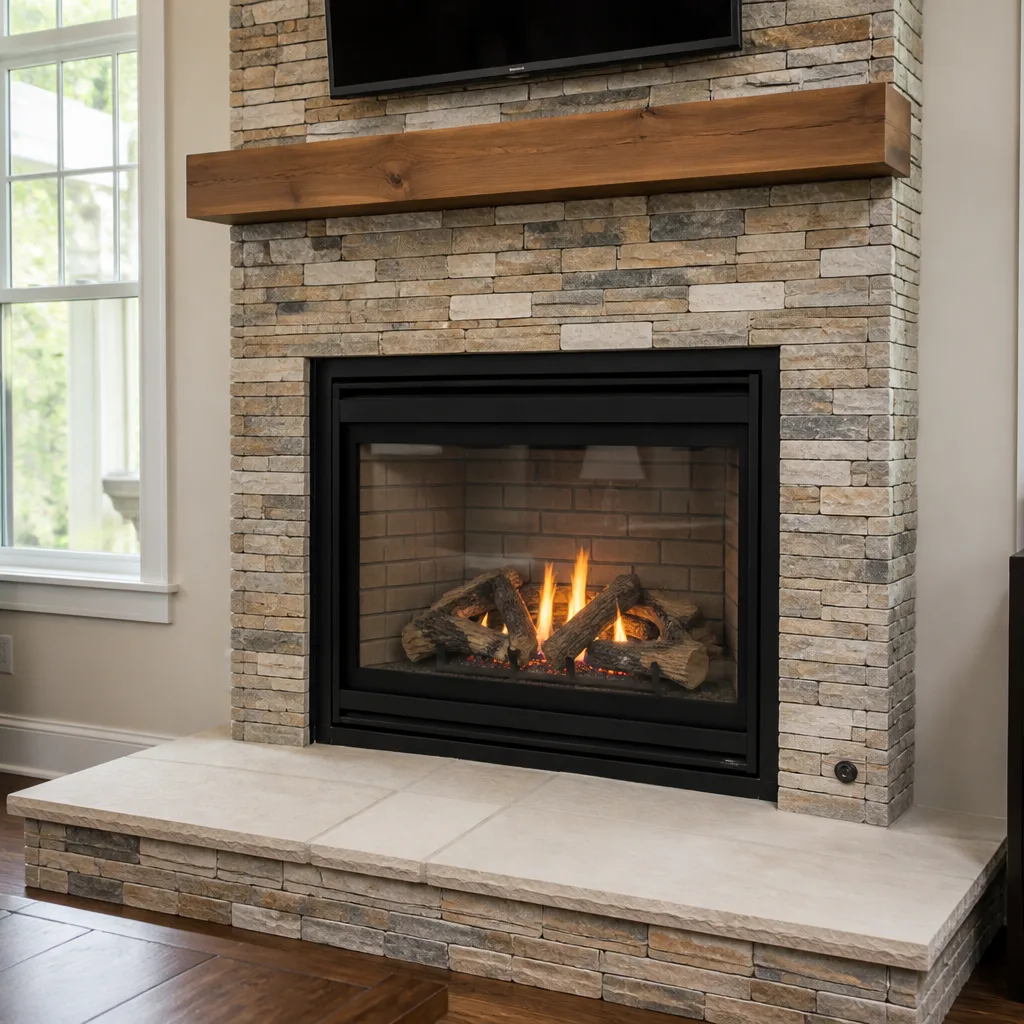
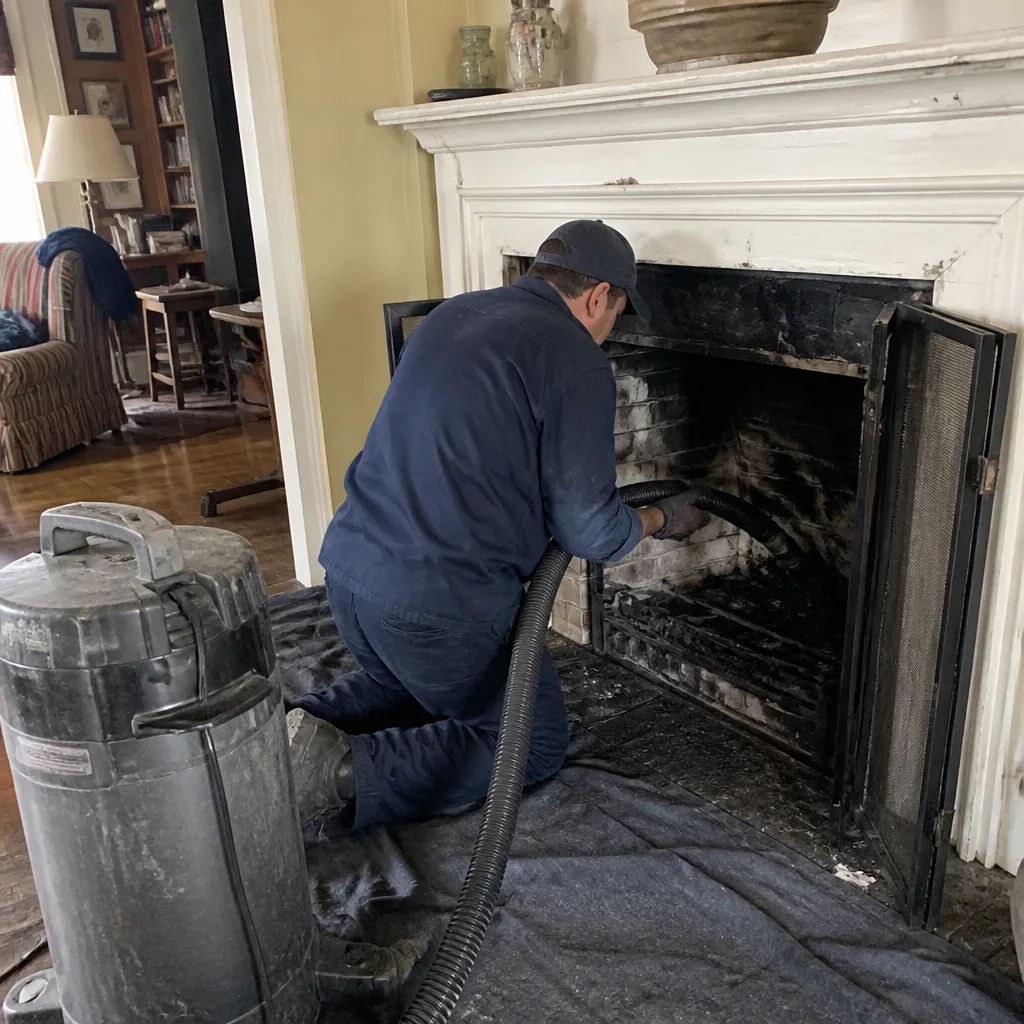 Before
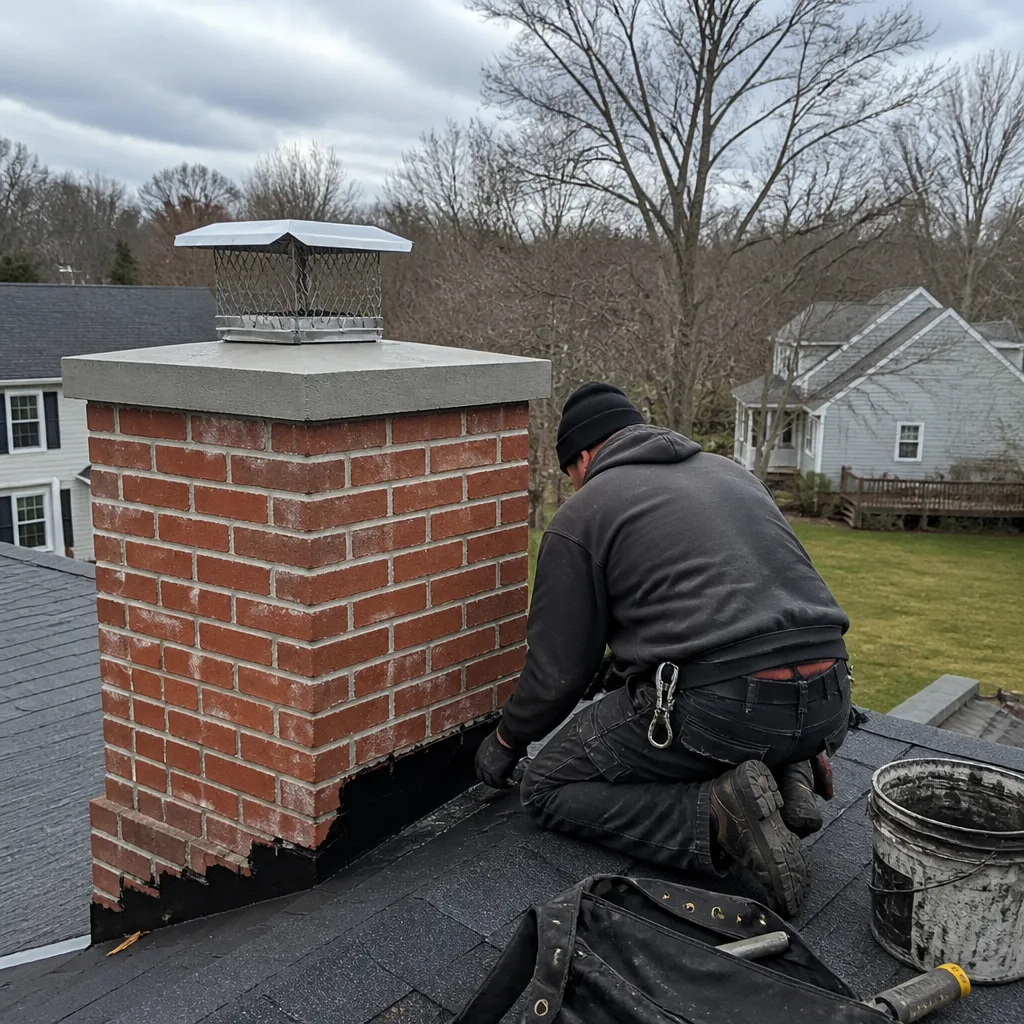 After
After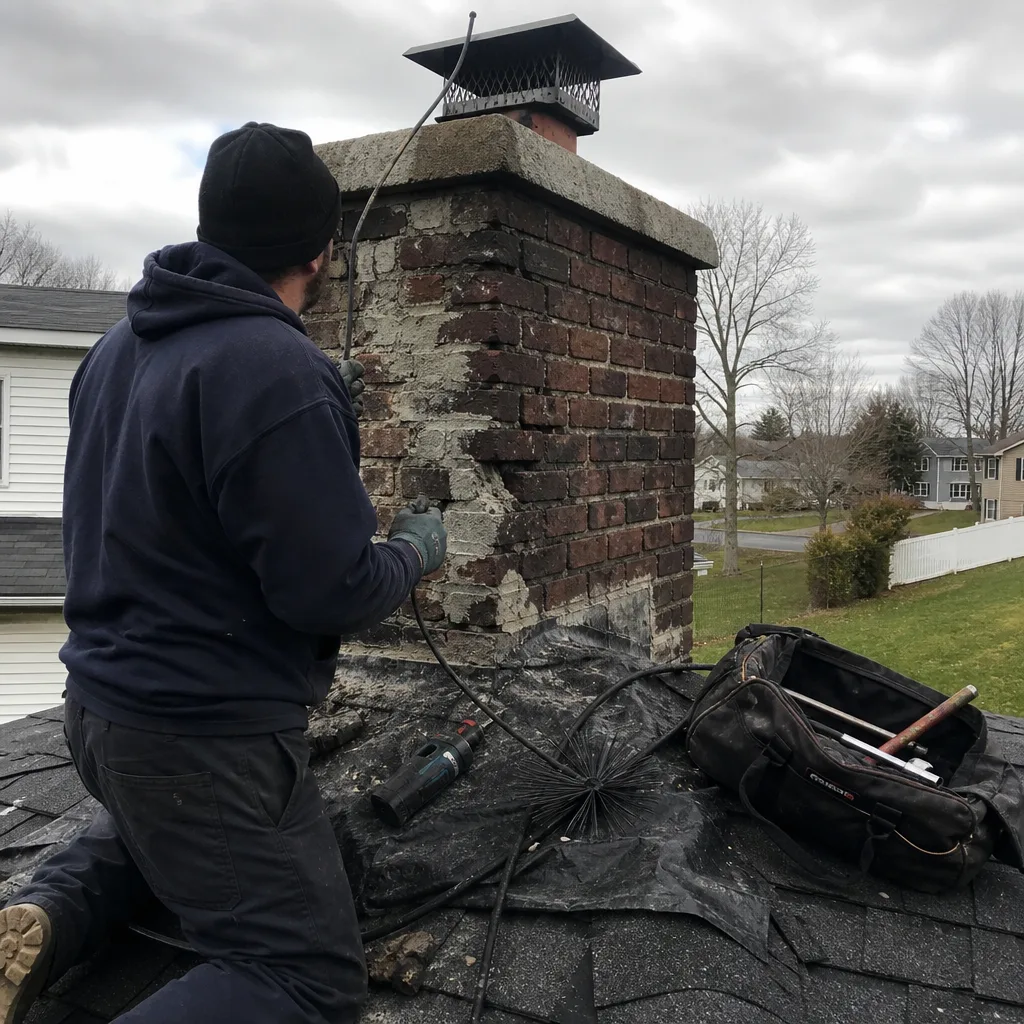 Before
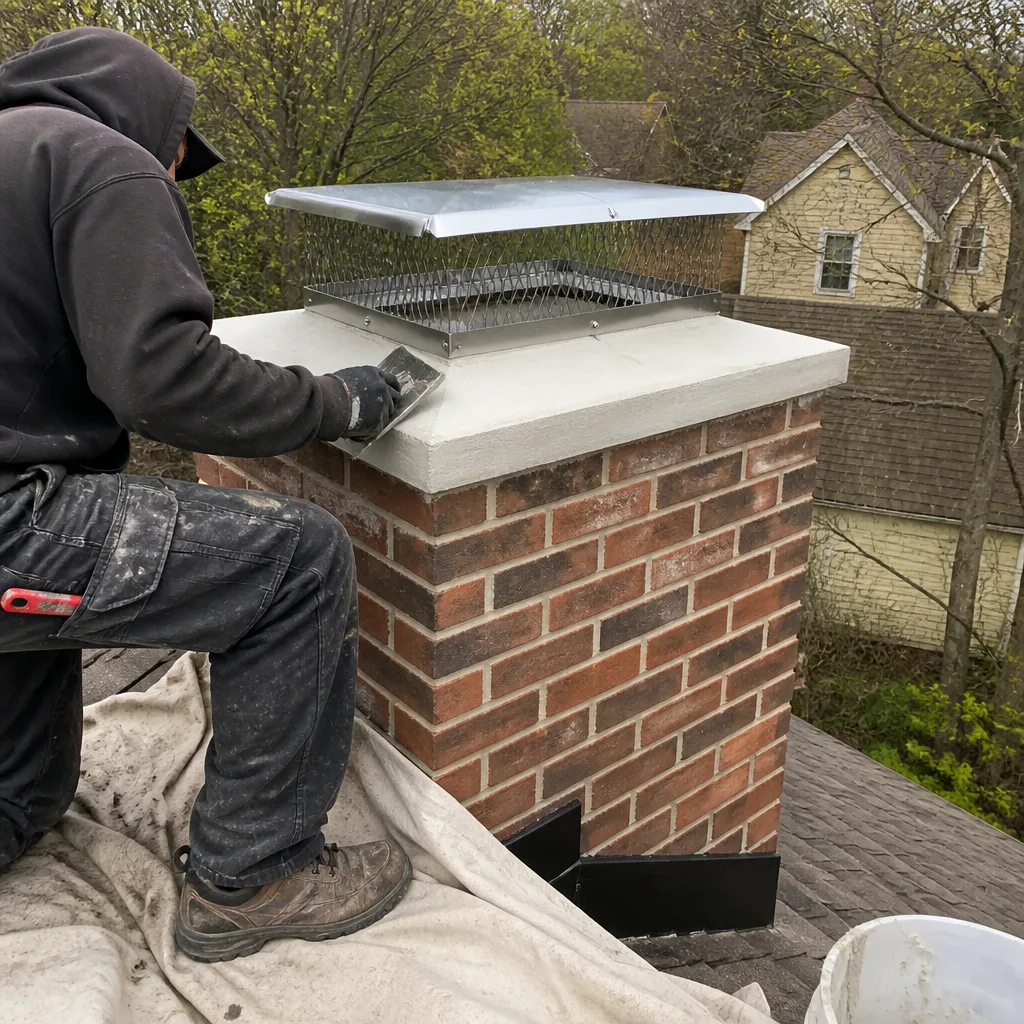 After
After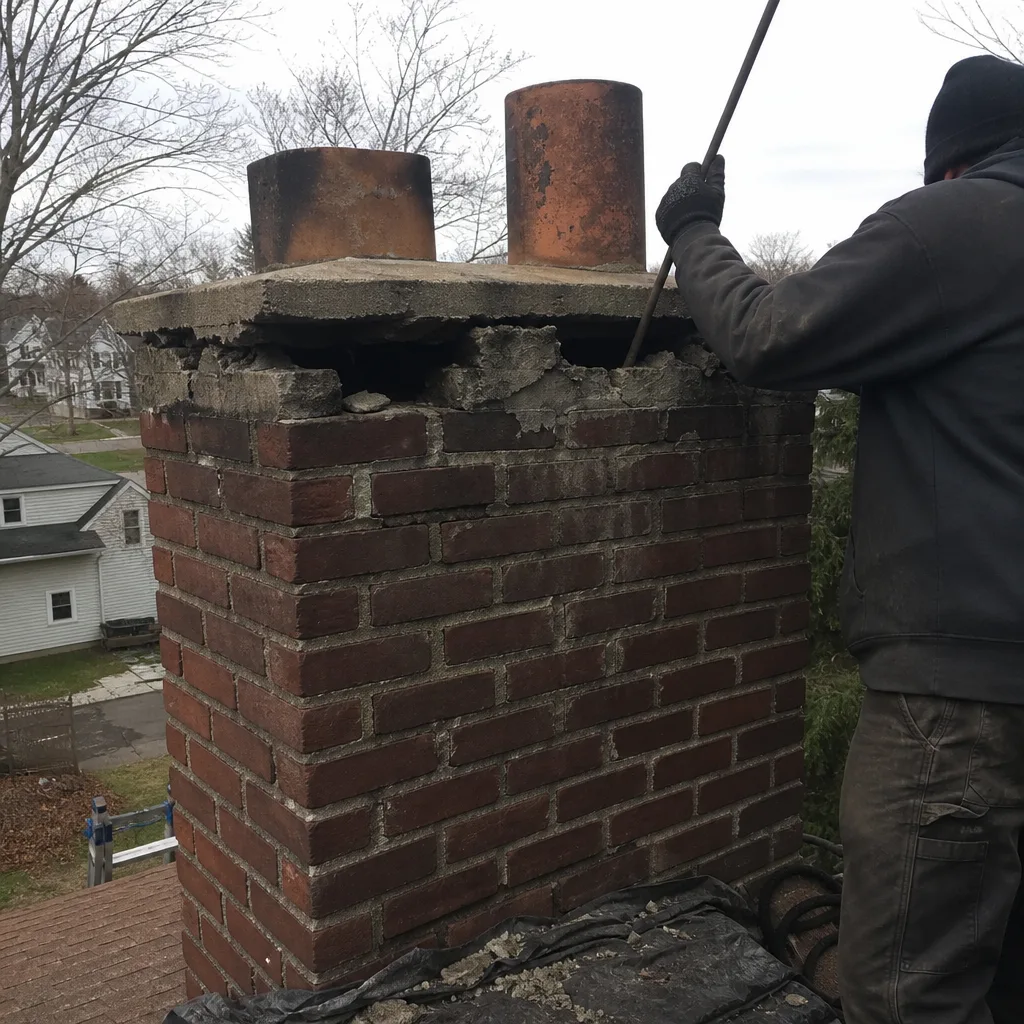 Before
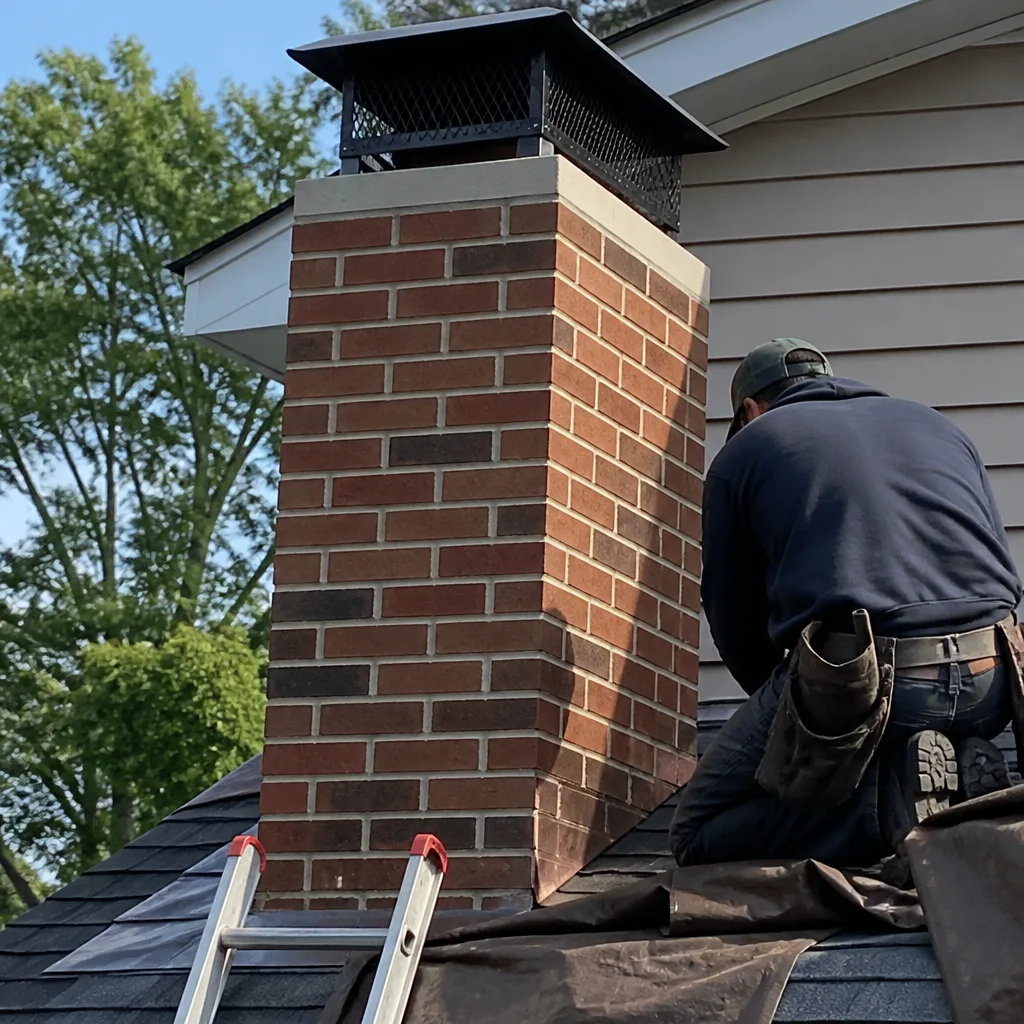 After
AfterCreosote Removal in Bristol, CT
Creosote removal in Bristol, CT typically costs between $150 and $450 depending on how much buildup is present and which stage of creosote has formed in your flue. Most jobs are completed in a single visit, and the sweep who shows up will tell you exactly what he found before a single dollar changes hands.
If you burn wood in Bristol – whether it’s a fireplace insert in your Forestville ranch or a freestanding stove in a farmhouse off Route 72 – creosote is forming in your flue right now. That’s not a scare tactic; it’s just chemistry. Wood smoke cools as it rises, and what doesn’t escape condenses on your liner walls as a carbon-rich residue that ranges from a dusty flake to a tar-thick glaze depending on how your stove runs and what you’ve been burning. When that buildup gets thick enough, it becomes fuel – and a chimney fire burns between 1,800 and 2,000 degrees Fahrenheit, enough to crack a tile liner in minutes.
At Top Hat Chimney, Wendell Pike has been pulling creosote out of Bristol flues since 1999. He’s worked in this town long enough to know how the cold Farmington Valley winters push people to load their stoves too full, too fast, which is exactly the recipe for heavy second- and third-degree buildup. If you want a straight answer about what’s in your chimney, call us at (860) 743-7743. A live person picks up every time – it may well be Wendell himself. For a broader look at what a full chimney tune-up involves, see our Chimney Cleaning & Sweep in Bristol page.
When You Need Creosote Removal
A standard annual Chimney Cleaning & Sweep handles light, first-degree creosote – the dry, flaky kind that a stiff chimney brush clears in one pass. But some situations call for something more deliberate. Here’s when you should pick up the phone rather than just scheduling a routine cleaning:
- You smell something sharp or acrid when the fireplace isn’t burning. A persistent smoky or chemical smell coming from the firebox, especially during warm weather or on humid days, usually means a significant creosote deposit is off-gassing through your liner. We see this regularly in older Bristol homes where the fireplace went unused for a season or two and the residue had time to oxidize.
- You’ve gone two or more seasons without a sweep. In Bristol’s climate, where heating season runs roughly October through April, two years of regular burning can deposit enough material to move from first-degree into second-degree buildup – glazed, shiny, and much harder to remove than what a brush alone can handle.
- You burn green or unseasoned wood. Firewood that hasn’t dried for at least 12 months produces far more smoke per BTU than well-seasoned hardwood, and that smoke carries more of the condensable compounds that become creosote. It’s a common situation in Bristol’s rural pockets where people cut their own wood and get impatient.
- You had a chimney fire, even a small one. A chimney fire can be as dramatic as visible flames above the cap or as quiet as a low rumble and a slight pressure change you barely noticed. Either way, the heat alters the structure of any existing creosote into a brittle, porous char that needs to come out completely before the flue is safe to use again.
- Your stove glass is fogging up black within an hour of lighting. Heavy soot on the glass is a sign of incomplete combustion, which means the same incomplete combustion is coating your liner. That’s a creosote problem in progress, not just a draft issue.
- A home inspection flagged creosote buildup. If a real estate inspector noted creosote as a concern on a Bristol home you’re buying or selling, you need documentation that it’s been properly addressed – not just a general cleaning receipt, but a written report with before and after camera footage.
Our Creosote Removal Process
The process looks a little different depending on what stage of buildup we find. First-degree is a brush job. Third-degree is a different matter entirely – it’s a hardened glaze that a brush will skip right over, and trying to force it out with steel alone can crack an older tile liner. Here’s how Wendell and his crew actually approach it:
- Inspection before anything else. The sweep who shows up runs a camera through the full length of your flue before opening a brush bag. You see the footage. Wendell gives you a plain-English read on what’s there – degree of buildup, condition of the liner, any cracks or offsets that would affect the job. No guessing, no mystery.
- Upfront pricing before tools come off the truck. Once we know what we’re dealing with, you get a firm number. The price you hear is the price on the invoice. There are no add-ons discovered partway through the job.
- Set up and protect the room. Drop cloths go down, the firebox is sealed with a vacuum shroud, and the workspace is organized. Bristol homes, especially the 1960s and 70s colonials off Stafford Avenue, often have older fireplaces with loose mortar and tight surrounds – we work carefully and leave the room cleaner than we found it.
- Mechanical removal for first- and second-degree buildup. For standard buildup, we work top-down with professional-grade chimney brushes sized exactly to your flue dimensions. A high-powered HEPA vacuum runs simultaneously so the debris goes into the unit, not your living room. For heavier second-degree buildup, we use rotary tools and specialty equipment to break through the harder deposits.
- Chemical treatment for third-degree creosote where indicated. When the buildup has glazed over into a hard, tar-like layer, mechanical removal alone can stress the liner. We apply a professional-grade chemical creosote modifier – a dry powder or spray applied to the deposits – that converts the glaze into a brittle, brushable ash. We schedule a follow-up pass to clear the converted material after it has had time to work. This is the safe way to handle late-stage buildup, and it’s the only approach we’re comfortable recommending.
- Post-removal camera inspection and written report. After removal, we run the camera again. You see the before and after footage side by side. You get a written report that documents what was removed and the current condition of the liner – something you can hand to your insurance company or a future buyer without hesitation. Every job is covered by our 90-Day Done Right Promise: if something isn’t right, one call brings us back at no additional cost.
Creosote Removal Pricing in Bristol
Creosote removal in Bristol runs somewhere between $150 and $450 for most residential jobs. Here’s an honest breakdown of where costs land depending on what’s present:
| Buildup Stage | What It Looks Like | Typical Cost Range |
|---|---|---|
| First-degree (light, flaky) | Dry, dusty soot – brushes clear in one pass | $150 – $225 |
| Second-degree (tar-like) | Shiny, harder deposits – requires rotary tools | $225 – $350 |
| Third-degree (glazed) | Hard, brittle glaze – requires chemical treatment plus follow-up | $350 – $450+ |
| Post-chimney-fire removal | Structural inspection included, altered creosote cleared | $300 – $500+ |
A few things affect where your job falls in those ranges. How often you’ve burned matters – a Bristol homeowner who runs their insert five nights a week through a full New England winter will have meaningfully more buildup than someone who lights a fire on Christmas and Easter. Flue length matters too; a two-story colonial with a long liner run accumulates more surface area of deposit than a single-story ranch. And what you’ve been burning matters as much as anything. Green wood, pine, or cardboard boxes produce dramatically more creosote per cord than properly seasoned oak or maple.
If any repair work comes out of the inspection – a cracked liner tile, a damaged smoke shelf, a cap that needs replacing – that’s priced separately and always quoted before we start. And if you’ve gotten a written estimate from someone else that doesn’t seem right, we’ll give you a free second opinion on it, no charge, no strings.
Seniors and veterans always get 10% off. Any repair over $200 takes $40 off automatically. Call (860) 743-7743 for a free estimate – the number you hear on the phone is the number on the invoice.
Why Bristol Chimneys Build Up Faster Than You’d Expect
Bristol sits in the Farmington River valley, and that geography does something specific to wood-burning chimneys. Cold air settles into the valley floor in winter, and temperatures in the lower-elevation neighborhoods near Memorial Boulevard and in the flats below Riverside Avenue regularly drop several degrees below what you’d see on the ridge lines to the east. When outside temperatures are consistently colder, flue gas cools faster on its way up the liner – and faster cooling means more condensation, which means more creosote per cord of wood burned.
We also see a pattern with older Bristol homes that were converted from oil heat to wood or pellet supplemental heat sometime in the 2000s and 2010s. The chimneys in those houses were originally built for oil appliances, which run at different temperatures and produce almost no creosote. When a wood stove or insert gets connected to a liner that hasn’t had regular sweeping, the first few seasons of burning can produce surprisingly heavy buildup because nobody had thought to establish a cleaning schedule for a flue that suddenly needed one.
Once a year, regardless of how much you burn. Chimneys deteriorate in the off-season too – moisture works on mortar joints and liner tiles whether there’s a fire going or not, and a summer Level 1 Inspection catches cracks before the first fall fire turns a small problem into a large one.
Third-Degree Creosote: A Safety Note
Third-degree creosote deserves a direct word. This is the stage where the buildup has hardened into a thick, tar-like or glassy coating that can actually restrict airflow through the flue and, critically, is extremely flammable. A chimney fire fed by third-degree creosote burns longer and hotter than one fed by earlier-stage deposits, and that sustained heat is what cracks liner tiles, damages mortar, and in serious cases compromises the surrounding masonry.
Attempting to remove third-degree creosote with a standard chimney brush – which some low-cost operators will do anyway because it’s faster – risks fracturing the liner and pushing burning debris into voids in the chimney structure. The correct approach is chemical modification first, then mechanical removal of the converted material. It takes two visits instead of one, which costs a bit more. It also means your liner is still intact when we’re done. Wendell’s been doing this since 1999 and he doesn’t cut that corner.
If a sweep quotes you a single-visit price for confirmed third-degree buildup and doesn’t mention chemical treatment, ask him how he plans to get it out. The answer will tell you a lot.
Brands We Use for Creosote-Related Liner Work
When creosote removal reveals liner damage that needs addressing, the materials we reach for matter. For liner repairs and relining, we work with HeatShield – a ceramic resurfacer designed specifically for damaged tile flues – and DuraFlex stainless liner systems for situations where a full reline is the right call. Both products are spec’d for the actual conditions inside a Bristol flue: sustained high temperatures, seasonal moisture cycling, and the mechanical stress of thermal expansion and contraction over decades of use. We don’t stock whatever’s cheapest at the supply house; we use materials that perform over the long term because our 90-Day Done Right Promise means we’re accountable for how they hold up.
Key Takeaways
- Creosote forms in every wood-burning flue; Bristol’s cold valley winters accelerate the process.
- Three stages of buildup require three different removal approaches – what worked at stage one won’t work at stage three.
- Third-degree creosote requires chemical treatment first; mechanical-only removal at that stage can damage your liner.
- Annual inspection is the right interval whether you burn heavily or lightly – the off-season does its own damage.
- Every job at Top Hat Chimney comes with camera footage, a written report, and the 90-Day Done Right Promise.
- Seniors and veterans get 10% off; any repair over $200 gets $40 off automatically.
FAQs – Creosote Removal in Bristol
How much does creosote removal cost in Bristol, CT?
Creosote removal in Bristol runs $150 to $450 for most residential jobs, depending on the stage of buildup and the length of your flue. First-degree cleanup is on the lower end; third-degree glazed deposits that require chemical treatment before mechanical removal sit at the top. The estimate is always free, and the price is locked before we start. Call (860) 743-7743 and we’ll give you a straight number.
Can you remove third-degree creosote in one visit?
No – and any sweep who says he can do it safely in one pass is either misidentifying what’s actually in your flue or skipping a step that matters. Third-degree creosote has to be chemically modified first, then cleared on a follow-up visit after the conversion has had time to work. Trying to force a steel brush through hardened glaze risks fracturing your liner. We book two visits for confirmed third-degree buildup and we’re transparent about why. Call us at (860) 743-7743 if you want a Level 2 Inspection with a camera to find out what stage you’re actually dealing with.
How often should I have creosote removed from my Bristol chimney?
Once a year is the right baseline for any wood-burning system in Bristol, and more frequently if you burn more than two cords per season. The Chimney Safety Institute of America recommends annual inspections for all chimneys regardless of use – and Bristol’s valley climate, with its colder temperatures at lower elevations, makes consistent maintenance especially important because flue gases cool faster here and deposit more creosote per fire than you might expect. If you’re not sure when your last sweep was, that’s reason enough to schedule one now.
Is creosote removal covered by homeowners insurance?
Routine creosote removal is maintenance, not a covered loss, so standard homeowners policies don’t pay for it. However, if a chimney fire caused by creosote results in structural damage, that damage is often covered depending on your policy terms. What insurers consistently ask for is documentation: a written inspection report and camera footage showing the condition of the flue before and after the fire. Every job we do at Top Hat Chimney includes that documentation. If you’re filing a claim or just want paperwork you can actually hand to an adjuster, call (860) 743-7743.
Schedule Your Creosote Removal in Bristol
If you’re not sure what’s in your flue, or you already know there’s a problem and you’ve been putting off the call, this is a straightforward job when it gets caught early and a harder one when it doesn’t. Wendell and his crew have been doing this work in Bristol since 1999. The home base is local, the number you call is answered by a real person, and the price you hear before we start is the price you pay when we’re done. For the full picture of what a chimney cleaning appointment covers, see our Chimney Cleaning & Sweep in Bristol page.
Call (860) 743-7743 today for a free estimate. No trip charge within the county, and if you’re a senior or veteran, 10% off comes off the top automatically.
Written by Wendell Pike, Owner at Top Hat Chimney, serving Bristol since 1999.