
Level 1 sweep and inspection to the NFPA 211 annual standard - flue, crown, cap, and flashing checked and photographed
Chimney sweep logs do not sweep chimneys. They loosen some creosote - which then falls where a brush and vacuum still have to collect it.
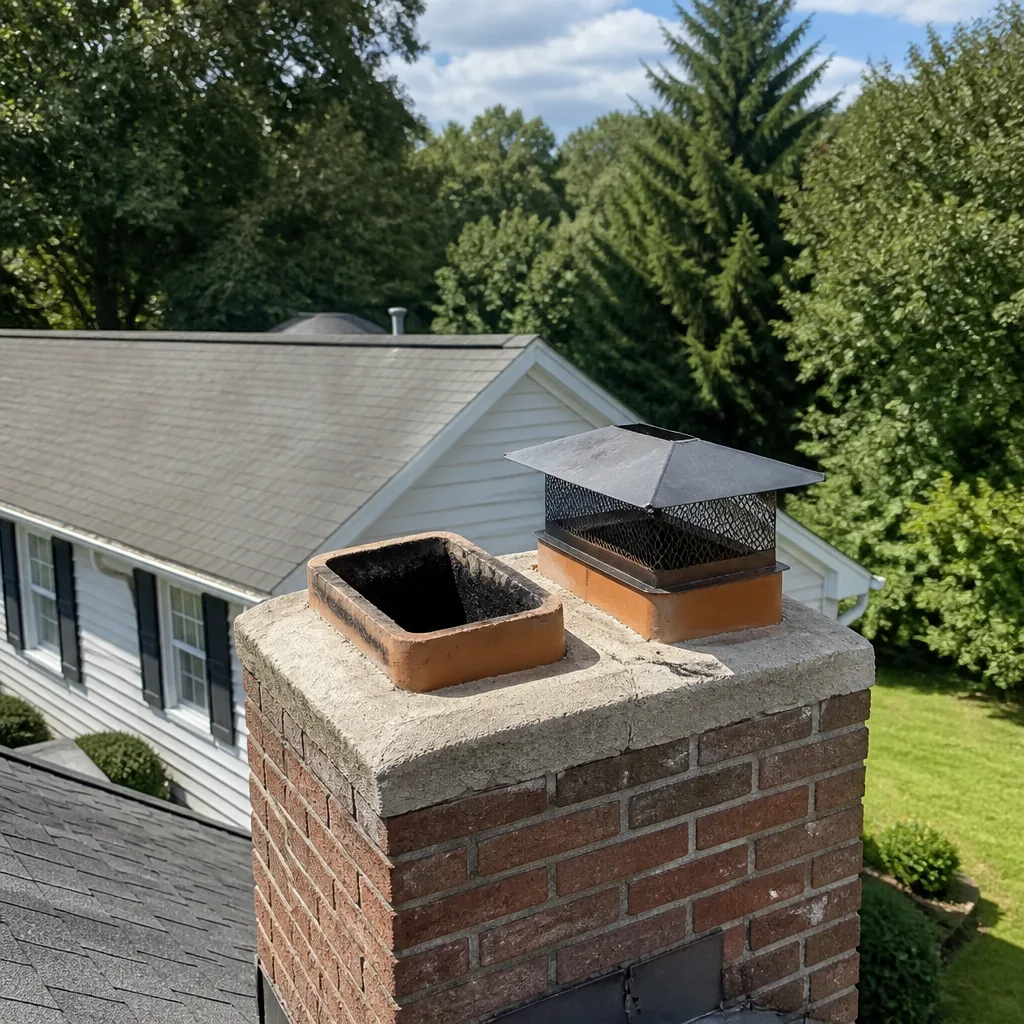
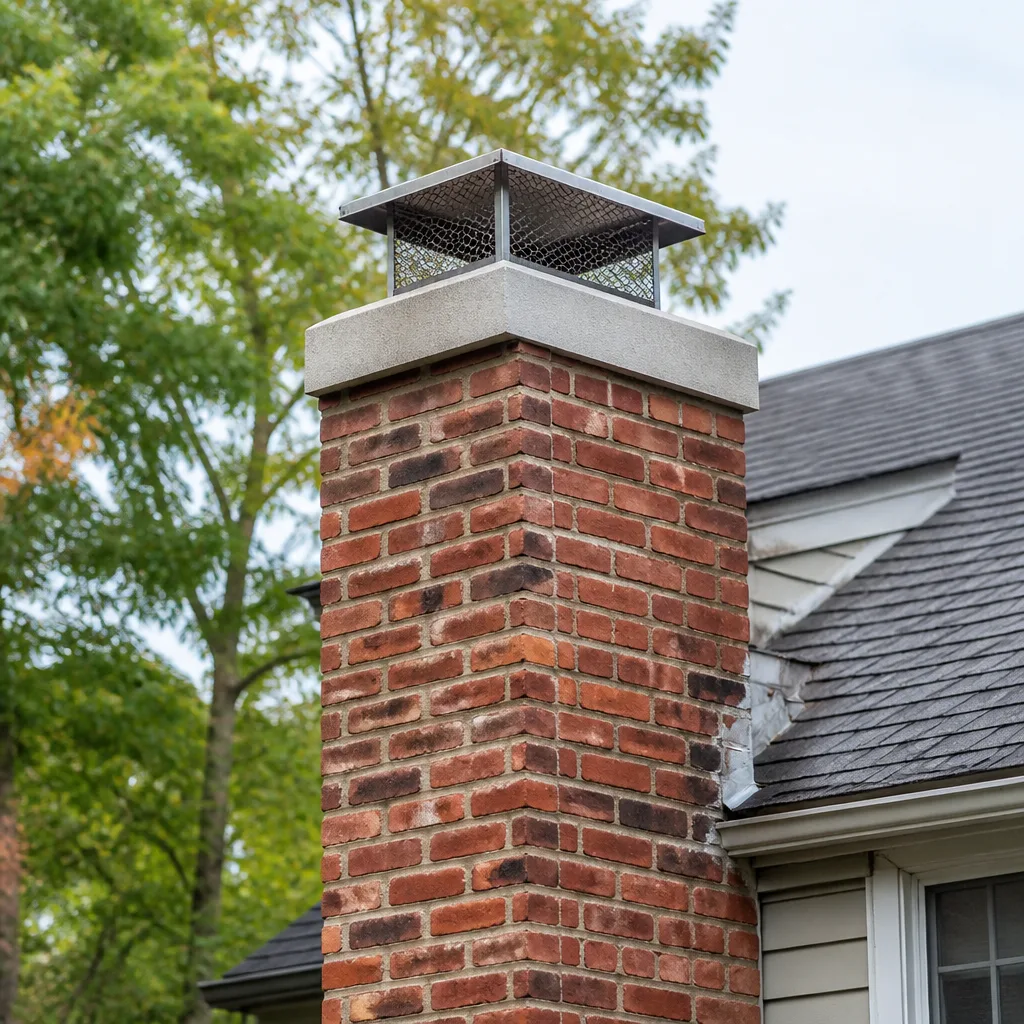
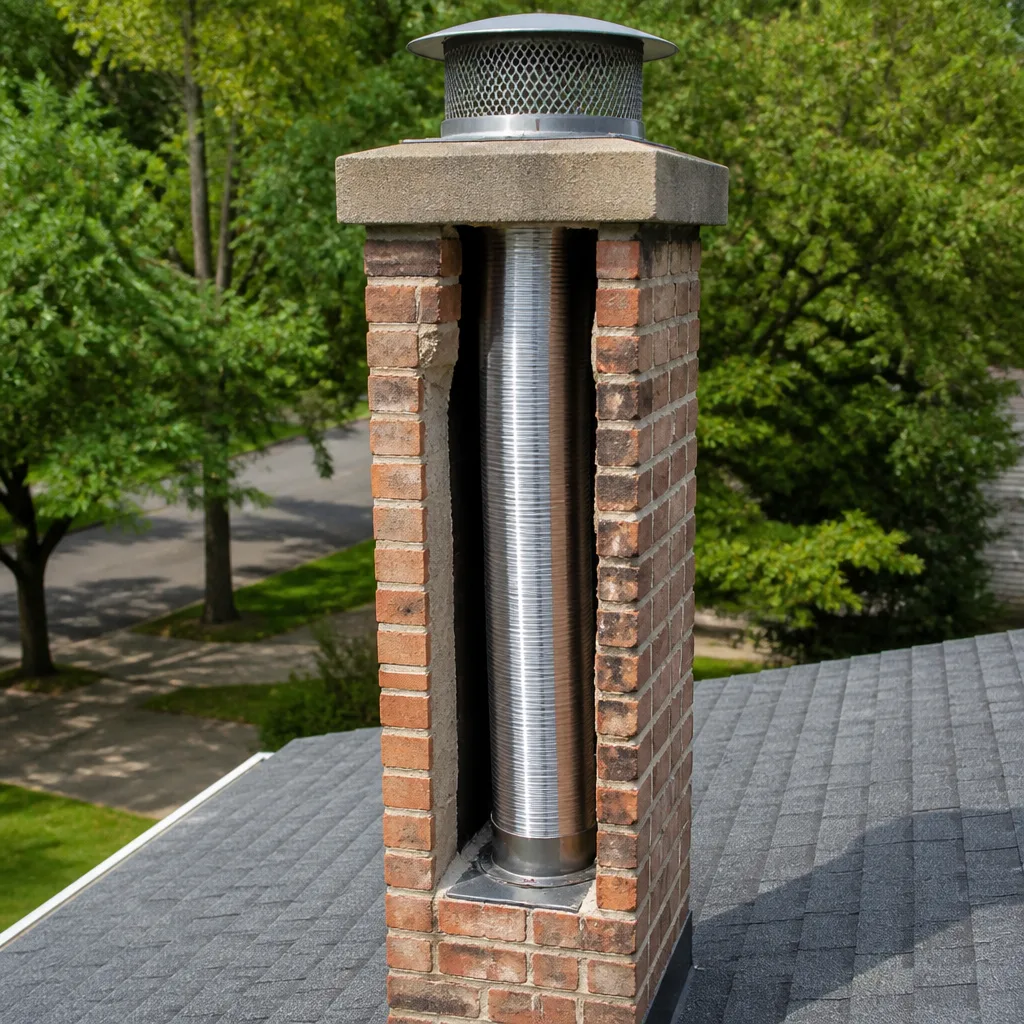
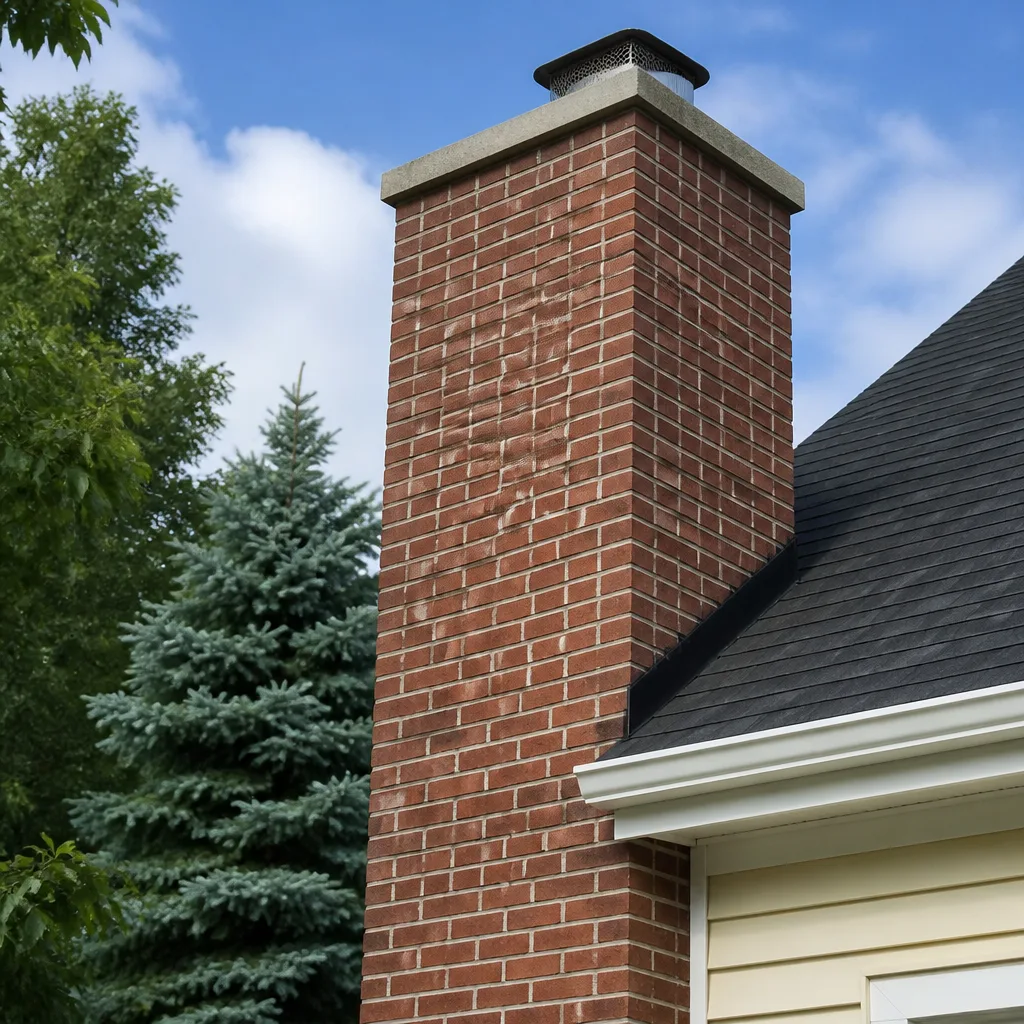
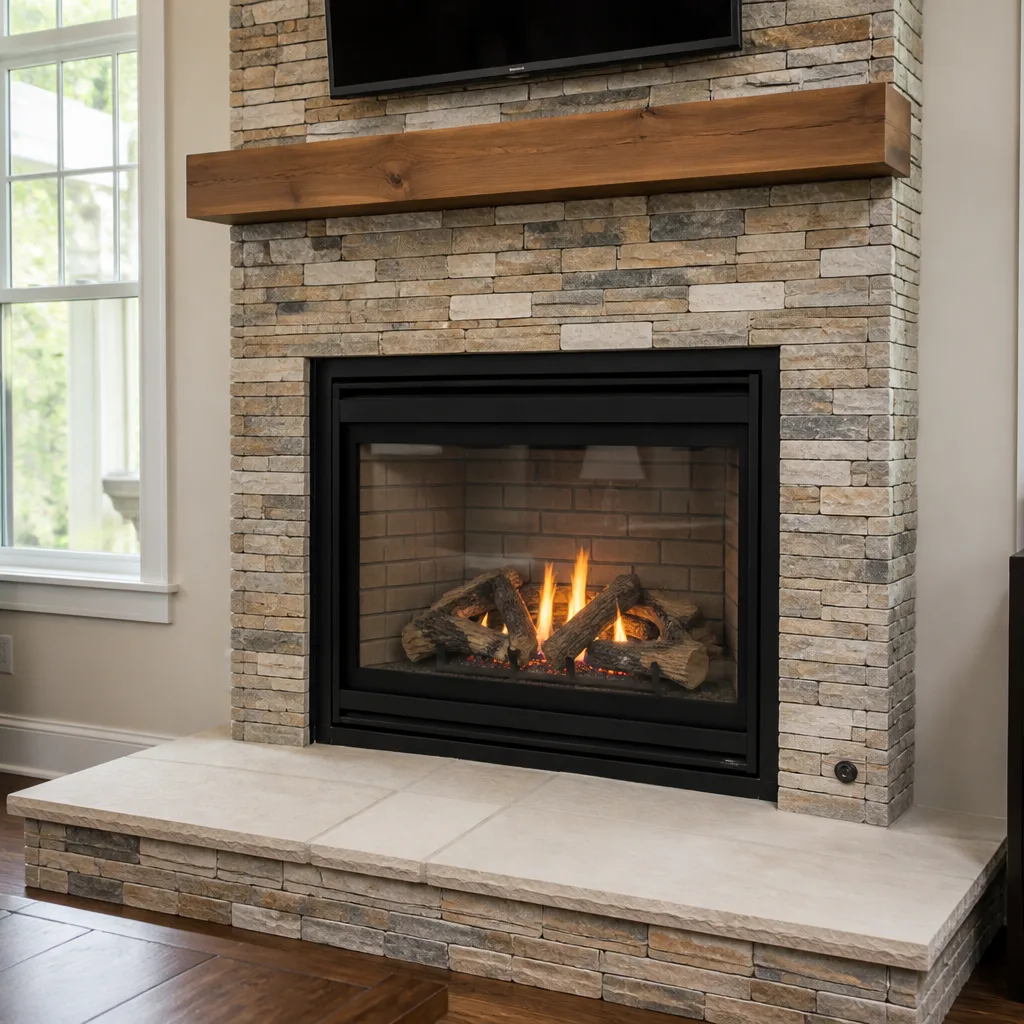
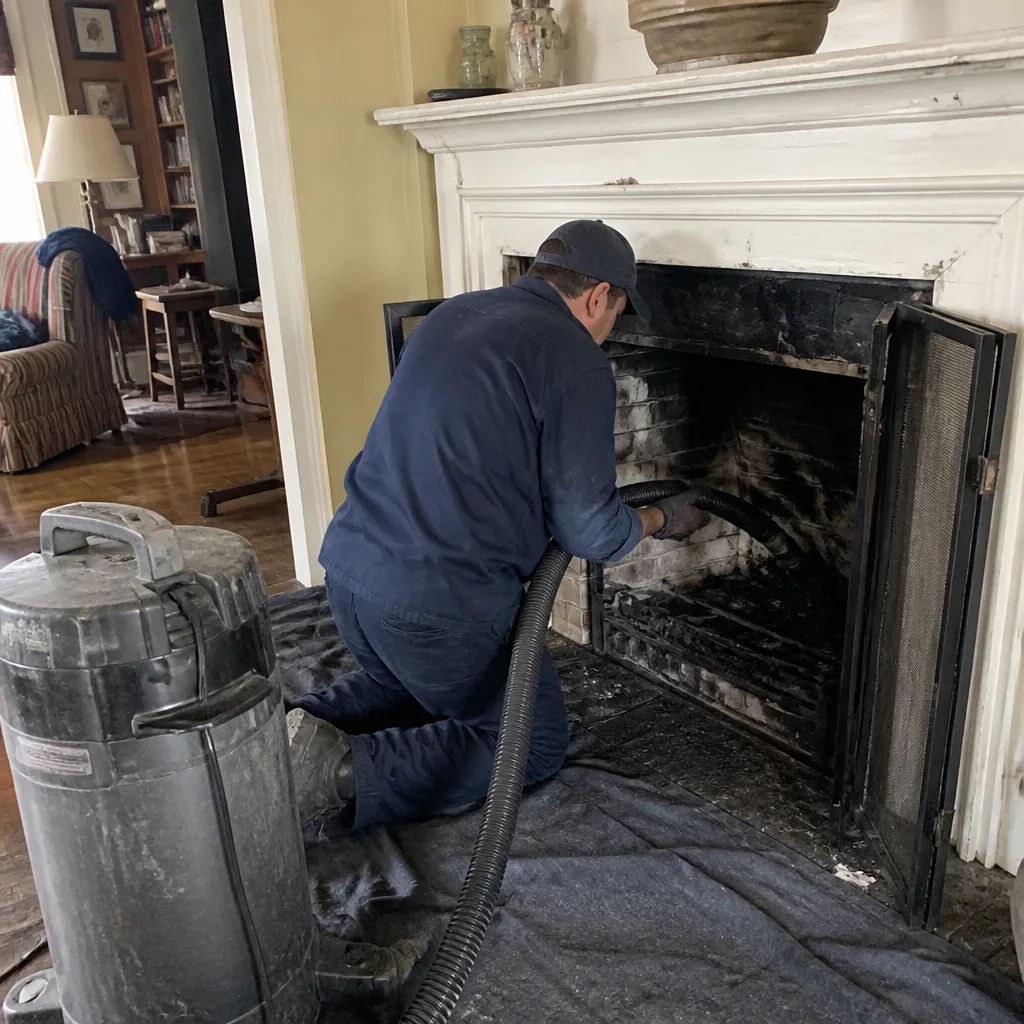 Before
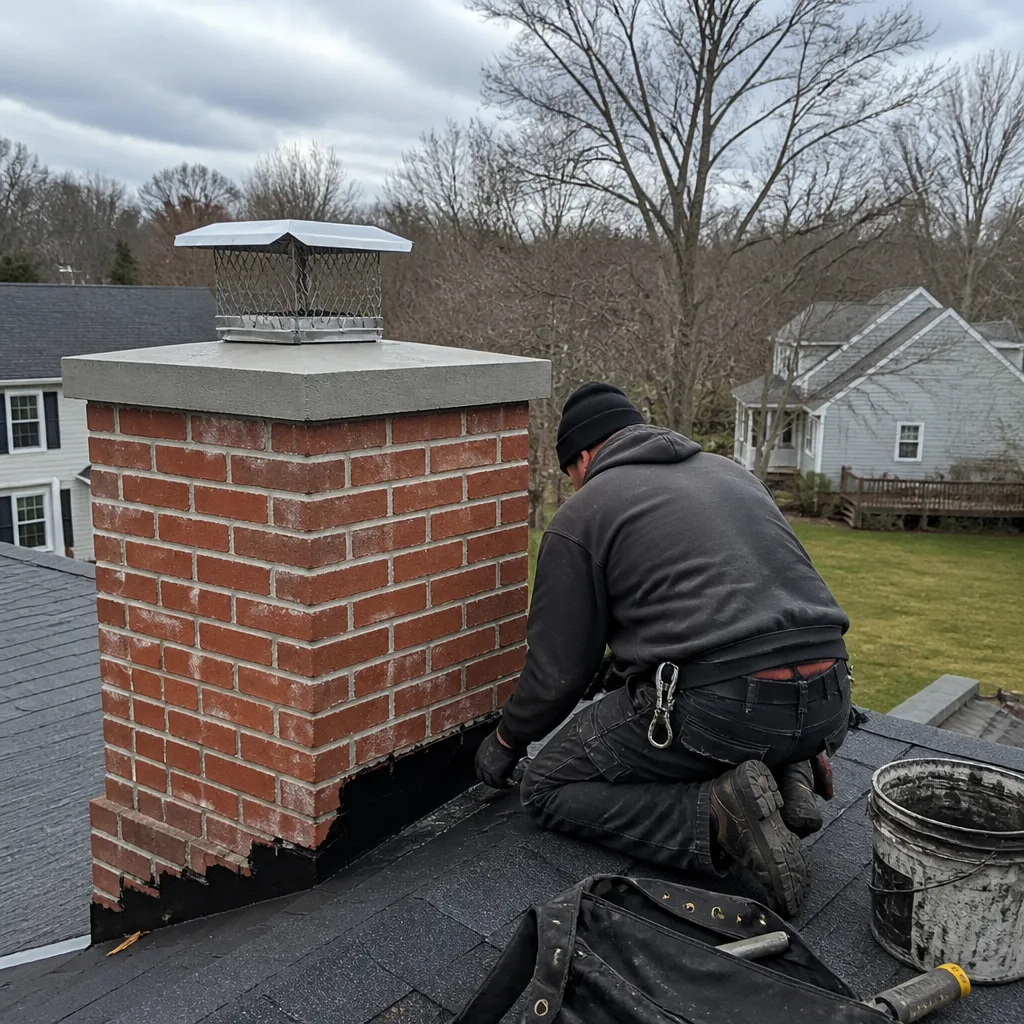 After
After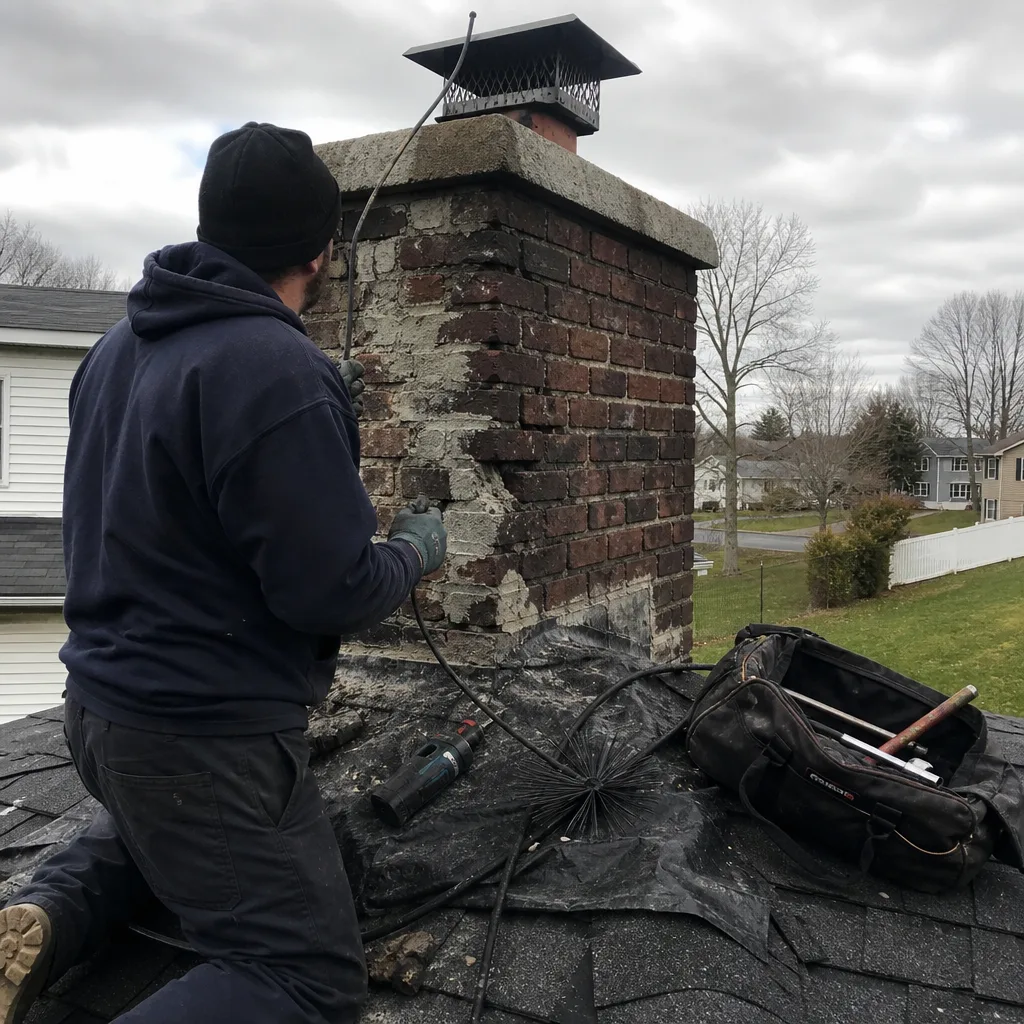 Before
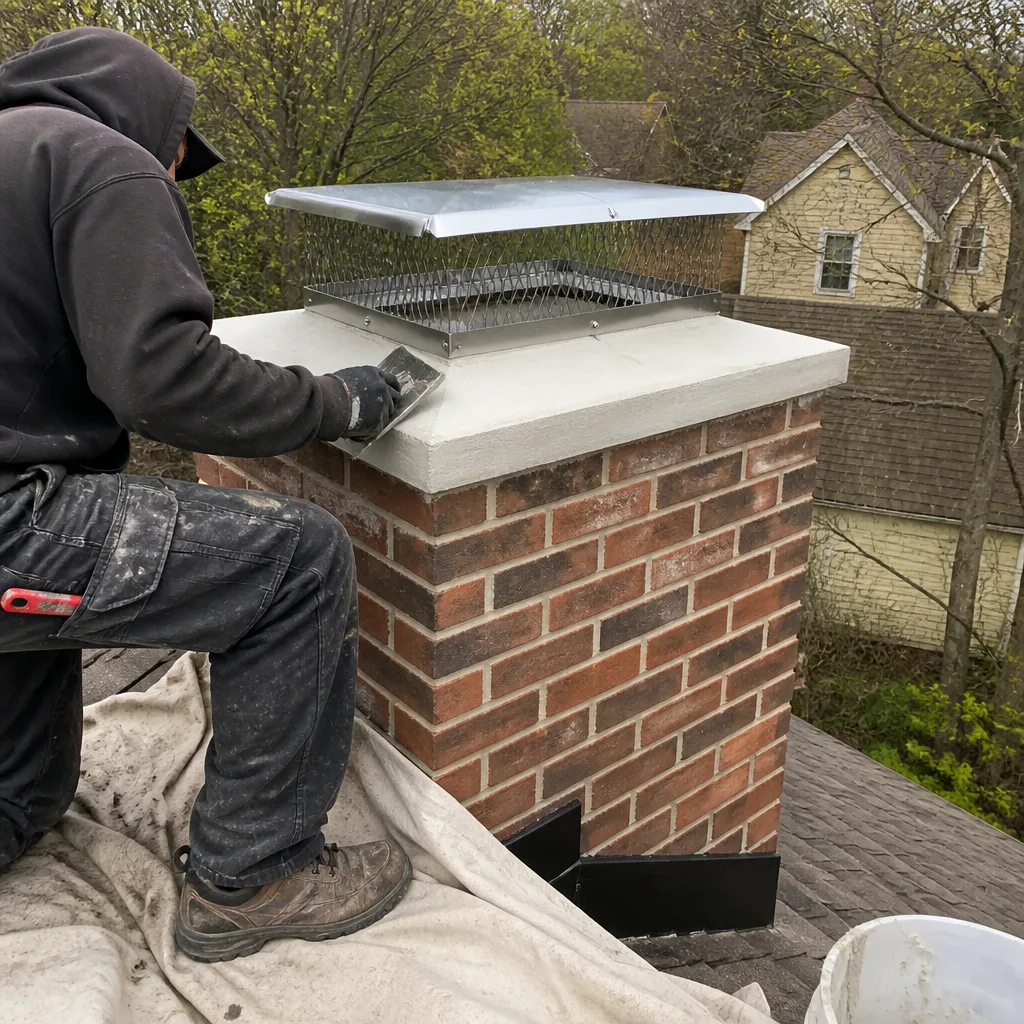 After
After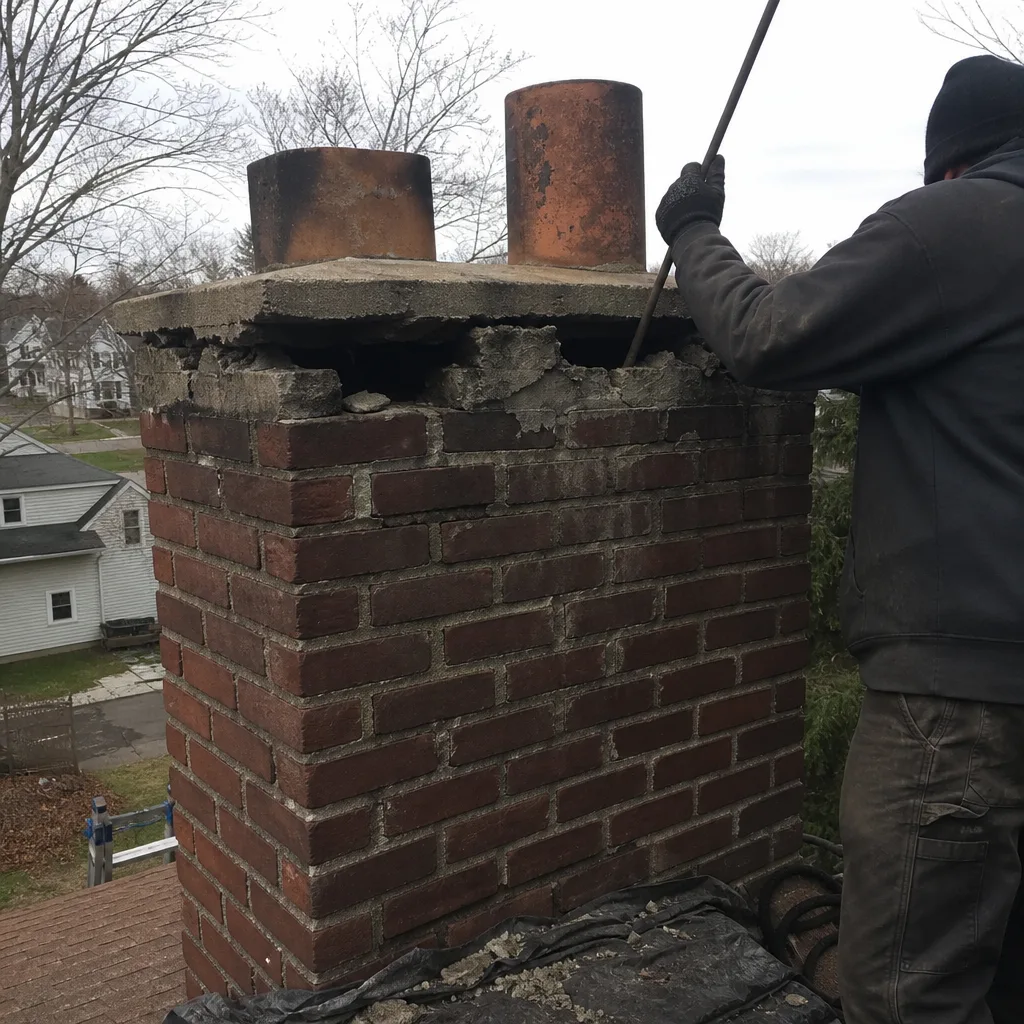 Before
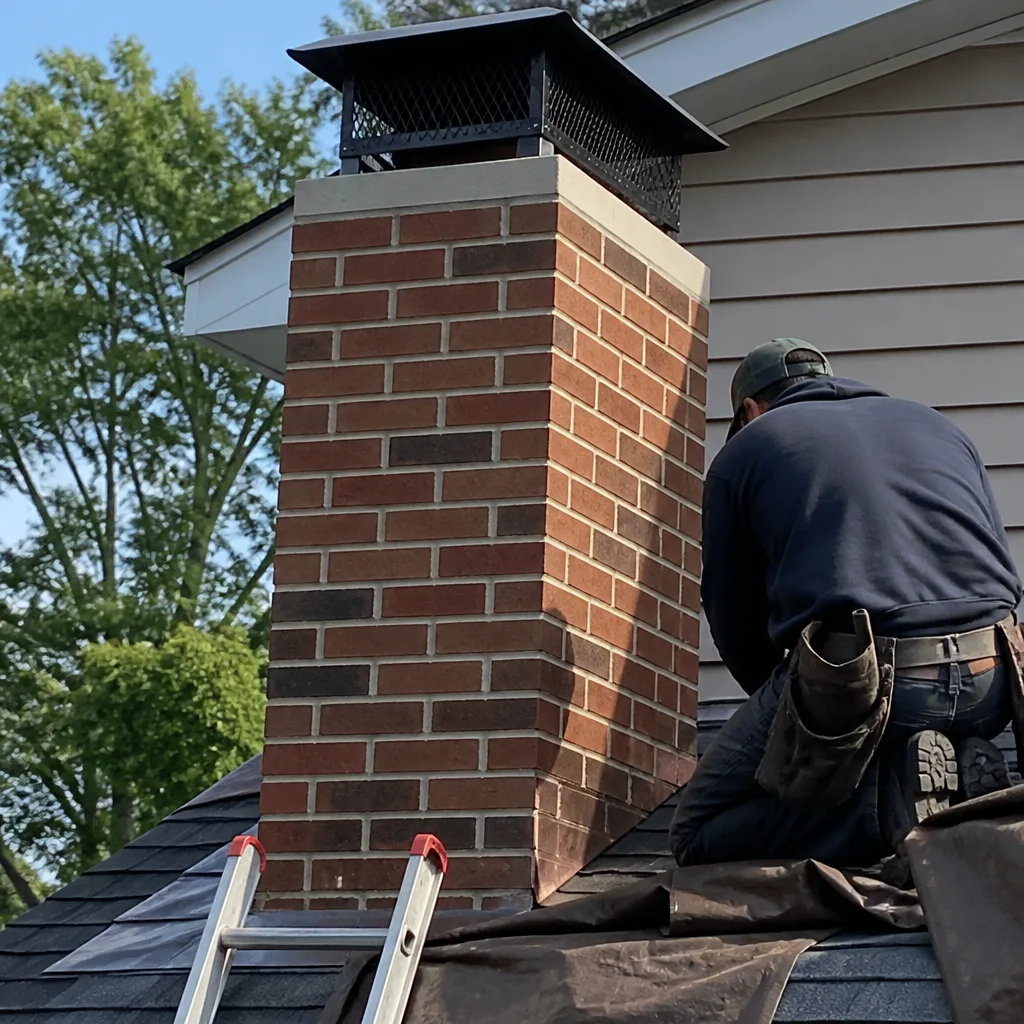 After
AfterSoot Removal in Bristol, CT
How Much Does Chimney Cleaning & Sweep Cost? (2026 Price Guide) - Bristol, CT: typically $120-$280, depending on how much has built up, how accessible the flue is, and whether the firebox needs attention alongside the liner. Most jobs are finished in a single visit, and Wendell carries everything on the truck to handle it start to finish. If you want a straight number before anyone shows up, call (860) 743-7743 – we’ll ask a few plain questions and give you a real price, not a teaser.
Soot is the soft, powdery black residue that forms every time wood or gas burns incompletely. It settles on flue walls, firebox bricks, damper plates, and smoke shelves, and it does two things you don’t want: it restricts airflow and it holds moisture against masonry. Left alone through a Bristol winter – and Bristol winters are damp enough that freeze-thaw cycles start in October and drag into April – that moisture works into mortar joints and accelerates spalling in ways you won’t see until the damage is already expensive.
This page is part of our full Chimney Cleaning & Sweep in Bristol service. Soot removal is usually the core task inside that visit, but it’s worth understanding what it is on its own so you know exactly what you’re getting and what it costs.
When You Need Soot Removal
Soot accumulates whether you burn every weekend or light the fireplace twice a season. Here are the clearest signs it’s time to call us.
- You can see a dark film on the firebox walls or the damper frame. A thin grey-black coating after a few fires is normal. A thick, oily layer that smears when you touch it is a different story – that’s soot mixing with early-stage creosote, and it needs to come out before it bakes on.
- There’s a persistent smoky smell in the house, even days after a fire. In Bristol’s older neighborhoods – Forestville, Edgewood, the streets around Lake Compounce – we see this frequently in cape-style homes where the flue runs through an interior wall and soot odors migrate through small gaps in the masonry when humidity rises.
- You’re getting smoke rollback into the room. Heavy soot deposits narrow the effective flue diameter. Your fireplace was built with a specific throat opening and liner size for a reason; coating the walls cuts that cross-section and disrupts the draft before you’ve added a single log.
- It’s been more than a year since your last sweep, regardless of how much you burned. The National Fire Protection Association standard is clear on this: annual inspection, every year, burn or no burn. Chimneys collect soot and debris in the off-season – bird nests, windblown leaves, moisture damage – and you want that cleared before the first fire of the year, not after.
- You burned green wood or trash, or had a poorly adjusted gas appliance. Incomplete combustion produces soot faster than anything else. If you burned a cord of unseasoned oak last winter, there’s a good chance you have more buildup than you realize.
- Your home inspection flagged it, or you’re buying a house in Bristol with an existing fireplace. We offer free second opinions on any written estimate from another company – bring us the paperwork and we’ll tell you honestly what the flue actually needs.
Our Soot Removal Process
Wendell and his crew have been working Bristol chimneys since 1999. The process below is what happens on every soot removal call – no shortcuts because the job looks easy, no upsell because we found something to point at with a flashlight.
- Arrival, drop cloths, and a five-minute conversation. The sweep who shows up calls you with an arrival window and doesn’t show up in street clothes. Before any tool comes out, we cover the hearth and the floor around it – Wendell uses a combination of heavy canvas drop cloths and a commercial vacuum pre-seal around the firebox opening so fine soot particles don’t drift into the room. We’ll also ask when you last burned and what you burned, because that changes what we’re looking for.
- Top-down camera inspection first. We run a camera down the liner before we clean it, not after. This gives you an honest baseline – you can see the footage, and we give you a plain-English verdict on what’s there. Soot, first-degree creosote, masonry cracks, a damper that doesn’t seat properly – whatever’s present gets documented before we touch it. That footage is yours.
- Top-down brush work through the liner. For standard soot, Wendell uses Copperfield rod-and-brush systems – quality rods that don’t leave wire bristle fragments in the flue. We work the full length of the liner, including the smoke chamber and the area just above the damper where soot concentrates most heavily. The simultaneous HEPA vacuum at the firebox opening captures the material as it falls rather than letting it settle.
- Firebox, smoke shelf, and damper cleaning. The liner is only part of the picture. The smoke shelf – the horizontal ledge behind the damper – is a collection point for soot, debris, and moisture. We hand-clean it every time. The damper plate gets inspected for warping or corrosion while we’re in there. If we find something, we’ll show you before we say anything about cost.
- Containment cleanup and a final check. All debris goes into sealed bags off your property. Drop cloths come up clean. We run a quick post-clean visual with the camera if there’s any question about what’s left. The firebox should look noticeably cleaner – dark masonry from heat staining stays, but the soft soot layer comes off.
- Upfront written summary before we leave. You get a clear written note of what we found, what we did, and whether anything else needs attention. If we saw early creosote forming or a crack in the smoke chamber, we’ll say so – with a specific recommendation, not just a vague flag. Every job walks out covered by our 90-Day Done Right Promise: if the work isn’t right, one call brings us back at no additional cost. That’s in writing, on every invoice.
Soot Removal Pricing in Bristol
Soot removal in Bristol, CT costs between $120 and $280 for most residential jobs. That range is honest – here’s what moves the number.
| Scenario | Typical Range |
|---|---|
| Single-story home, light soot, accessible flue (standard firebox) | $120 – $160 |
| Two-story flue, moderate soot, firebox and smoke shelf included | $160 – $220 |
| Heavy accumulation, older masonry liner, or a second story with offsets | $220 – $280 |
| Gas fireplace or insert with soot buildup on the flue collar and liner | $140 – $200 |
| Add-on camera inspection (included in most visits, always disclosed upfront) | Included or $60-$80 if standalone |
A few things that affect where your job lands in that range:
- Flue length and configuration. A Cape-style home in Forestville with a short straight liner is faster to clean than a two-and-a-half story colonial off Stafford Avenue where the flue has an offset and runs through two floors of finished space.
- How long it’s been since the last cleaning. One season of moderate burning is very different from three or four seasons of heavy burning with green wood. We can often estimate which category you’re in based on a few questions over the phone.
- Whether soot has started transitioning to creosote. Soot is soft and brushes out easily. First-degree creosote is still manageable with standard brush work. Second- or third-degree creosote is a different job with different chemistry – we’ll tell you clearly which one you have before we price it.
- No trip charge inside the county. We don’t bill a separate fee to get to your door if you’re in our service area.
If you’re a senior or a veteran, take 10% off every time – no paperwork, just mention it when you call. If soot removal leads to a repair over $200, the $40 repair discount applies automatically.
Estimates are free. Call (860) 743-7743 and you’ll get a real number before we schedule anything.
What Makes Bristol Chimneys Specific
Bristol sits in Hartford County at an elevation that catches more freeze-thaw cycling than folks in the valley towns further south. From Chippens Hill down toward the Route 6 corridor, you’ll find a mix of mid-century colonials with terra cotta tile liners, older bungalows near the downtown with unlined masonry flues, and newer construction with stainless steel inserts. Each of those liner types holds soot differently and requires a slightly different approach.
Terra cotta tile liners, which are common in Bristol homes built between 1940 and 1980, are prone to cracking at tile joints as they age. Soot accumulates in those cracks and can mask the damage underneath. That’s one reason we camera-inspect before we clean – so we’re not just removing soot but actually reading the flue wall behind it. If we find a compromised liner, we work with HeatShield or DuraFlex products depending on what the damage profile calls for. Those aren’t upsells we push at every job; they’re fixes we recommend when the footage shows they’re actually needed.
Bristol’s wood-burning culture also tends toward mixed loads – hardwood, some softwood, the occasional pallet scrap – and that produces more soot per cord than a clean seasoned hardwood burn. We see it in the deposits. Forestville in particular has a lot of older full-cord stoves and wood inserts that run hard from November through March, and the soot accumulation at the end of a Bristol heating season in those homes is substantial.
Soot vs. Creosote: Know the Difference Before You Call
Soot and creosote are related but not the same, and the distinction matters for both safety and cost.
Soot is the soft, dry, powdery carbon residue that forms from any combustion. It brushes off easily, is not particularly flammable on its own, and is the primary target of a standard Annual Sweep.
First-degree creosote is a slightly denser, flakier deposit – still mostly dry, still removable with standard brush work. You get this when fires burn a bit cooler or wood is slightly green. It’s still a brush job.
Second and third-degree creosote are a different matter entirely. Second-degree looks like dry, crunchy tar scales. Third-degree is a shiny, glazed coating that has essentially baked onto the liner wall. Third-degree is highly flammable – a chimney fire in a liner with third-degree creosote burns at temperatures that can crack terra cotta and warp steel. This is not a DIY situation. Removal requires chemical treatment and specialized equipment, and we’ll be direct with you if that’s what we find rather than quoting you a standard sweep price and hoping you don’t notice the difference.
If you’re not sure which category your flue falls into, the camera footage we show you at the start of every visit will make it obvious.
Key Takeaways
- Soot removal in Bristol runs $120-$280 for most homes; you get an exact number before we start.
- Annual cleaning applies whether you burned heavily or barely at all – soot and debris accumulate regardless.
- Bristol’s damp, freeze-thaw winters mean soot-trapped moisture attacks mortar joints faster than in drier climates.
- We camera-inspect before cleaning so you see the flue condition, not just our word for it.
- Soot is a brush job. Third-degree creosote is not. We’ll tell you which one you have.
- Every job is backed by the 90-Day Done Right Promise – in writing, no exceptions.
- Seniors and veterans get 10% off, always. No trip charge inside the county.
FAQs – Soot Removal in Bristol, CT
How much does soot removal cost in Bristol, CT?
Soot removal in Bristol typically costs between $120 and $280, depending on flue length, how much has accumulated, and whether the firebox and smoke shelf need attention alongside the liner. A single-story home with light buildup usually lands at the lower end. We give you the exact price before we start – call (860) 743-7743 and we’ll work through it with you in about five minutes.
How often should I have soot removed from my chimney?
Once a year is the standard, and it applies whether you burned every week or just a few times. The NFPA recommends annual inspection and cleaning for all chimneys, and Bristol’s moisture-heavy shoulder seasons make that even more relevant – soot holds water against your masonry, and freeze-thaw damage accumulates quietly over months you’re not using the fireplace at all. If you’re searching for Chimney Cleaning & Sweep Near Me in Bristol, CT, this local climate context is why timing matters.
Is soot removal something I can do myself?
The firebox face and the immediate area around the damper are things a homeowner can wipe down safely. The flue liner is a different question. Getting meaningful soot out of the liner requires brush rods long enough to reach the full depth, a HEPA vacuum system to capture airborne particles, and a way to inspect the liner wall before and after. Without that, you’re more likely to redistribute soot into the room than actually remove it. For anything beyond surface cleanup of the firebox, a professional visit is worth it – and a year’s worth of soot in a Bristol flue isn’t a job where guessing at the result is a good idea.
Can soot cause a chimney fire?
Soot itself is not highly flammable the way creosote is, but heavy soot deposits restrict airflow and drive up flue temperatures, which accelerates creosote formation in the liner. Over time, the distinction between soot and first-degree creosote blurs, and that transition toward more flammable deposits is where chimney fire risk climbs. Catching it at the soot stage – before creosote glazes onto the liner wall – is exactly what annual cleaning is for. Call (860) 743-7743 if you’re not sure what stage your flue is at; the camera footage will answer that question clearly.
Schedule Your Soot Removal in Bristol
Chimney Cleaning & Sweep services from Top Hat Chimney have been keeping Bristol flues safe since 1999, and Wendell Pike puts his name on every job that goes out the door. If you want a straight answer on what your chimney needs and what it’ll cost, call (860) 743-7743. A live person picks up around the clock – no voicemail box, no call center routing. Give us your address and a few details about the fireplace, and we’ll give you a real price before anyone sets foot in your house. Free estimate, no trip charge inside the county, and the 90-Day Done Right Promise on every invoice. That’s how we’ve kept our name worth something in this town for over two decades.
You can also learn more about what a full annual visit includes on our home page, or read through the complete details of our Chimney Cleaning & Sweep in Bristol service.
Written by Wendell Pike, Owner at Top Hat Chimney, serving Bristol since 1999.