
Level 1 sweep and inspection to the NFPA 211 annual standard - flue, crown, cap, and flashing checked and photographed
Chimney sweep logs do not sweep chimneys. They loosen some creosote - which then falls where a brush and vacuum still have to collect it.
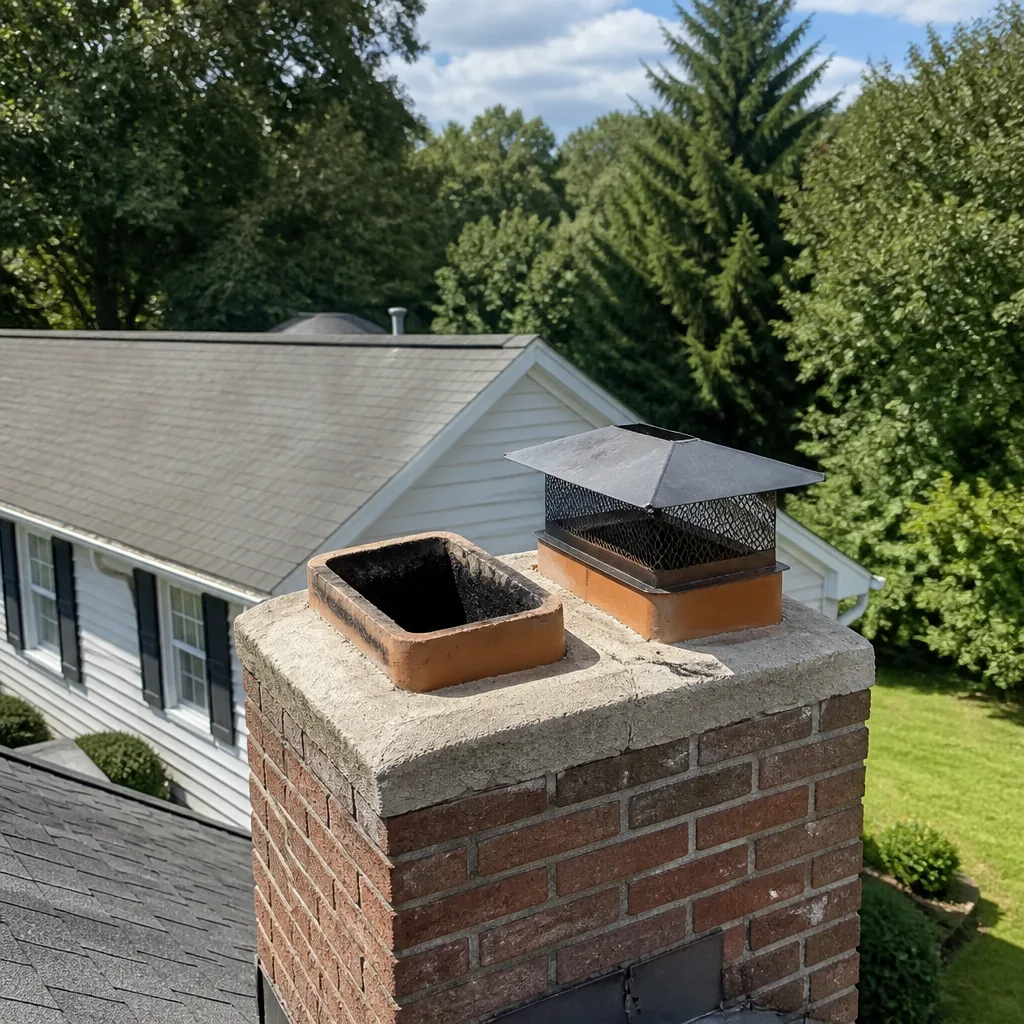
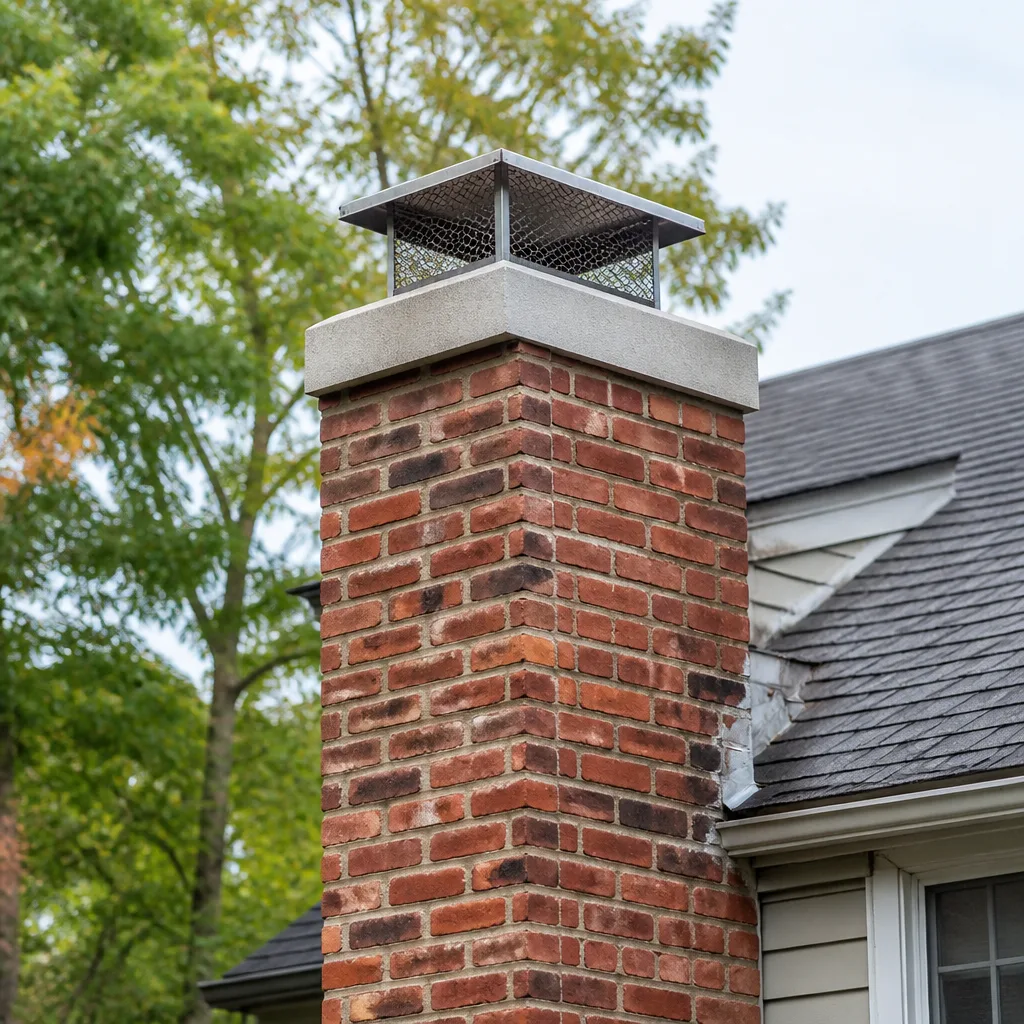
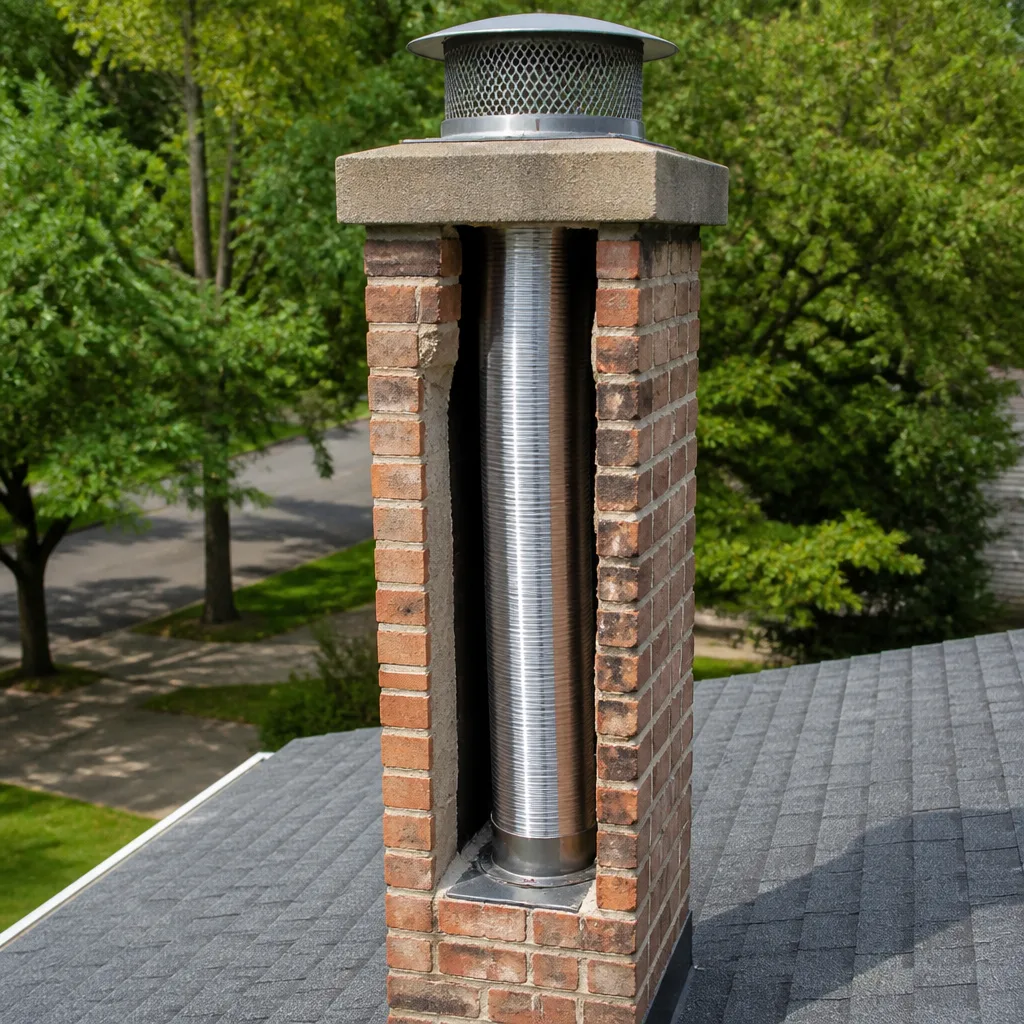
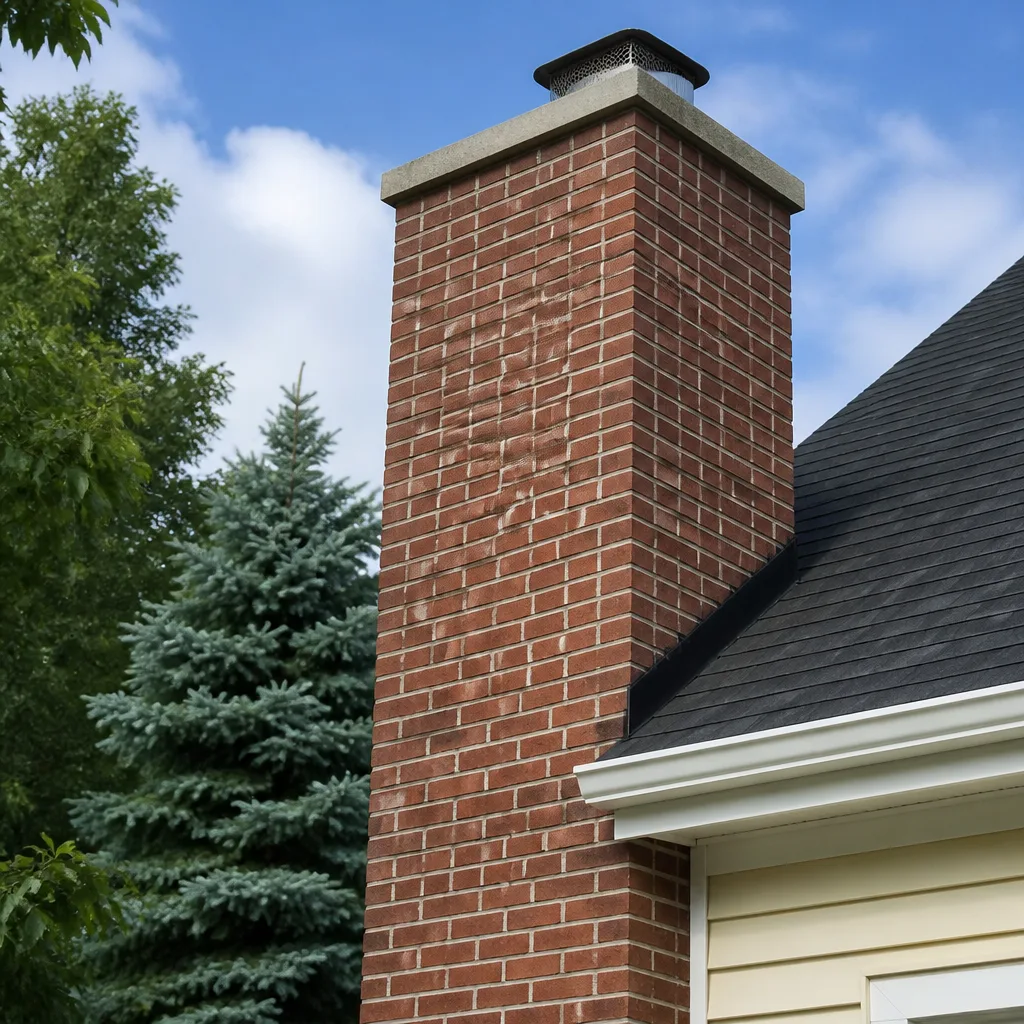
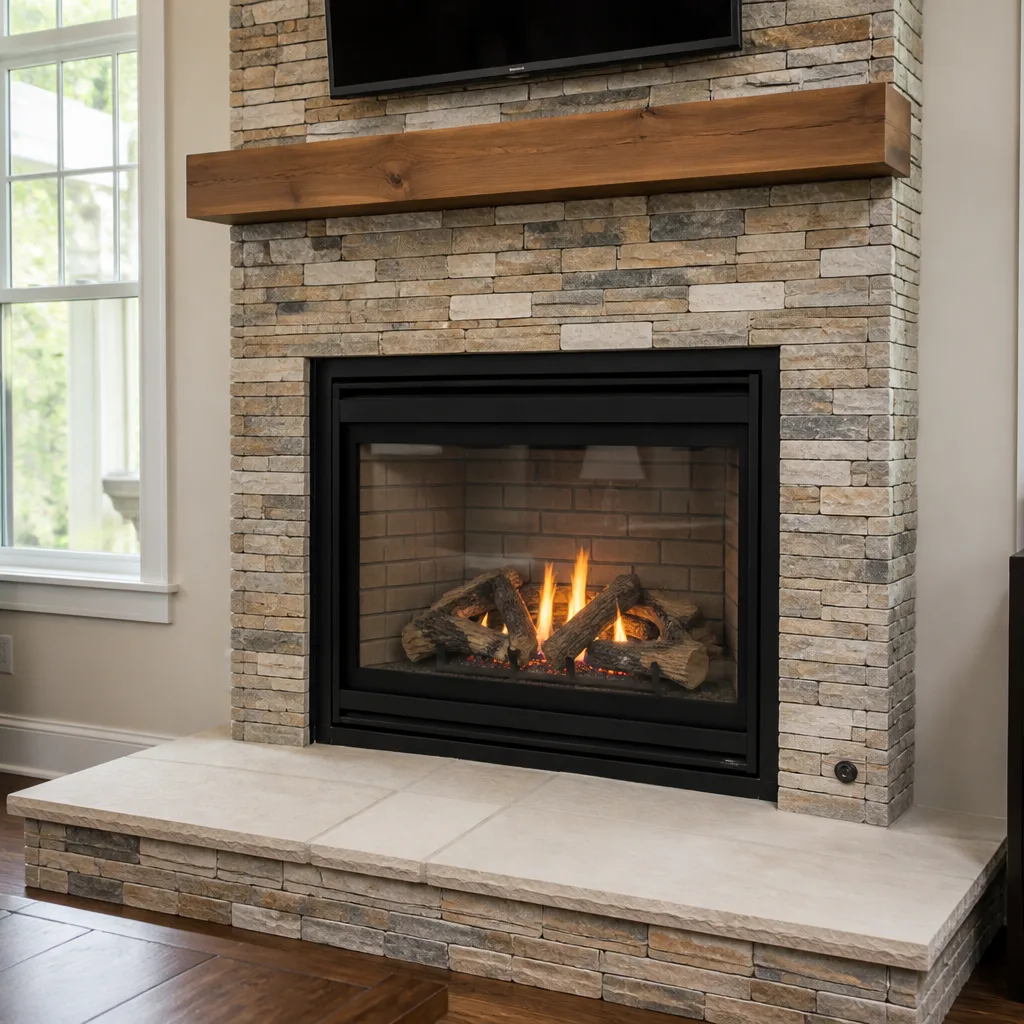
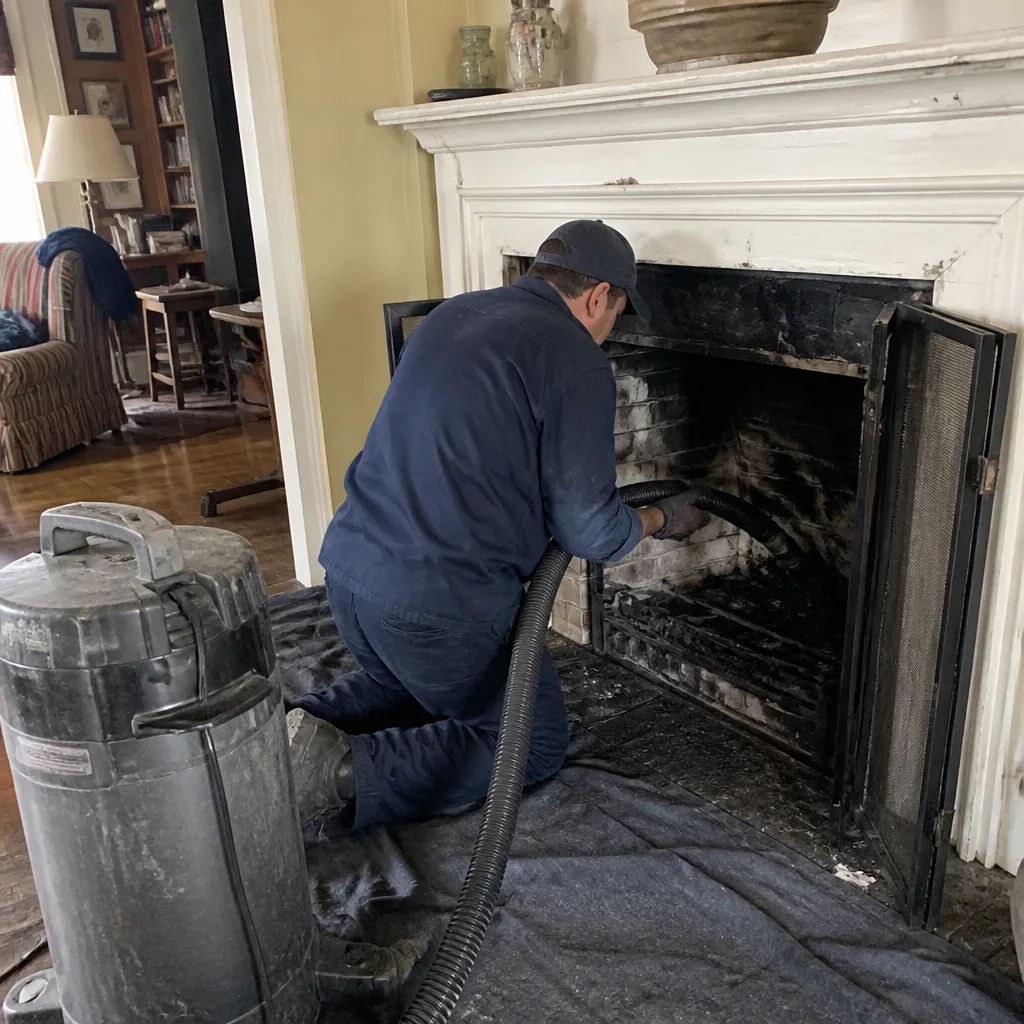 Before
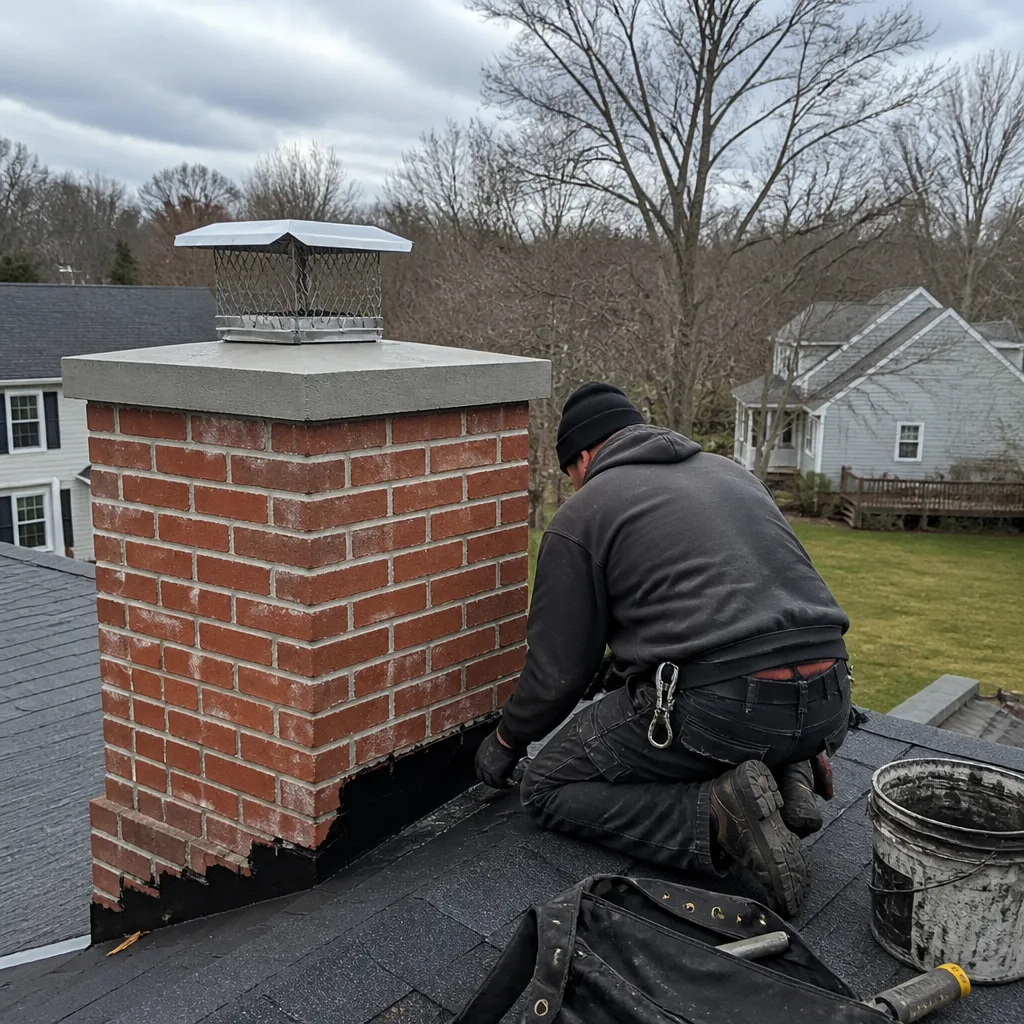 After
After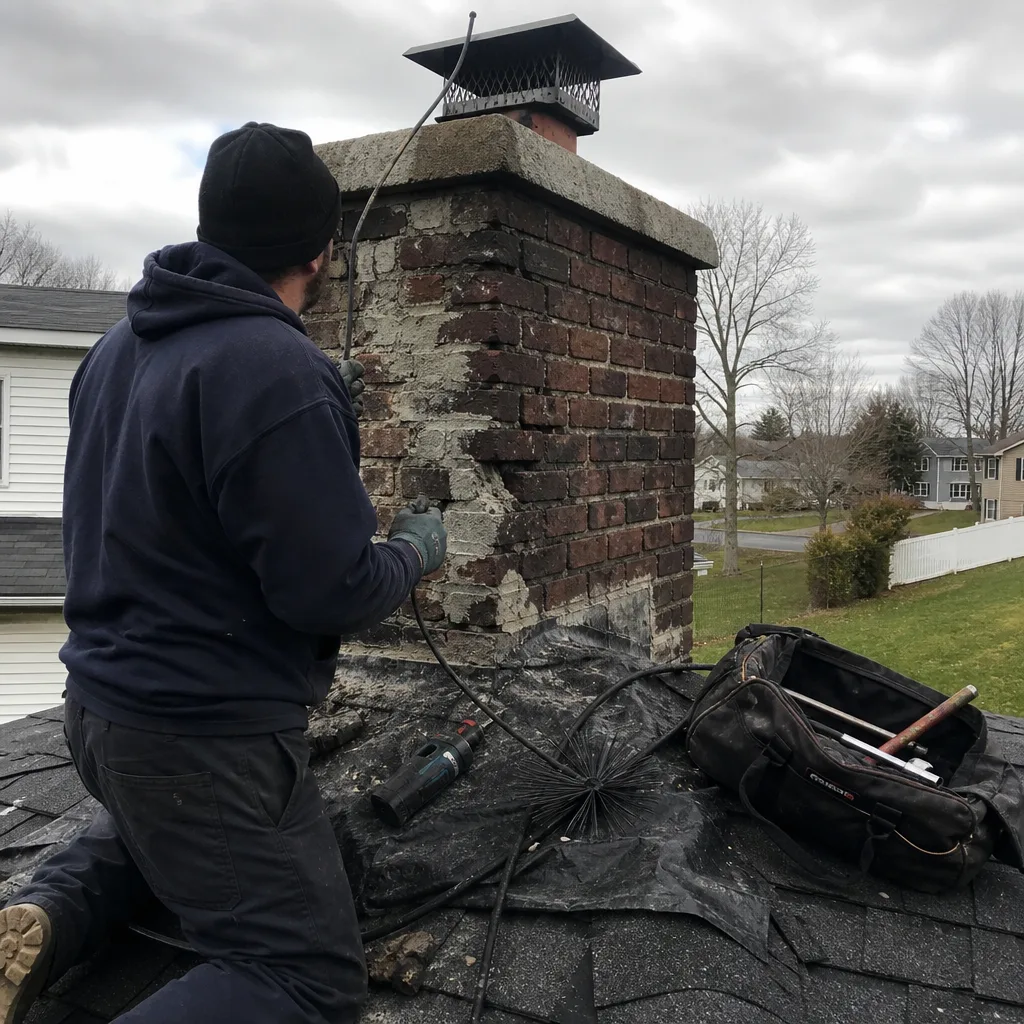 Before
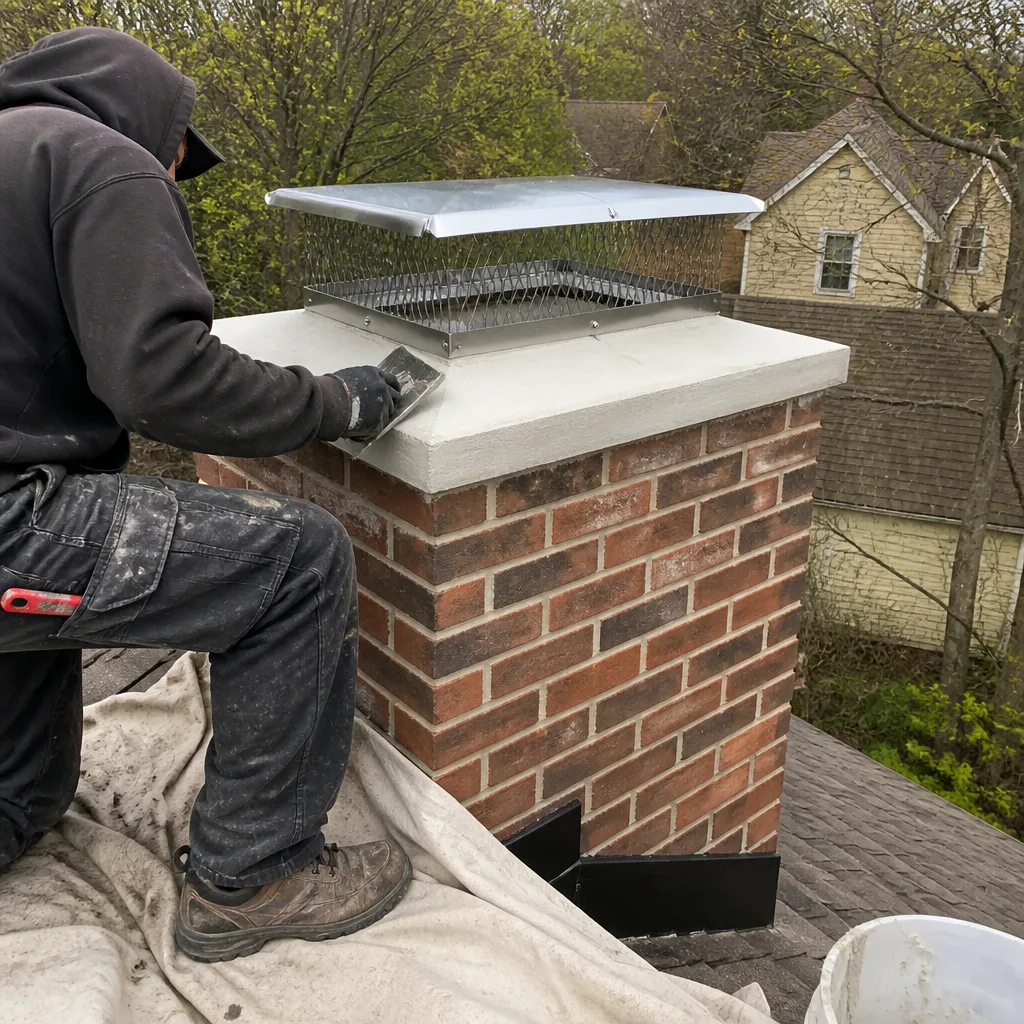 After
After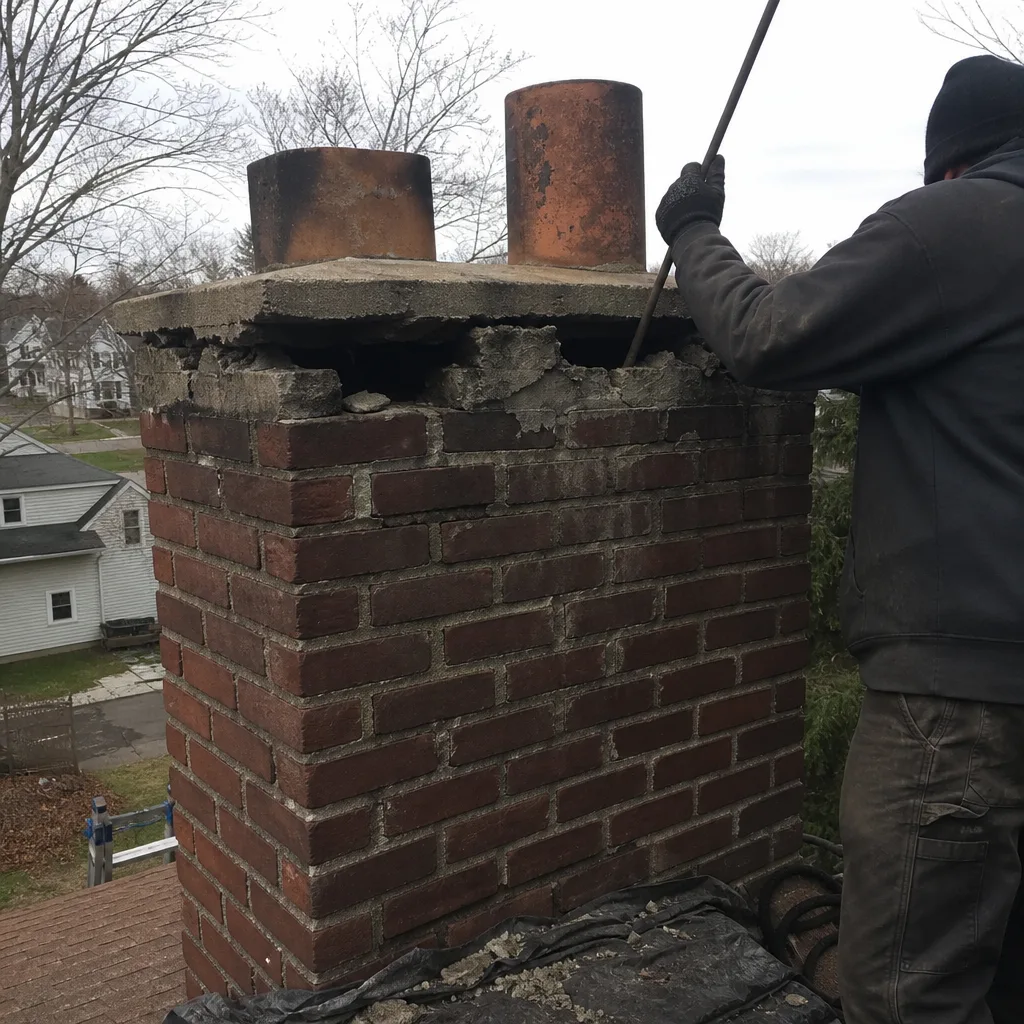 Before
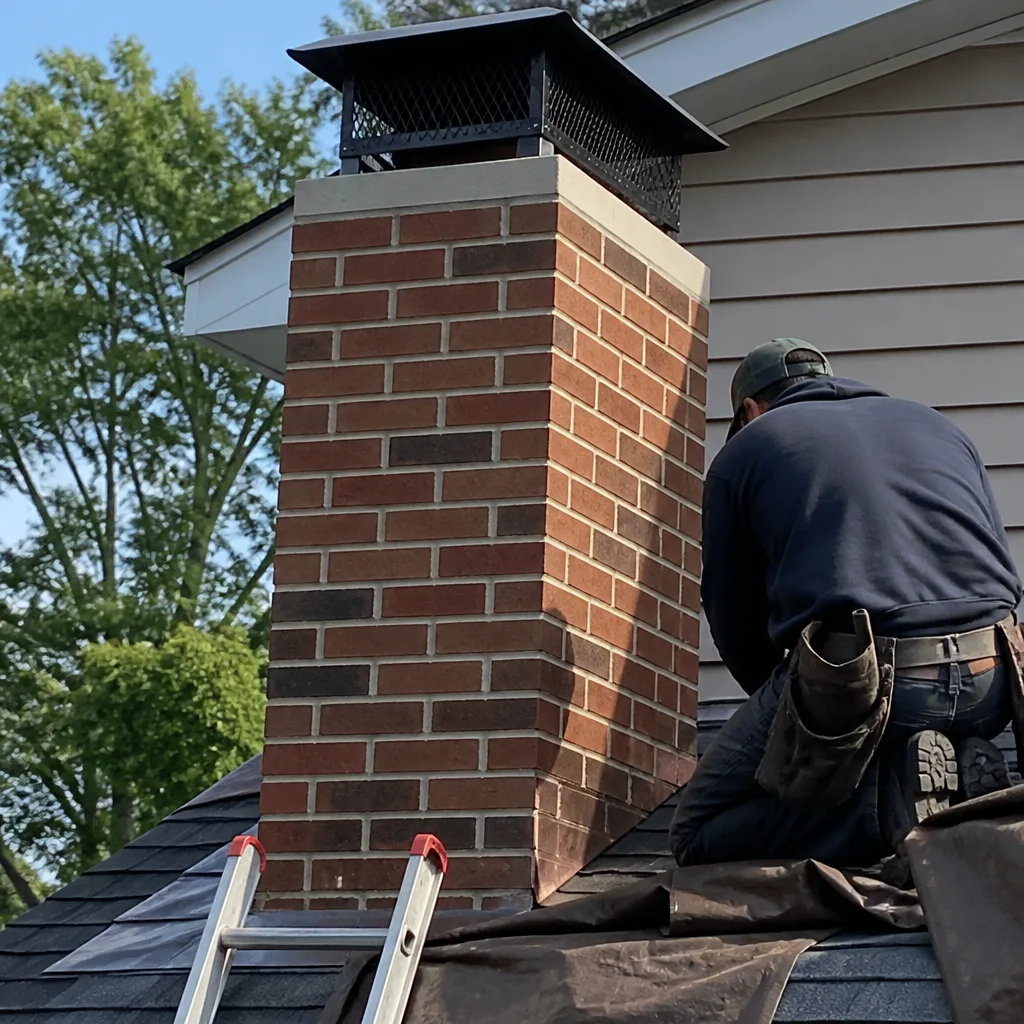 After
AfterSpalling Brick Repair in Bristol, CT
Spalling brick repair in Bristol typically runs between $300 and $1,800 depending on how much of the chimney face is affected, and in most cases we can get out to you within a few days. Left alone, spalling bricks don’t stabilize on their own – the freeze-thaw cycle that cracked the surface last winter will push deeper this winter, and what’s a cosmetic problem today becomes a structural one by spring.
If you’ve noticed chunks of brick on your patio, red powder collecting at the chimney base, or chunks of mortar dusting off the face of your chimney, you’re already past the early warning stage. That’s not a reason to panic, but it is a reason to call. Bristol’s winters aren’t gentle – we average around 45 freeze-thaw cycles a year, and every one of those cycles works water a little deeper into any crack that’s already there.
Wendell Pike has been repairing chimneys in Bristol and the surrounding communities since 1999. If you call (860) 743-7743 right now, a live person will pick up – not a voicemail, not a call center – and we’ll get you a straight answer about what you’re looking at. For a broader look at everything we handle on chimneys, visit our Chimney Repair in Bristol page.
When You Need Spalling Brick Repair
Spalling shows up in different ways, and not all of them are obvious from the ground. Here’s what tends to send Bristol homeowners our way:
- Red or orange dust and grit collecting at the chimney base. This is pulverized brick face – the outermost fired layer of your brick is literally falling off. Once the protective face is gone, the softer interior absorbs water like a sponge.
- Flat flakes or chunks of brick on the roof or patio. A few pieces after a hard winter might look minor. But each missing chunk leaves a raw, porous cavity that the next freeze will exploit. In Bristol’s older neighborhoods around Forestville and West End, we see this frequently on pre-1970s chimneys where the original brick is soft and the pointing has never been touched.
- Visible horizontal cracks running through the brick faces. These are classic freeze-thaw fractures. Water gets into a hairline crack, freezes overnight, expands, and the brick separates. The horizontal orientation usually means water is sitting on the brick rather than running off it – often a crown or cap problem working in combination.
- White staining (efflorescence) on the chimney face. The white powder itself isn’t the damage – it’s the evidence that water is moving through the masonry and depositing mineral salts as it evaporates. Where efflorescence shows up repeatedly in the same spots, spalling usually follows within a season or two.
- Mortar joints that crumble when you press them with a finger. Deteriorated mortar is often the first domino. Once the joint opens up, water gets behind the brick, and that’s where the spalling cycle starts. This is worth catching early – repointing before the brick spalls costs considerably less than replacing brick after it does.
- Interior water stains on the firebox back wall or the ceiling above the fireplace. Water that’s gotten through the chimney’s outer masonry doesn’t always run straight down the flue – it finds paths through cracked brick and can show up in places that seem unrelated to the chimney’s exterior.
Our Spalling Brick Repair Process
Every spalling repair starts with an honest look at what’s actually causing the problem, not just what’s visibly broken, which is why our Chimney Repair services always begin with full diagnostics. Replacing a spalled brick without addressing the water source that spalled it is the kind of repair that looks fine in April and fails again by December. Here’s how we work through it:
- Visual inspection and moisture assessment. Wendell or one of his crew walks the chimney from base to crown – ground level, roof level, and in some cases a close camera look at the flue – to find every area of active spalling, every open joint, and every spot where water is getting in. We check the cap, the crown, the flashing, and the brick face together, because spalling rarely has just one cause.
- Upfront pricing before any work begins. Once we’ve seen the chimney, we give you a number. Not a range with an asterisk, not a starting price that climbs once the truck is in your driveway. The number you hear is the number on the invoice. If the scope changes because we find something unexpected once we’re up close, we tell you before we act on it.
- Removal of damaged brick and mortar. Spalled brick that’s lost structural integrity has to come out. We cut away only what’s actually compromised – we’re not looking for reasons to do more work. Mortar is ground or chipped out of the surrounding joints to give the new material a clean, solid seat.
- Replacement with matched brick and proper repointing. Bristol chimneys span about a hundred years of brick styles, and getting a close match matters – both for appearance and for performance, since mixing significantly different brick types can create new stress points. New mortar is mixed to match the existing joint profile (not just color) and tooled to shed water rather than collect it. Where we use specialty repair materials, we work with products from Copperfield and HeatShield that are formulated for the temperature cycling a chimney goes through.
- Crown and cap inspection and repair if needed. Most spalling we see in Bristol has a water intrusion point higher up on the chimney that started the whole process. We don’t just fix the brick and leave the crown cracked. If the crown needs patching or the cap needs replacing, we handle that in the same visit so you’re not calling us back in six months.
- Water repellent application. After the repair has cured, we apply a breathable masonry water repellent to the repaired area and, where appropriate, the full chimney face. Breathable is the key word – a product that traps moisture inside the brick is worse than nothing. The repellents we use allow vapor out while stopping liquid water from getting in, which is what keeps the freeze-thaw cycle from restarting.
Spalling Brick Repair Pricing in Bristol
Spalling brick repair in Bristol runs $300 to $1,800 for most residential chimneys, with the majority of jobs landing in the $400 to $900 range. For a detailed breakdown, see How Much Does Chimney Repair Cost? (2026 Price Guide) - Bristol, CT. Here’s what drives the number:
| Scope of Work | Typical Range |
|---|---|
| Minor spalling – 5 to 10 bricks, single face | $300 – $500 |
| Moderate spalling – up to 20 bricks, one or two faces, repointing included | $500 – $900 |
| Significant spalling – multiple faces or chimney height requiring full staging | $900 – $1,800 |
| Crown repair or cap replacement added to spalling repair | +$150 – $400 |
| Water repellent application (full chimney face) | +$100 – $200 |
A few things that move the number up: chimney height (taller chimneys need more setup time and sometimes scaffolding), how many faces are affected, and whether the source of water intrusion is something that needs to be fixed alongside the brick itself. A chimney where the crown is also cracked will cost more to fix right than one where the crown is solid and only a few bricks have let go.
What doesn’t change the number: our pricing doesn’t shift between the phone call and the job. If you get a written estimate from another company and want a second look, that’s free – bring the paper and we’ll tell you exactly what we think. And if your repair comes in over $200 (which almost all spalling repairs do), take $40 off with our standing repair discount. Seniors and veterans always get 10% off the total.
Call (860) 743-7743 for a free estimate. There’s no trip charge for Bristol homes.
Why Bristol Chimneys Spall the Way They Do
Bristol sits at about 350 feet elevation in Hartford County, which puts it right in the path of the weather systems that come off the Farmington Valley in winter. The combination of cold temperatures, frequent thaw cycles, and wet winters makes masonry chimneys here more vulnerable than in parts of Connecticut that get milder or drier winters.
Older sections of Bristol – the neighborhoods around Forestville, the streets near Muzzy Field, and the denser residential blocks closer to downtown – have a lot of chimneys that predate modern water management details. Original construction often used softer brick and lime-based mortars that performed well for decades but are now at the age where they need real attention, not cosmetic patchwork-exactly the kind of work Mortar Repointing addresses.
We also see a pattern specific to Bristol: chimneys on the north-facing walls of two-story colonials that don’t get enough sun exposure to dry out between rainstorms. North-face chimneys in Bristol can hold moisture for weeks at a time in a wet fall, and by the time the first hard freeze hits, that moisture is already well inside the masonry. That’s the kind of thing Wendell notices on a job because he’s been doing this in these specific towns since 1999 – it’s not something that shows up in a general chimney repair manual.
All of this is also part of why we inspect the whole chimney when we come out for spalling, not just the sections that look bad from the ground. Sometimes the spalling you can see from the driveway is the least of it.
What Happens If You Wait
We don’t push work that doesn’t need doing. Wendell will tell you to his face if what you’ve got is something to watch rather than something to fix right now. But spalling is one of the cases where waiting genuinely costs money, and here’s the plain reason why:
Once the fired face of a brick is gone, the inner material absorbs water at a much higher rate. Every subsequent freeze-thaw cycle pulls more material out. A repair that involves replacing 8 to 10 bricks this fall might involve 25 to 30 bricks by next fall if the source of water isn’t addressed. Beyond brick count, there’s the structural question: when enough bricks in the upper sections of a chimney have spalled and the surrounding mortar has deteriorated, the chimney stack can begin to lean. At that point you’re not talking about a repair – you’re talking about a partial or full rebuild, which is a fundamentally different cost conversation.
For more detail on the full range of structural chimney issues and how we handle them, the home page has a complete overview of our services.
The 90-Day Done Right Promise
Every spalling brick repair Wendell and his crew complete is backed by the 90-Day Done Right Promise, in writing, on every job. If something we repaired isn’t right – mortar that didn’t hold, brick that shifted, flashing that’s still leaking – one call brings us back and we fix it. No second invoice, no negotiation. The promise is on the paperwork before we start.
This matters specifically for spalling repairs because the real test isn’t when the mortar dries – it’s when the first hard freeze hits. We’ve been around in Bristol long enough that we’d rather stand behind the work than explain ourselves later. And since Wendell is locally owned and picks up his own phone, “later” isn’t a phone tree and a case number – it’s a real conversation with the person who did the job.
FAQs – Spalling Brick Repair
What causes bricks to spall on a chimney?
Spalling is almost always caused by water getting into the brick and then freezing. When water freezes, it expands – and that expansion force is enough to crack brick from the inside, popping off the outer face. The water usually gets in through cracked mortar joints, a deteriorated chimney crown, missing or failed flashing, or a cap that doesn’t properly cover the flue opening. In Bristol, the freeze-thaw cycle is aggressive enough that even small amounts of moisture in the masonry can cause visible spalling within a single winter. Fixing the brick without finding and closing the water source means the same problem is back in 12 to 18 months. Call (860) 743-7743 and we’ll look at both.
Can I repair spalling bricks myself?
Small, isolated spalling on lower sections of the chimney that you can safely reach without getting on the roof is something a careful homeowner can address with the right materials. Matching the brick and mixing the mortar to the right consistency takes some attention, but it’s doable. What we’d caution against is getting on the roof or working on upper chimney sections – a chimney cap is typically 15 to 25 feet off the ground in a two-story Bristol colonial, and that’s a serious fall hazard. We’d also caution against patching over spalling without diagnosing the water source, because that’s how you end up paying for the same repair twice. If you want a second opinion on whether your situation is a reasonable DIY job or something better left to a sweep, call (860) 743-7743 – that conversation is free.
How long does spalling brick repair last?
A properly executed spalling repair – matched brick, correctly mixed mortar, water source addressed, and breathable water repellent applied – should last 15 to 25 years or more, depending on the chimney’s exposure and how the rest of the masonry holds up over time. The repairs that fail in two or three years are almost always ones where the water source wasn’t closed, the mortar mix was wrong (too hard a mortar on older, softer brick is a common mistake), or a breathable sealer wasn’t used. Our work is backed by the 90-Day Done Right Promise, and we’ll tell you if your chimney is the kind that needs more frequent monitoring going forward.
How much does spalling brick repair cost in Bristol, CT?
Most spalling brick repairs in Bristol run between $400 and $900 for moderate work involving up to 20 bricks and repointing of surrounding joints. Minor repairs involving only a handful of bricks on a single face can come in around $300 to $500. More significant damage across multiple faces of a taller chimney, or repairs that need to include crown work or flashing, can reach $1,400 to $1,800. The estimate is free, the pricing is given before anything starts, and there’s no trip charge for Bristol. Call (860) 743-7743 and we’ll give you a straight number.
Get a Free Estimate for Spalling Brick Repair in Bristol
If you’re seeing brick dust, loose chunks, or white staining on your chimney, don’t wait for next winter to confirm what’s already happening. Call Top Hat Chimney at (860) 743-7743 and a live person will pick up – day or night. We’ll schedule a look at the chimney, give you an honest assessment of what you’re dealing with, and quote you a firm price before we pick up a single tool.
Wendell Pike has been working chimneys in Bristol since 1999. The number you hear on the phone is the number on the invoice. The 90-Day Done Right Promise is on the paperwork before we start. And if you’ve got a competing written estimate you’re not sure about, bring it – the second opinion is free.
Written by Wendell Pike, Owner at Top Hat Chimney, serving Bristol since 1999.