
Last updated September 10, 2026
Level 1 sweep and inspection to the NFPA 211 annual standard - flue, crown, cap, and flashing checked and photographed
Chimney sweep logs do not sweep chimneys. They loosen some creosote - which then falls where a brush and vacuum still have to collect it.
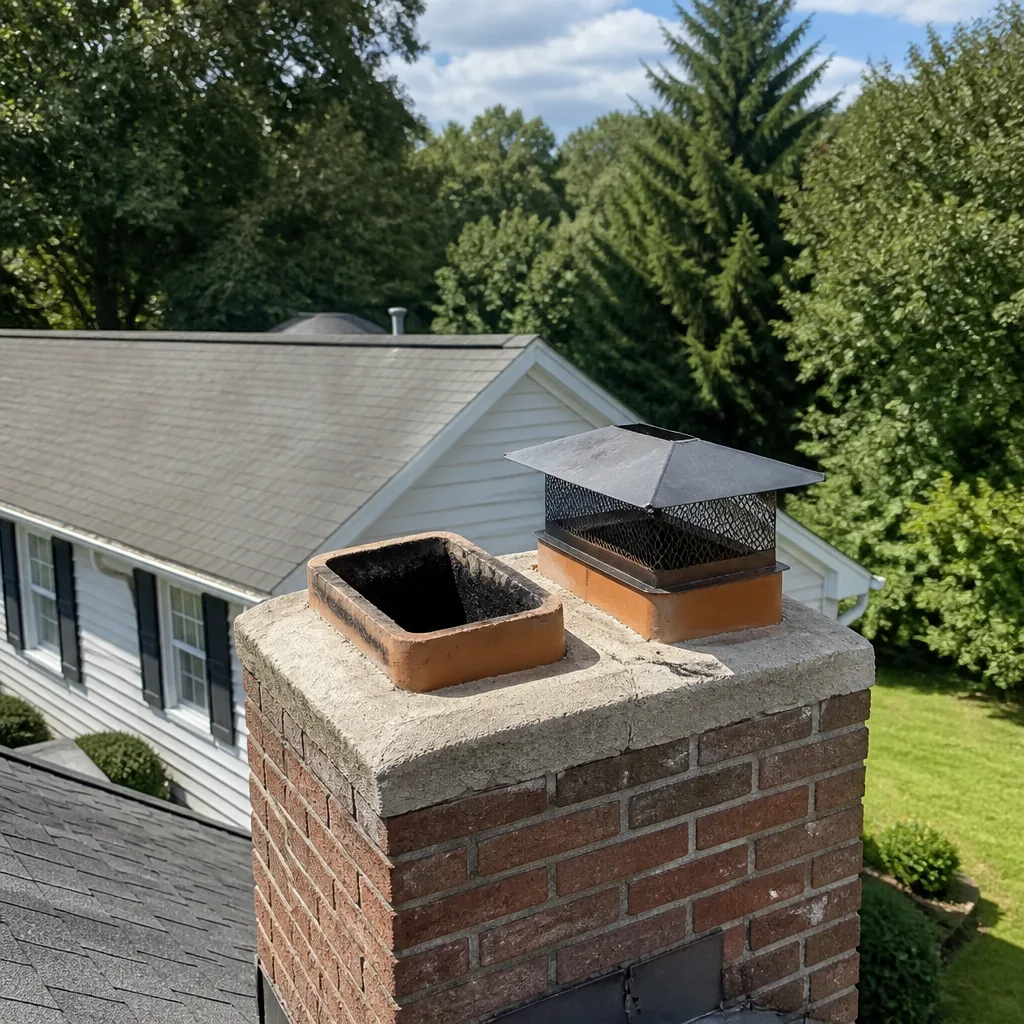
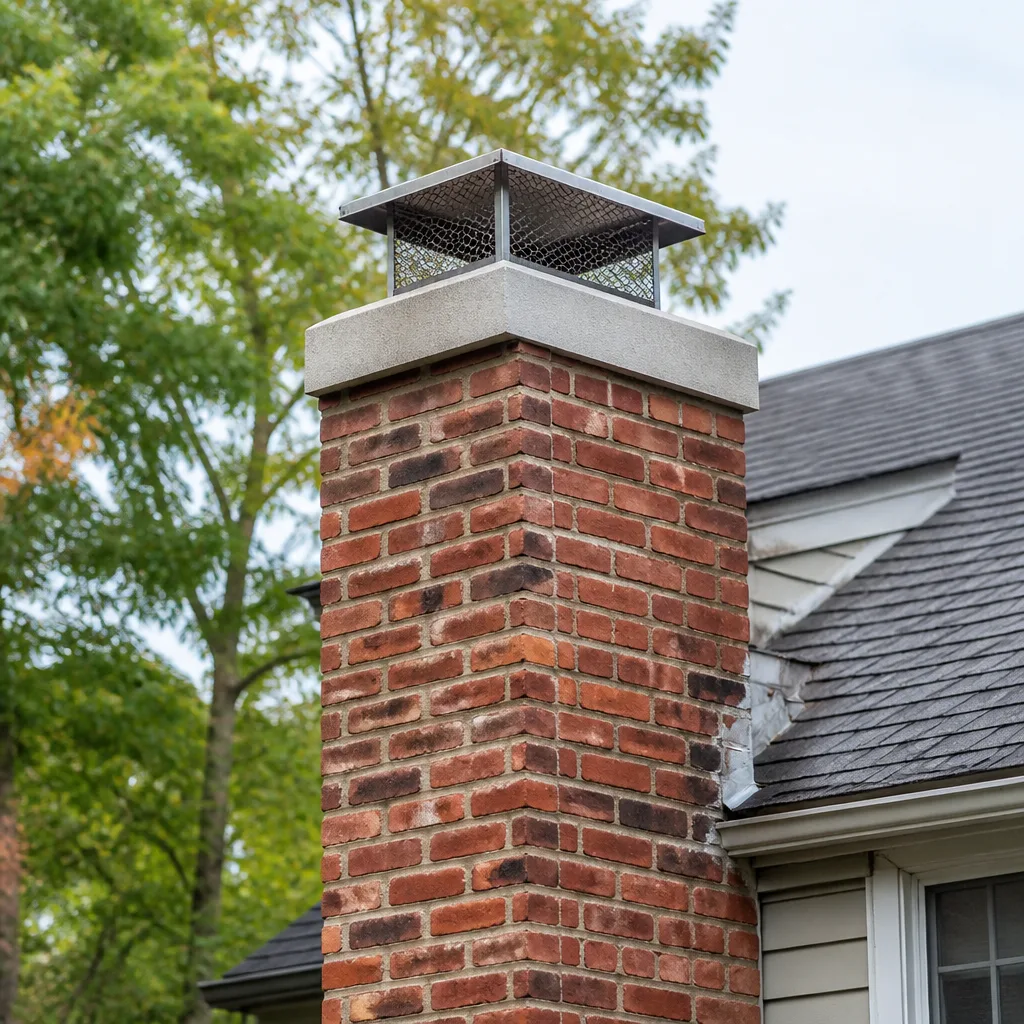
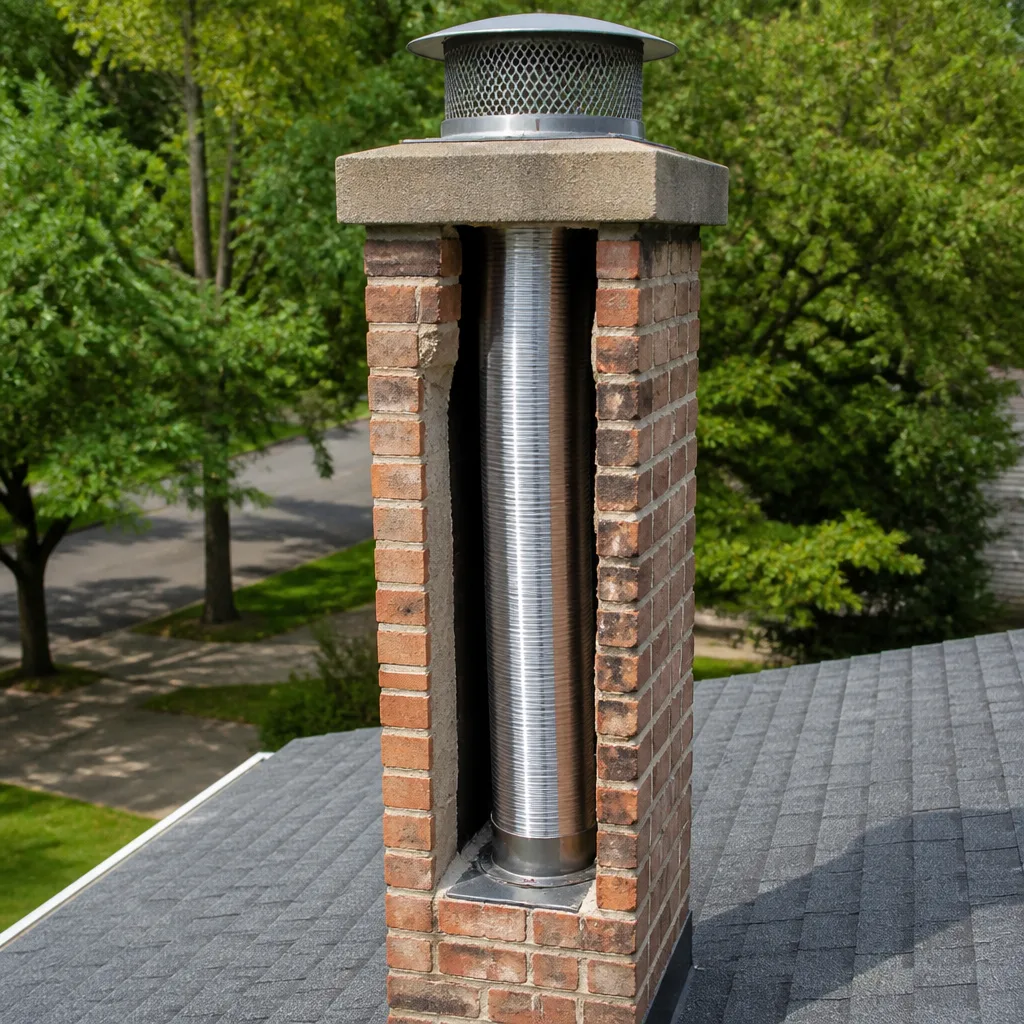
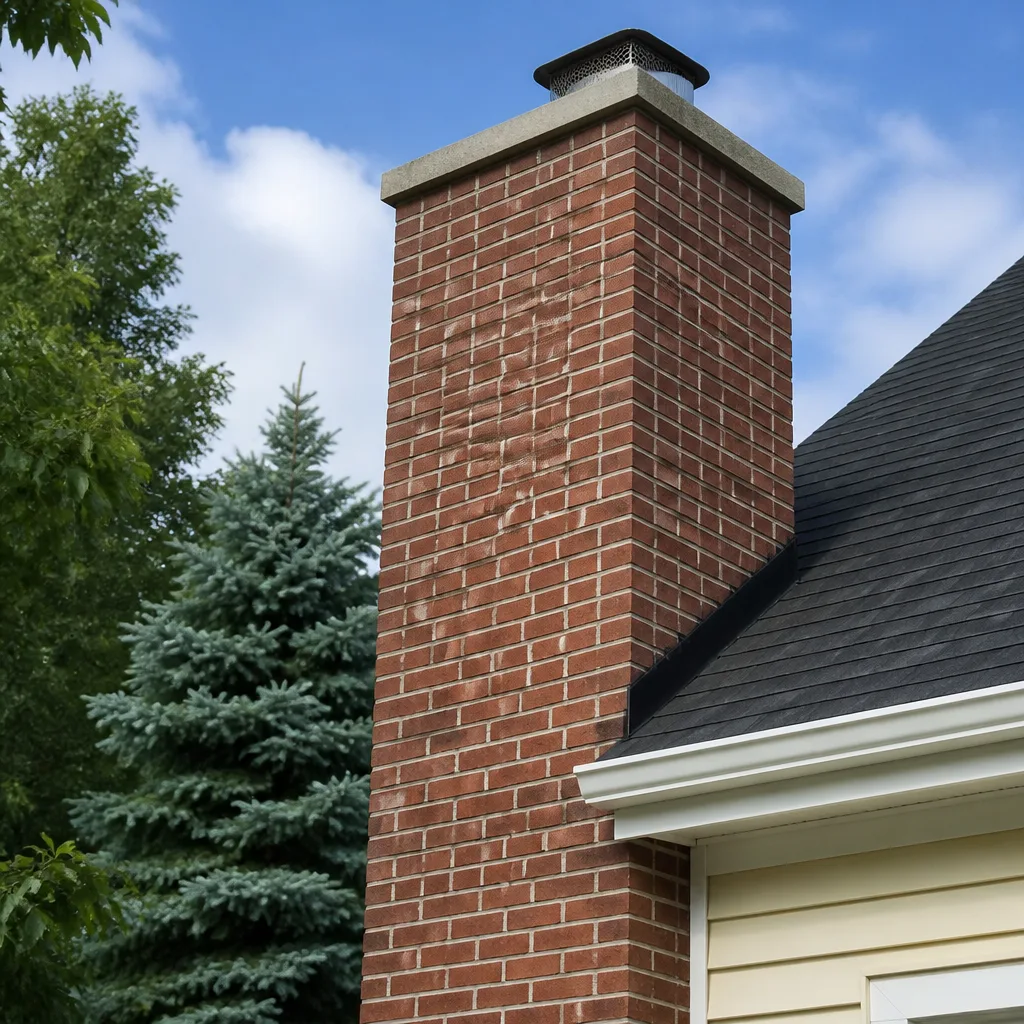
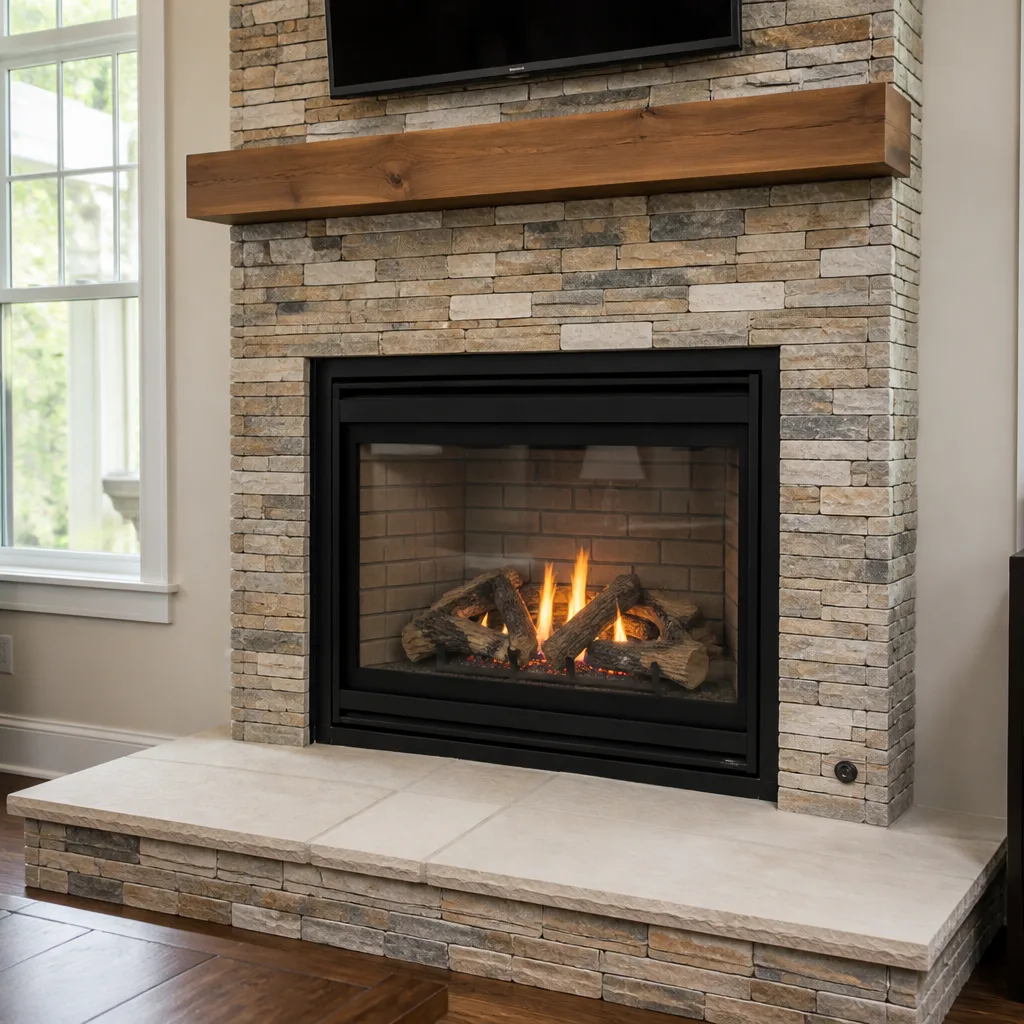
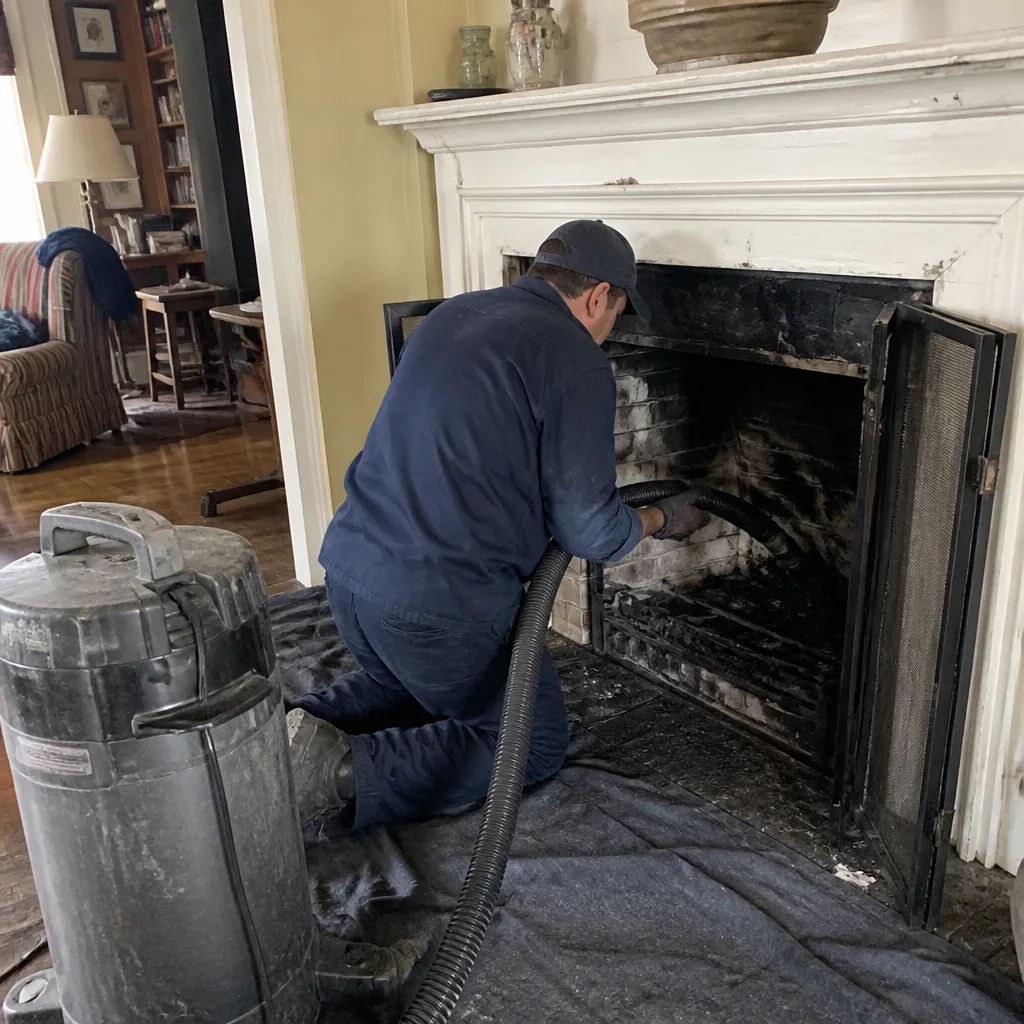 Before
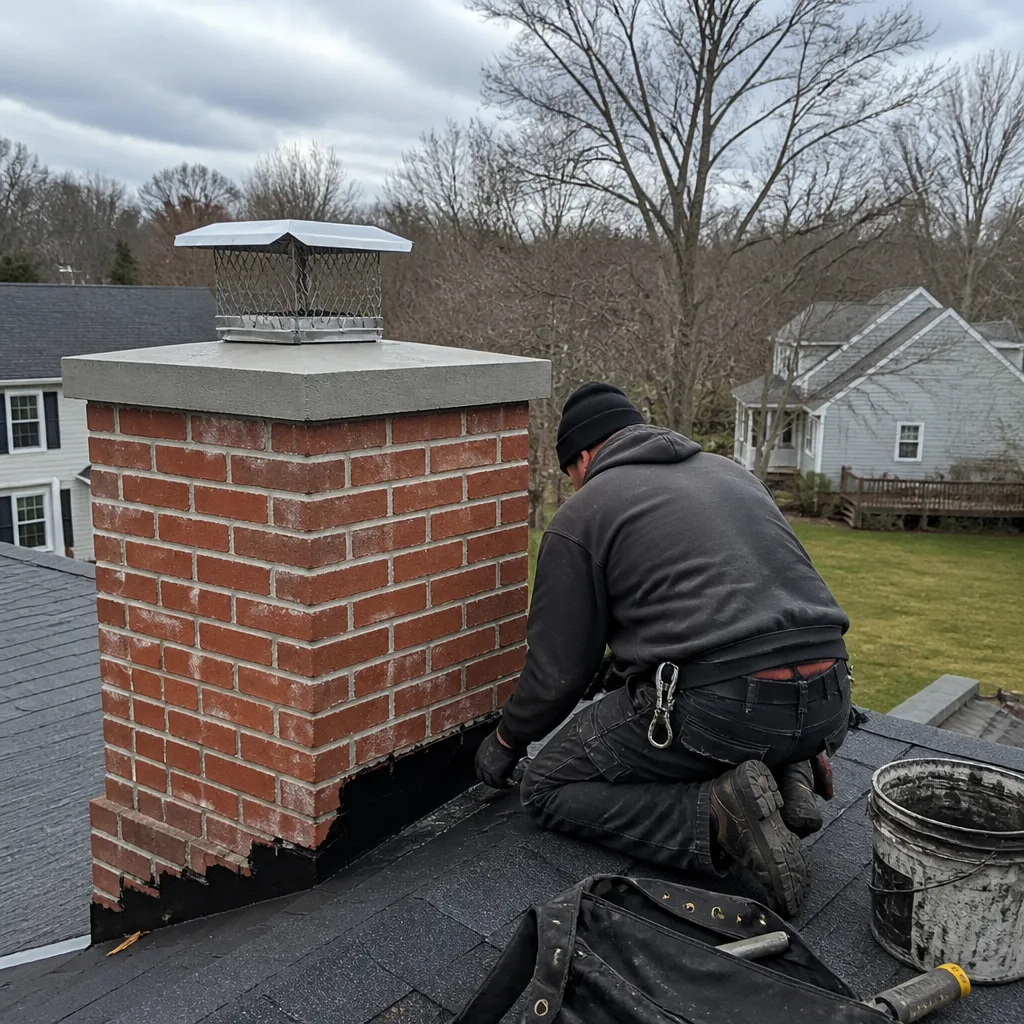 After
After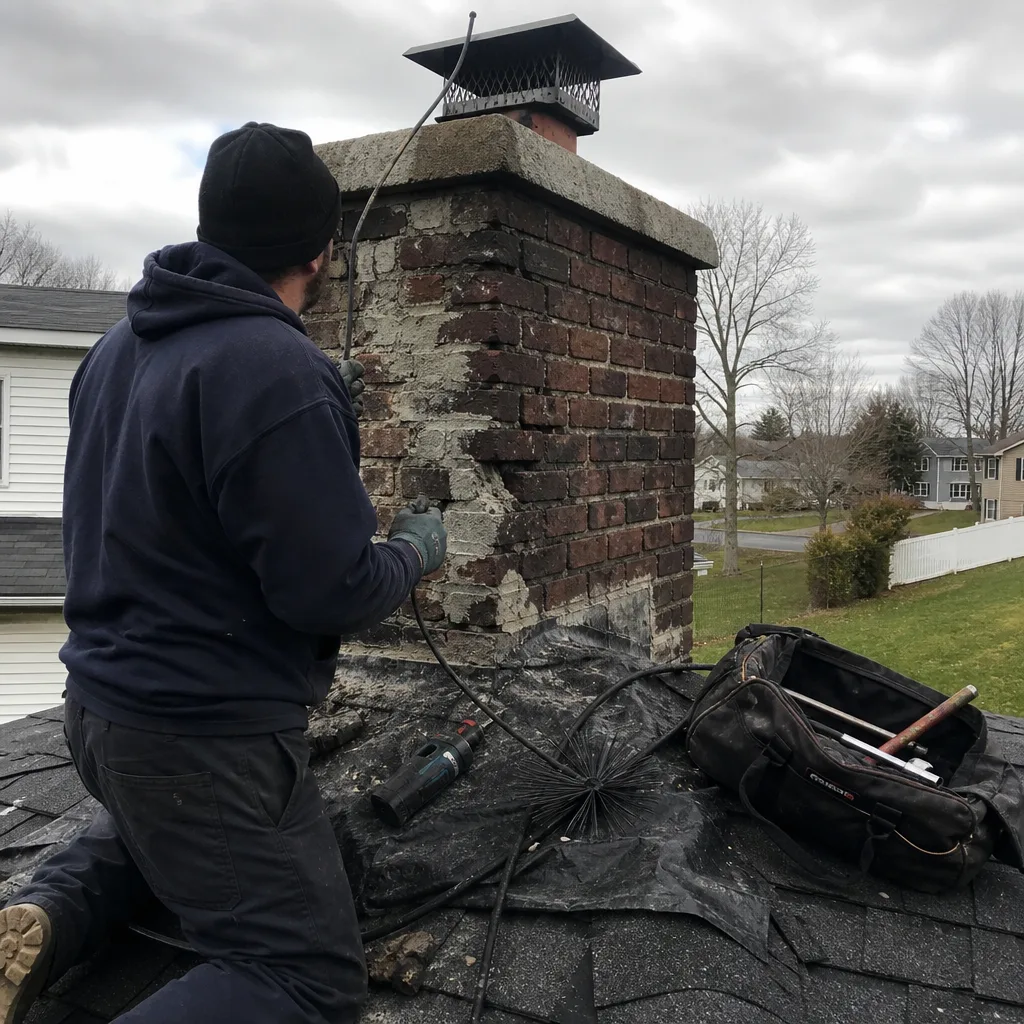 Before
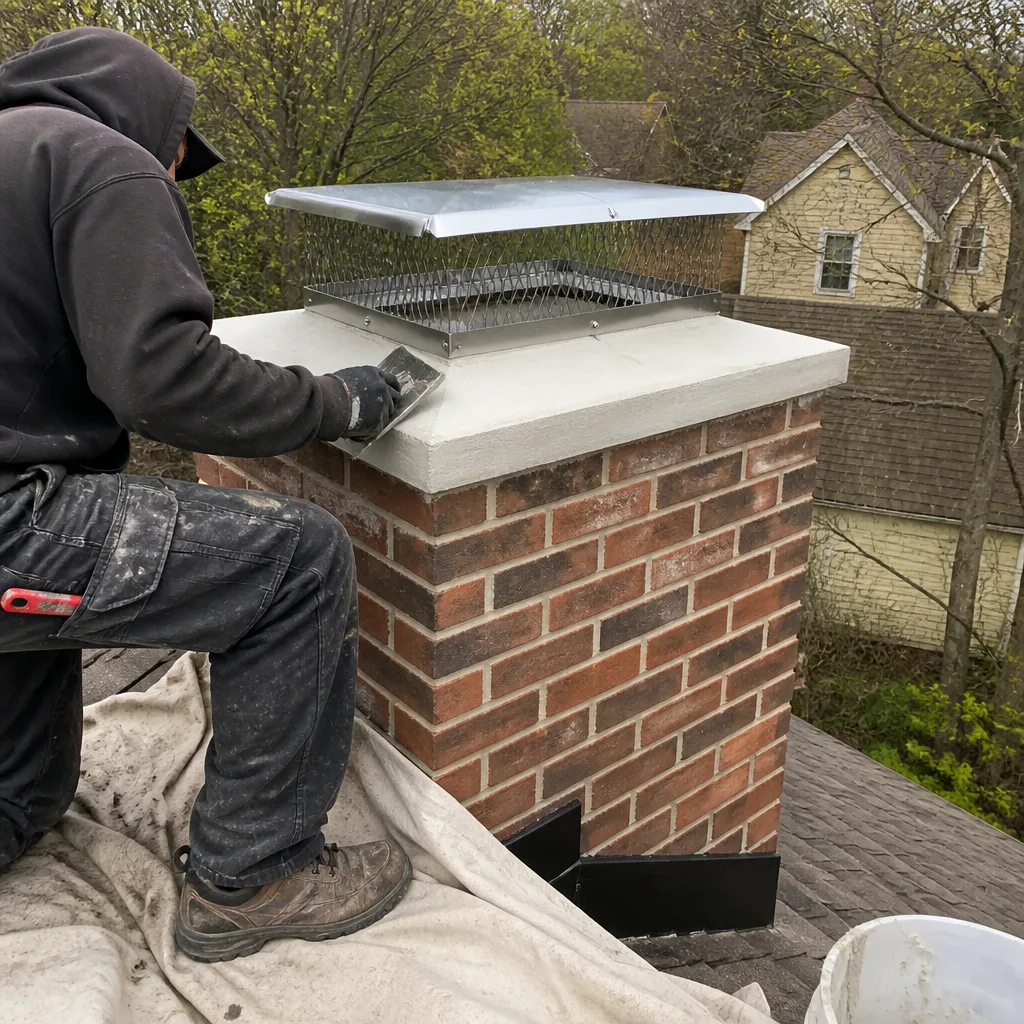 After
After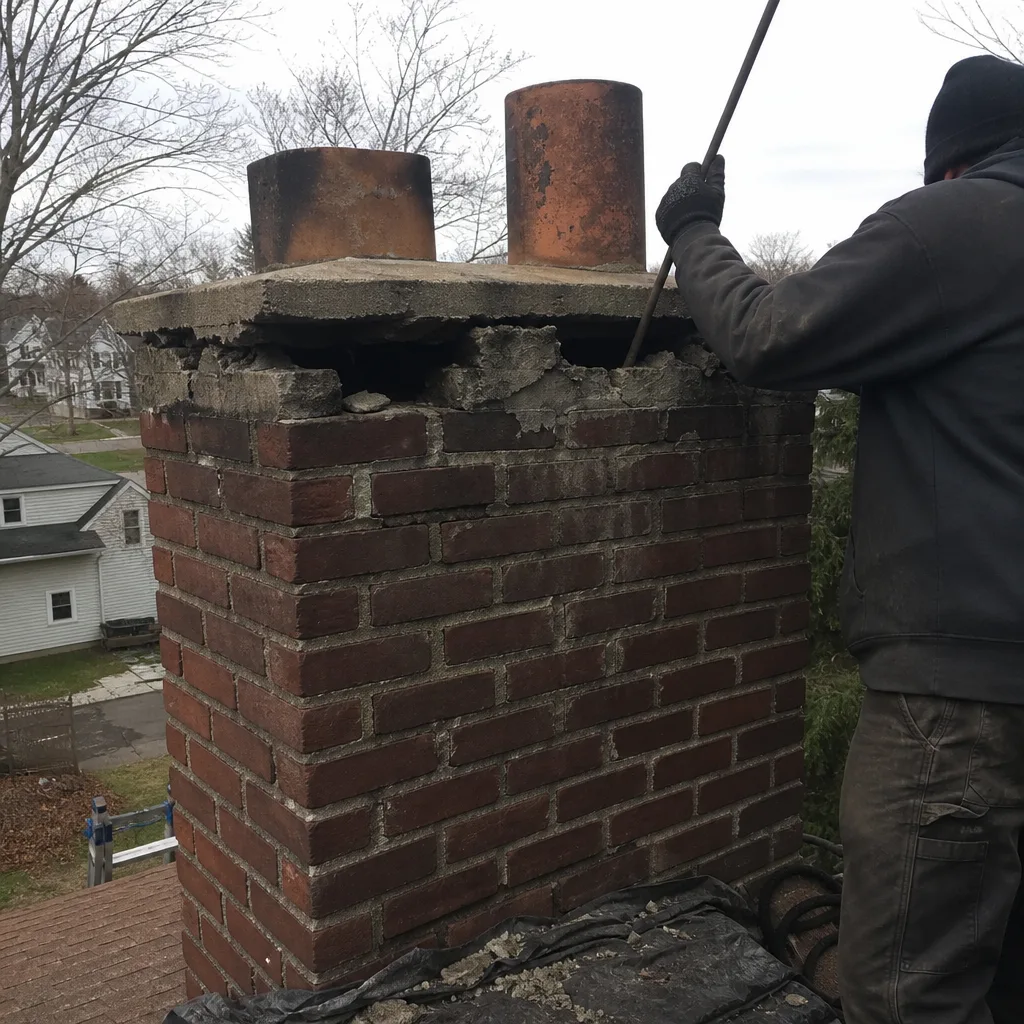 Before
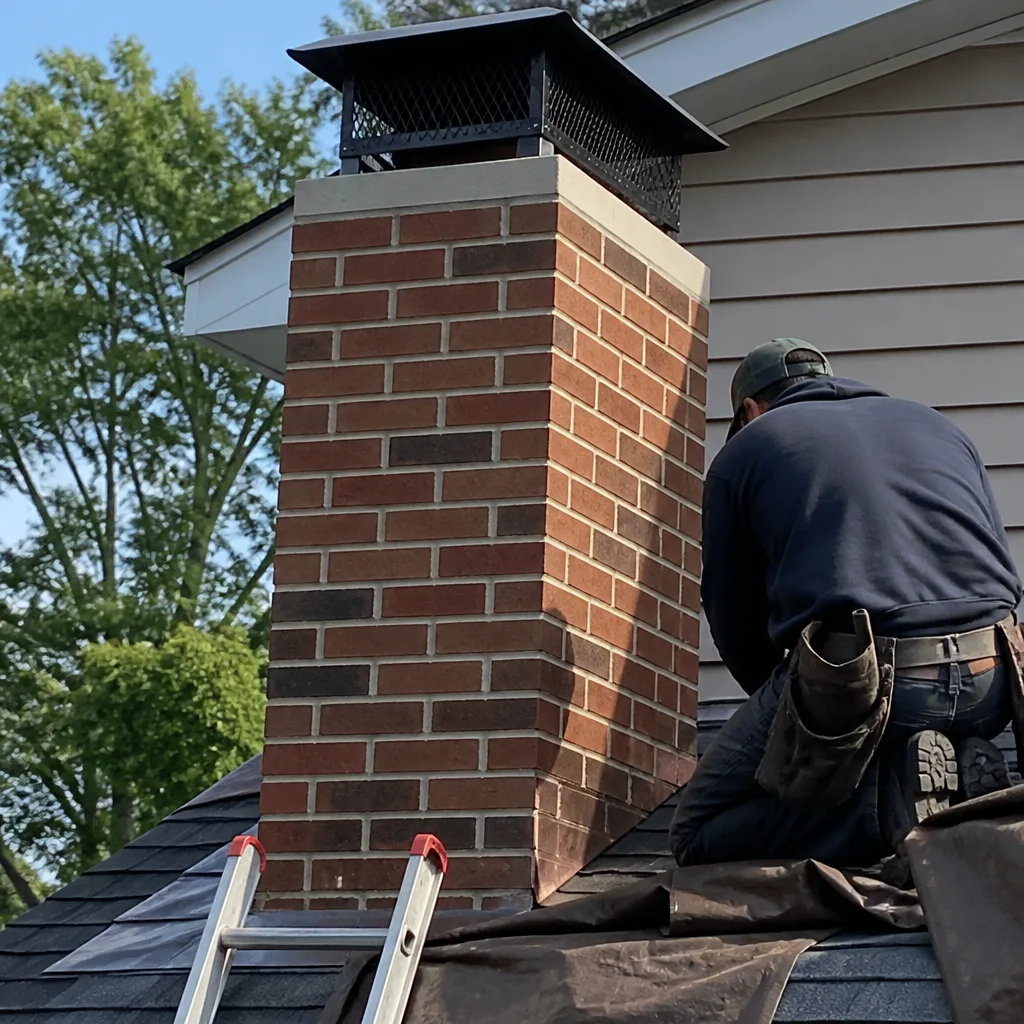 After
AfterChimney Cleaning Warning Signs: A Bristol Homeowner’s Reference Guide
A white haze on the brick above your fireplace opening isn’t a cosmetic issue. It’s your chimney telling you there’s a moisture problem somewhere in the flue system, and it’s been telling you for a while. We’ve been inside enough Bristol chimneys since 1999 to know that most fireplaces don’t fail suddenly. They send signals for months or years first. This guide teaches you to read those signals, the ones that show up in places you wouldn’t think to look: the ceiling above the firebox, the way the house smells on a humid August morning, the sound the damper makes when it opens. By the time you finish reading, you’ll know which warning signs mean “schedule a sweep this fall” and which ones mean “do not light another fire until this is inspected.”
Quick Answer
Chimney warning signs fall into three categories: what you see inside the house, what you smell, and what you can spot from the ground outside. White staining above the fireplace, a tar-like odor when the weather turns warm, flaking brick, rust on the damper, and smoke that lingers after the fire dies all indicate problems that range from a simple chimney cleaning in Bristol to structural repairs. The rule we give every homeowner: if the sign showed up on its own, it earned an inspection, because chimneys don’t heal themselves.
Table of Contents
- The Seven Warning Signs You Can See From Your Couch
- What Your Nose Knows: Smell-Based Warnings
- What a Dirty Damper Plate Is Actually Telling You
- Exterior Warning Signs You Can Check From the Ground
- Sweep or Mason? How to Tell Which Call to Make
- Why Bristol Chimneys Warn You at Specific Times of Year
- Common Mistakes to Avoid
- When to Call a Professional
- Frequently Asked Questions
The Seven Warning Signs You Can See From Your Couch
You don’t need a ladder or a flashlight to catch most chimney problems early. You need to know where to look. These seven signs appear inside the living space, often months before a sweep finds damage during a routine cleaning. Here’s what each one means and what it’s telling you to do.
1. White staining (efflorescence) on the brick above the fireplace opening. This is the sign that prompted this guide. When water seeps through the chimney structure, it dissolves the natural salts in the mortar and brick. When that water evaporates, the salts stay behind as a white, chalky film. The haze itself isn’t dangerous, but it proves water is moving through places it shouldn’t be. In Bristol’s freeze-thaw winters, trapped water expands when it freezes, and expansion is what cracks crowns, pops brick faces, and widens mortar joints. We see this most often on chimneys that run up exterior walls, where they face three sides of New England weather. This is a schedule-an-inspection sign, not a stop-using-the-fireplace sign, but don’t wait a full season.
2. Dark staining or a ghost-like soot mark on the ceiling above the fireplace. This tells you smoke is leaking somewhere it shouldn’t be, usually at the point where the flue passes through the ceiling structure or where the fireplace face meets the wall. It can mean a cracked flue liner, a shifted flue tile, or a damper that isn’t sealing the firebox from the house. If you see this and you’ve already run fires this season, stop burning until a sweep has looked. Smoke in the wall cavity is not just dirty. It’s a fire that’s waiting for the right temperature.
3. A damper that’s rusted, pitted, or hard to move. The damper plate sits in one of the wettest spots in the whole system. Condensation from every burned fire, combined with rain that finds its way past a missing or cracked cap, collects on that metal plate. Rust on the damper is a moisture report. And if the damper is stiff or won’t seat fully, the flue is losing its seal, which means warm house air is pouring up the chimney all winter whether you’re burning or not.
4. Soot or creosote flakes falling into the firebox between burns. When the flue walls are heavily coated, especially with the crusty, flaky stage-two creosote, the material dries and contracts between fires. Little black flakes rain down into your firebox or onto the smoke shelf. If you clean your firebox and it’s freckled again in a week, the flue is telling you it has a buildup problem. This one is almost always a straightforward cleaning call, but the longer it flakes, the more you’re burning on top of a fuel load above the damper.
5. Smoke that rolls into the room when you first light a fire, then slowly corrects itself. Cold flues draft poorly. Bristol homes, especially the Capes and colonials built before central heating, often have chimneys that fill with a column of cold, dense air that the first warm rise of smoke can’t push past. A lazy draft on a cold start is normal to a point. When it lasts more than two or three minutes, or when it happens in mild weather too, something is restricting the flue. Creosote narrowing, a partially closed damper, a nest, or a flue that’s undersized for the firebox all cause this. The fire isn’t the problem. The chimney isn’t breathing.
What Your Nose Knows: Smell-Based Warnings
Your chimney announces most of its problems as smells before you ever see them. The trouble is that houses have lots of smells, and most Bristol homeowners write off a faint odor near the fireplace as something old houses just do. Here’s how to separate the harmless from the hazard.
The cold-fireplace smell (usually fine). A wood-burning fireplace that’s been closed up all summer will often have a faint, ashy smell when you first open the damper in fall. This is normal. It’s residual soot and airborne dust that’s settled inside the firebox, and once the draft establishes, the smell leaves. If the smell disappears after your first burn of the season, you don’t have a problem.
The musty, dank odor (water infiltration). If your fireplace smells like a basement that got wet, that’s not an old-house smell. That’s moisture inside the flue or behind the masonry, and it means one of three things: you have a cracked or missing crown, the cap is missing or the wrong size, or water is moving through the brick itself. Bristol’s wet springs and autumn soakings push this problem to the surface every year. In our experience, the musty-smelling chimneys are the ones that end up needing chimney repair work, because water has been working on the masonry for a while before the smell became obvious.
The sharp, tar-like smell (stage-three creosote). This is the one that demands immediate attention. First-degree creosote is a light, dusty coating. Second-degree is flaky and crusty. But third-degree creosote has concentrated and hardened into a glossy, tar-like glaze that smells like hot asphalt or burnt roofing tar, especially when the house warms up in the afternoon or the humidity rises. That smell means the flue is carrying a heavy fuel load, and glaze creosote doesn’t brush out with a standard sweep. It requires chemical treatment or mechanical removal, sometimes both. If you smell tar near your fireplace and you haven’t burned in weeks, call before you light another fire.
Smell of smoke after the fire is out. A properly drafting chimney pulls combustion gases up and out. When the fire dies and you still smell smoke an hour later, the chimney is reversing the draft or leaking. In Bristol’s older hillside neighborhoods, where homes sit close to one another and trees crown over rooflines, negative air pressure from kitchen exhaust fans and bathroom vents can overpower a weak chimney draft. Fixing this starts with a camera inspection to see whether the problem is mechanical, structural, or just a drafting deficiency.
What a Dirty Damper Plate Is Actually Telling You
The damper is the metal plate that seals your firebox from the flue when you’re not burning. When we open one that’s crusted with shiny black buildup, the homeowner usually asks if they should just clean it. The honest answer: the dirty damper is the least of what’s going on.
The damper sits right at the choke point of the system. When the flue is drafting properly, moisture and creosote gasses keep moving upward and out. When the draft is weak, those gases stall, cool, and condense right there at the damper. So a heavily soiled damper plate is not a cleaning problem. It’s a draft problem, and the draft problem can have several causes.
Here’s what a dirty damper is actually telling us, in order of how often we find it in Bristol homes:
- The flue is oversized or the firebox is too small. Older Bristol chimneys, especially those built for coal or open stone fireplaces, often have oversized flues that cool combustion gases too quickly. The weaker the draft, the more deposits collect at the damper.
- The chimney is too short. A flue that doesn’t extend far enough above the roof peak creates a weak draw, especially on windy days when the roofline disrupts airflow.
- The damper isn’t sealing when closed. A warped or pitted damper lets warm, moist house air drift up the flue all year, which feeds the condensation cycle and creates a cold-smell chimney.
- There’s loose-fill chimney insulation missing or a firestop issue around the flue. Heat loss around the flue means colder interior surfaces, which means more condensation and more buildup where you can see it: the damper.
So when we find a dirty damper during a fireplace service visit, we don’t just wipe the plate and call it done. We trace the draft problem. Your flue doesn’t care how the fire looks. It cares how it breathes.
Exterior Warning Signs You Can Check From the Ground
You never have to climb a ladder to spot the majority of exterior chimney problems. Your eyes are enough. These are the checks a Bristol homeowner can do with both feet planted on the driveway or the back lawn, any season of the year.
1. The chimney leans or has a visible gap at the roofline. Stand across the street or at the end of the driveway and look at the chimney against the horizon. A plumb chimney runs straight. If it leans, even slightly, or if you can see daylight where the chimney meets the roof flashing, the structure has settled or the footing has failed. This is a mason’s call, not a sweep’s, and it should happen soon. A leaning chimney in Bristol faces the full force of every nor’easter and winter freeze cycle.
2. Cracked or missing crowns. The crown is the concrete cap on top of the chimney. You can see it from the ground in good light. If it has cracks running across it, if sections are missing, or if you can see exposed aggregate, water is getting in. Once water works through the crown, it attacks the masonry below, and the damage compounds fast during the cold months.
3. Spalling brick. Spalling is when brick surfaces flake, pop, or shell off. You’ll notice tiny red chips collecting at the base of the chimney or crumbling edges on the brick faces. In Bristol, this is almost always freeze-thaw damage. Water absorbed into the brick freezes and expands, and the surface of the brick gives way. Spalled brick isn’t just cosmetic. It exposes the softer inner brick to faster water absorption, which accelerates the whole cycle.
4. Missing or damaged caps. The cap is the metal cover over the flue opening. If it’s missing, rusted through, or the mesh is torn, you have an open invitation for rain, snow, animals, and debris. We install Copperfield caps on most Bristol homes because they hold up to New England weather, but any good cap beats no cap.
5. White staining on the exterior chimney above the roofline. That’s the same efflorescence we talked about for the interior, but on the outside it’s telling you water is moving through the masonry from a crack or missing joint. The location of the staining tells you where the water enters.
6. Dark streaks or green growth below the chimney on the roof. Algae, moss, and dark water streaks where the chimney meets the shingles often mean the flashing has failed. Most Bristol homeowners never look at this junction, but it’s one of the most common places we find leaks that travel down into the living space.
Sweep or Mason? How to Tell Which Call to Make
This is the question that separates a quick, inexpensive visit from a multi-thousand-dollar repair, and we want Bristol homeowners to know the difference before any truck shows up. Because those are different calls, and the wrong call costs you time.
Call a sweep when the issue is inside the flue. If you see flaking creosote, smoke rollback, a dirty damper, or you’re smelling tar, you need a chimney cleaning and a camera inspection. These problems live in the path the smoke travels, and a certified sweep with the right equipment can resolve most of them in one visit. The cleaning usually runs $189 to $320 in Bristol depending on the flue condition and whether it’s a standard or heavy glaze removal.
Call a mason when the issue is in the structure. Cracked crowns, spalling brick, a leaning chimney, failed flashing, or gaps in the mortar joints are masonry problems. A sweep can’t fix these with a wire brush. They require tuckpointing, crown recasting, flashing replacement, or partial rebuilding. These jobs often run into the thousands in the Bristol market, which is exactly why you want the problem caught early, before a $300 crown repair becomes a $4,000 rebuild.
The overlap. Here’s the part competitors don’t tell you: many Bristol chimneys need both. Water has been getting in through a cracked crown, which has soaked the masonry, which has affected the flue liner, which has allowed smoke to condense in places it shouldn’t. When you call a sweep who also does repairs, like Top Hat Chimney home has been doing since 1999, you get one crew that can address the whole picture, not two separate calls and two separate diagnoses.
If you’re not sure which problem you have, the camera tells the truth. The camera footage and a plain-English verdict, every time, no exceptions. That’s how we’ve always worked, and it’s the only way to know whether the white haze above your fireplace is a cleaning issue or a structural one.
Why Bristol Chimneys Warn You at Specific Times of Year
Chimney problems in Bristol follow the seasons more predictably than the foliage. Once you understand the timing, the warning signs stop being mysterious and start being expected.
Late summer and early fall: the musty-smell months. Bristol gets its heaviest seasonal rain in spring, but the humid August days are when the musty chimney smell shows up. Warm, moist air sits inside the damaged flue and pulls the trapped moisture out of the masonry. If your chimney is going to smell damp, it’ll smell damp in the last weeks of summer. This is also the season when homeowners start thinking about fall fires, and it’s the best time to book a sweep before the October rush.
The first cold snap: the smoke-rollback morning. When the first freezing night hits Bristol, every chimney with a weak draft announces itself. Cold flues that don’t warm quickly will push smoke back into the room. Homes in the Federal Hill and Chippens Hill neighborhoods, where chimneys often run up exterior walls, are especially prone to this because the flue starts colder and warms more slowly.
Mid-winter: the freeze-thaw damage window. Any water already inside the chimney structure will freeze and expand during the January cold spells. That’s when cracks grow, crowns fail, and spalling accelerates. If you see new brick chips or a change in the lean of the chimney during winter, the freeze cycle just did damage that started months ago.
Spring thaw: the leaking ceiling. As the snow and ice on the roof melt, damaged flashing and cracked crowns let water run straight down through the structure. The ceiling stain above the fireplace that shows up in March or April is the payoff on a problem that’s been building all winter.
Once a year, burn or no burn. Chimneys break in the off-season too, and the off-season in Bristol is long.
Common Mistakes to Avoid
- Ignoring white staining on the brick as “aging” or “normal.” Efflorescence means water is moving through the masonry, and in Bristol’s freeze-thaw climate, that water becomes structural damage within one or two winters. The stain is the cheapest warning you’ll ever get.
- Thinking one good hot fire will clean the chimney. Creosote doesn’t burn off at fireplace temperatures. A hot fire can ignite stage-three glaze, and the little brush-clearing fires people talk about are how chimney fires start. First-degree creosote is a brush job. Third-degree is a glaze, catch it early.
- Ignoring a cold-smell fireplace. Homeowners assume old houses have old-house smells. A musty fireplace is not a personality trait. It’s a water problem, and water problems inside a chimney don’t stay inside the chimney.
- Assuming the previous owner’s cap is still good. Many Bristol homes change hands, and the flue cap that was there at inspection is now rusted through or missing entirely. Look up from the ground at every chimney you own. It’s the cheapest insurance against a winter of water damage.
- Calling a mason first when you smell tar. Tar smell is a flue problem, not a masonry problem. Start with a sweep and a camera inspection. A mason won’t remove stage-three creosote, and you’ll pay for two calls instead of one.
- Waiting for the ceiling stain before calling. By the time water has traveled through the crown, the masonry, the flashing, and the ceiling, the repair bill has multiplied. Water inside the chimney structure is always cheaper to fix before it reaches drywall.
When to Call a Professional
Call when you smell tar near the fireplace, no matter the season. Call when you see a ceiling stain above the firebox, when smoke rolls back into the room and won’t correct, when brick chips collect at the chimney’s base, or when the damper is rusted and stiff. Any one of these means the system has been telling you something, and now it’s time for trained eyes to find out what. Top Hat Chimney offers free estimates in Bristol, and Wendell or one of his crew will walk you through exactly what we found before a single tool comes off the truck. Call (860) 743-7743 and we’ll schedule the visit.
Frequently Asked Questions
A standard chimney cleaning in Bristol typically runs $189 to $320 depending on flue condition, height, and whether it’s a straightforward sweep or a heavy creosote removal. Homes with stage-three glaze deposits often fall at the higher end because removal requires chemical treatment plus mechanical cleaning. We always give the exact price before work begins, and we’ll tell you plainly if the flue doesn’t need cleaning this year. Call (860) 743-7743 for a free estimate.
The main signs are flaking creosote falling into the firebox, a tar-like smell when the house warms, smoke that rolls back into the room on cold starts, and visible soot buildup around the damper. Any one of them means the flue is carrying more fuel than it should, and the longer it builds, the harder the eventual cleaning will be. In Bristol, we recommend an annual check before burning season so a heavy accumulation never gets to surprise you; see our DIY vs Professional Chimney Cleaning guide to decide who should do the work.
White staining above the fireplace opening, a musty smell from the firebox, water in the firebox after rain, and ceiling stains above the chimney are all leak indicators. In Bristol’s wet springs and freeze-thaw winters, leaks that start small will open fast once water starts expanding on freeze nights. If you see any of these signs, we can find the entry point with a camera and give you a straight answer on what needs fixing.
Yes, and it’s the cheapest protection a Bristol chimney can have. A correctly sized cap stops rain, snow, leaves, and animals from entering the flue, and it prevents embers from escaping onto the roof. We install Copperfield caps on most local homes because they hold up to New England weather. A missing or rusted-out cap is a standing invitation to water damage.
Once a year, burn or no burn. Creosote doesn’t care how often you operate the fireplace, and structural problems develop in the off-season just the same. Most Bristol homeowners schedule their cleaning in late summer or early fall, before the cold snap makes the draft problems obvious; our Complete Guide to Chimney Cleaning in Bristol walks you through what to expect. If you burn more than three cords in a season, a mid-season check is prudent too.
Creosote builds in layers. First-degree is a brush job. Second-degree flakes and restricts the draft. Third-degree hardens into a flammable glaze that a standard sweep won’t remove, and that’s where chimney fires start. Meanwhile, water continues working on the masonry regardless of whether you’ve burned, and masonry repair bills grow with each freeze cycle. The cheapest chimney is the one you don’t skip caring for.
The Bottom Line
Your chimney talks. It talks through white stains, tar smells, flaking soot, stiff dampers, and brick chips at the base. The problem is that nobody teaches Bristol homeowners what those signals mean, so they get written off as old-house quirks until the repair bill becomes impossible to ignore. A chimney that gets inspected the moment it sends a signal is a chimney that rarely needs a major repair. We’ve spent 29 years in the same Bristol homes, and the families who call early never have to call twice. Learn the signs, trust what your nose tells you, and when something shows up, call (860) 743-7743. The walkthrough is free, and the truth is always part of the deal.
Written by Wendell Pike, Owner at Top Hat Chimney, serving Bristol since 1999.