
Level 1 sweep and inspection to the NFPA 211 annual standard - flue, crown, cap, and flashing checked and photographed
Chimney sweep logs do not sweep chimneys. They loosen some creosote - which then falls where a brush and vacuum still have to collect it.
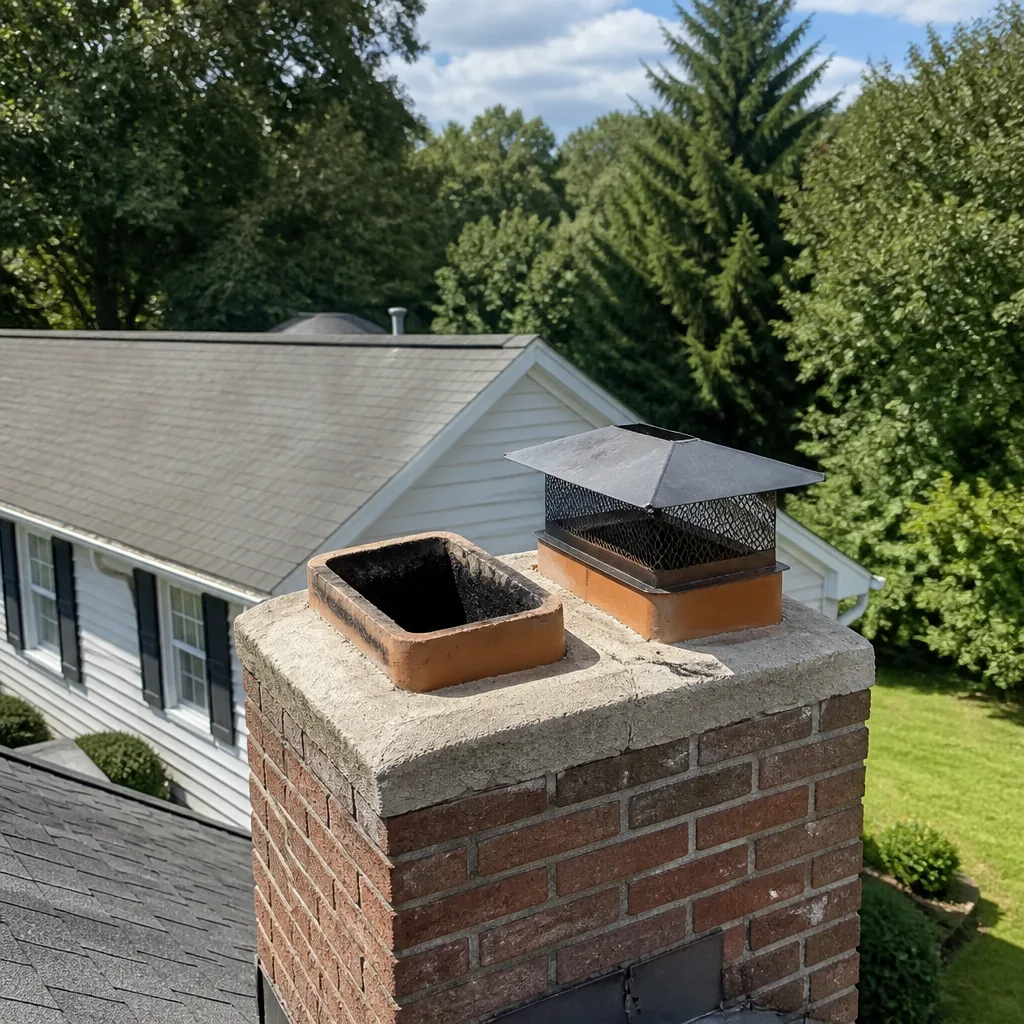
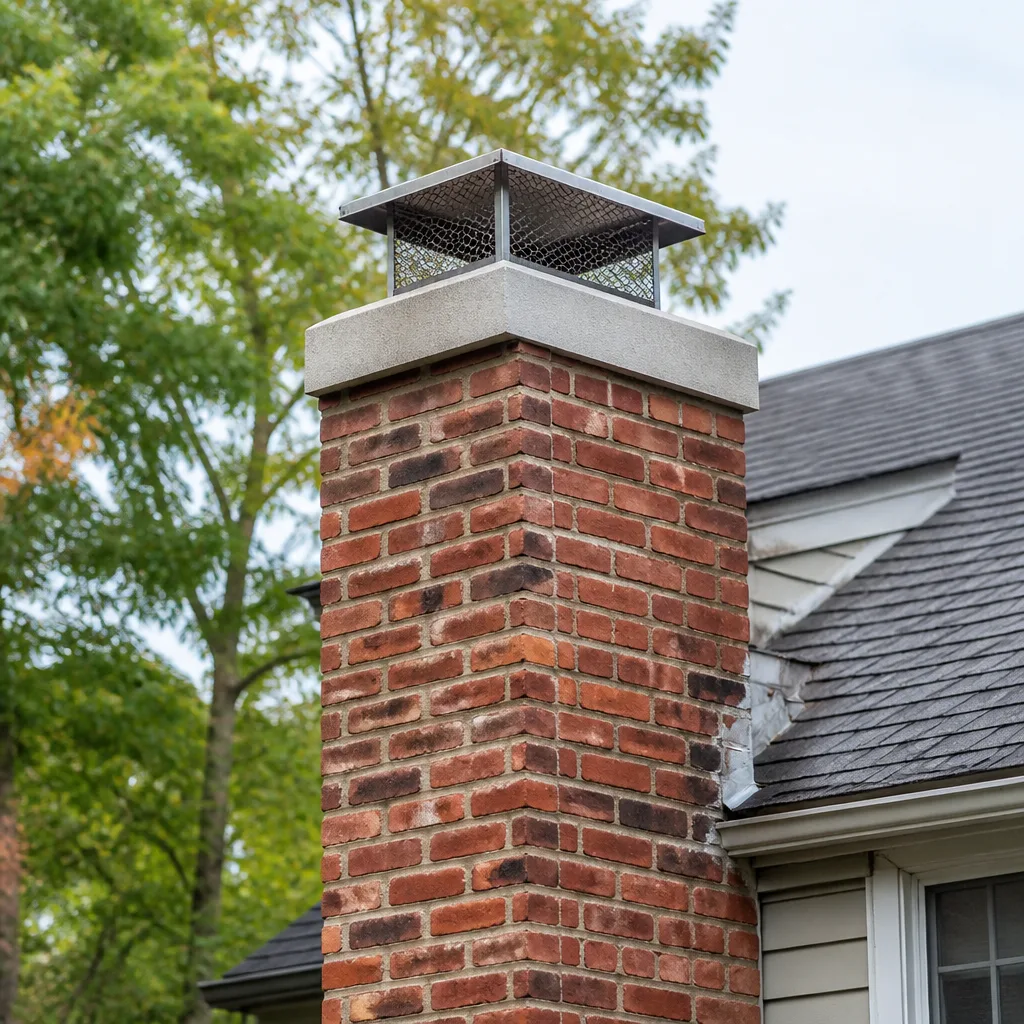
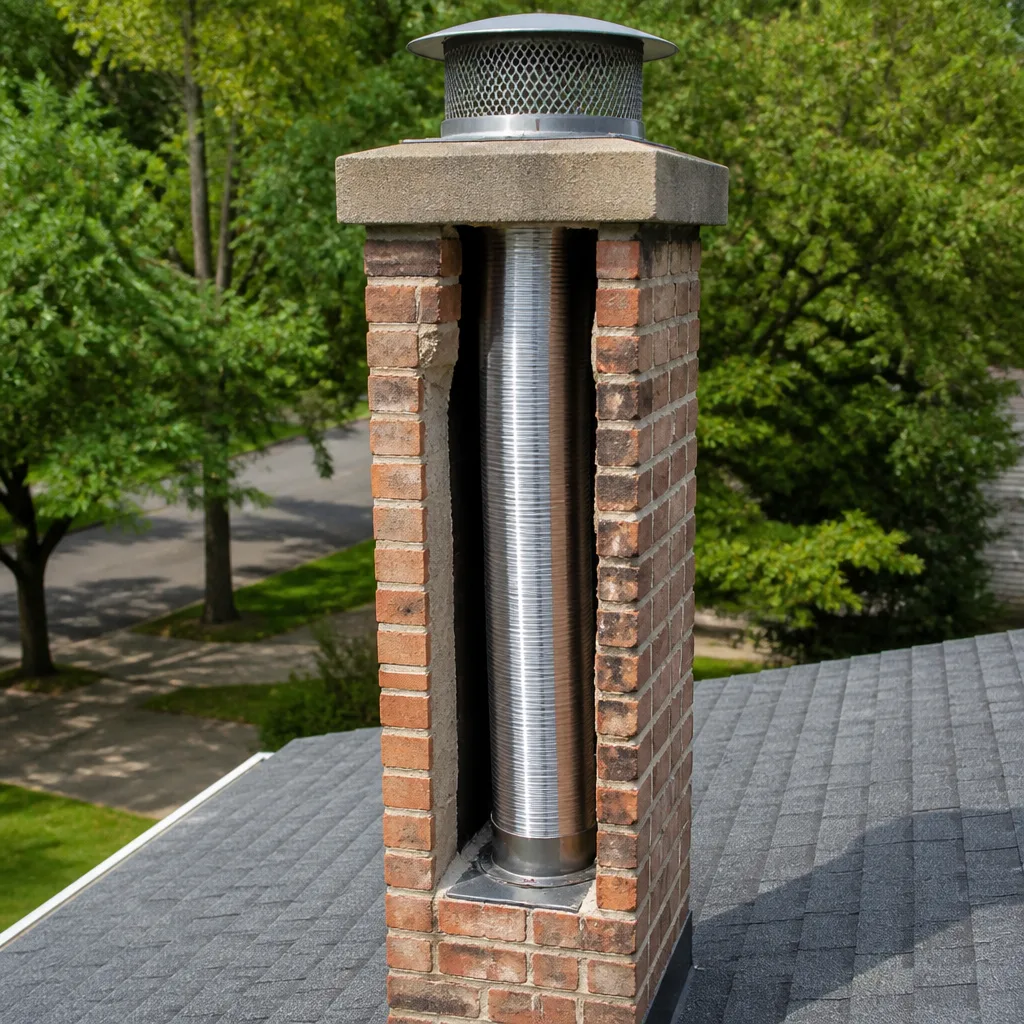
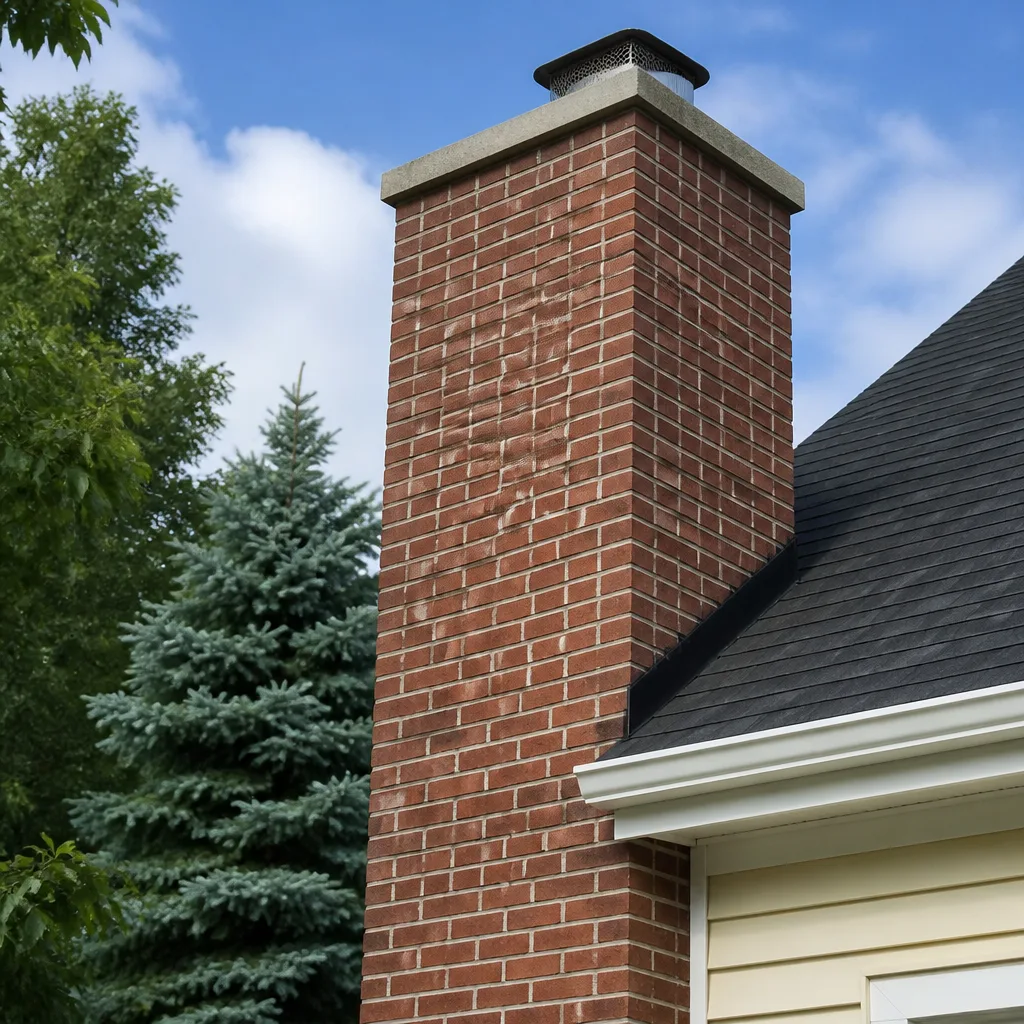
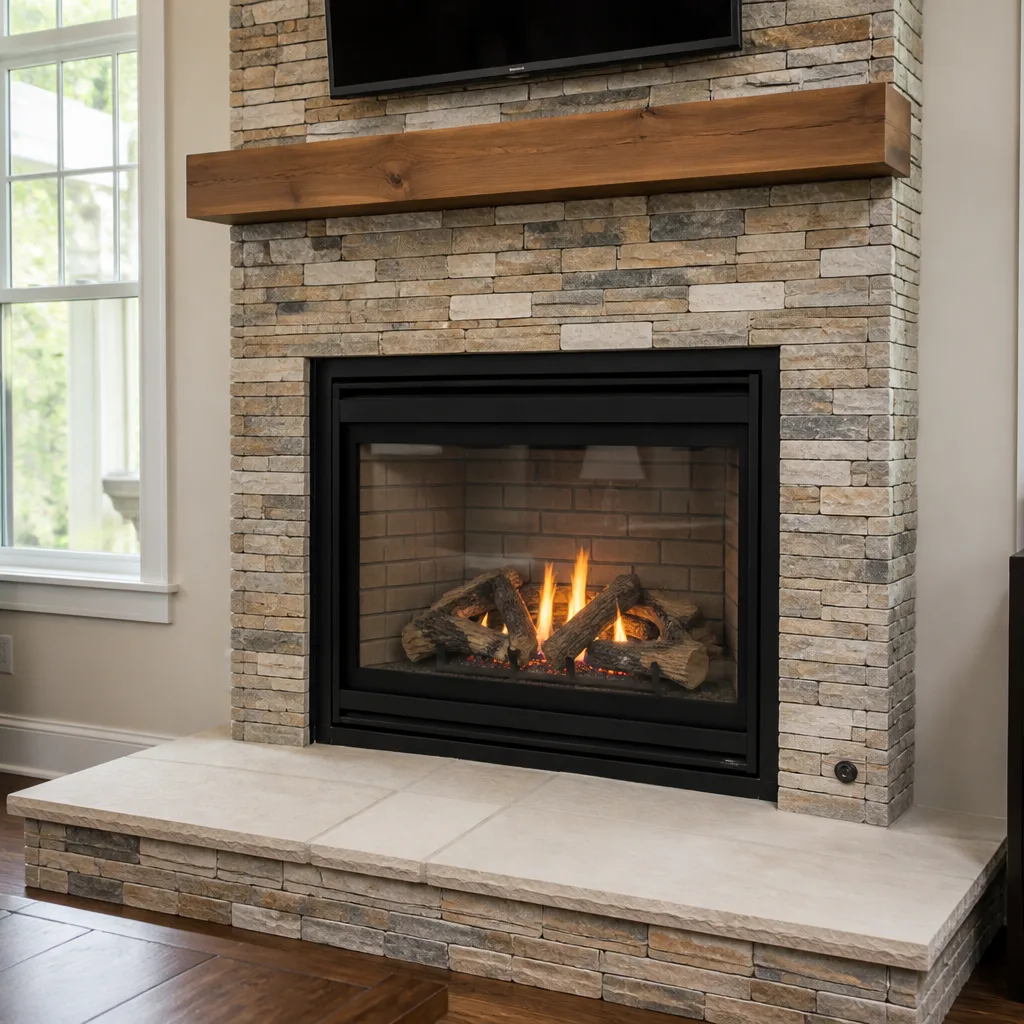
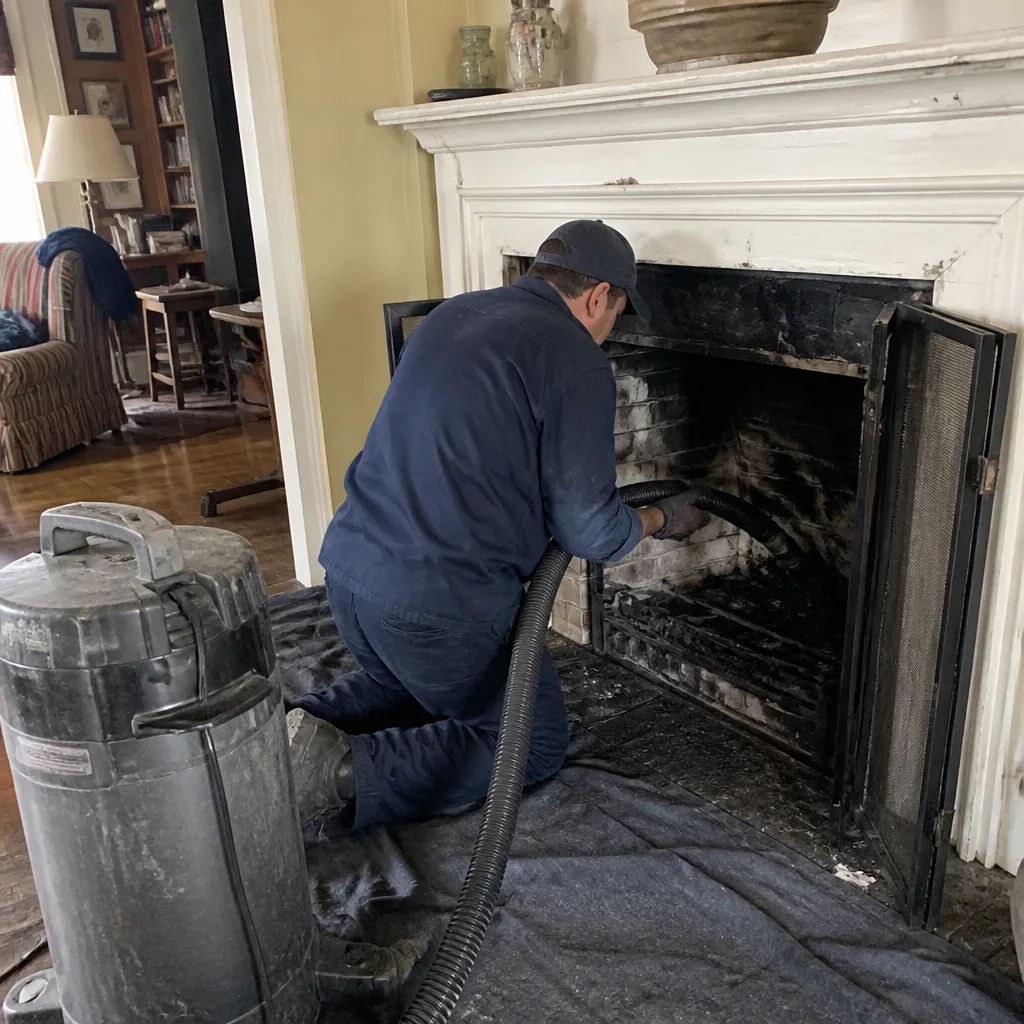 Before
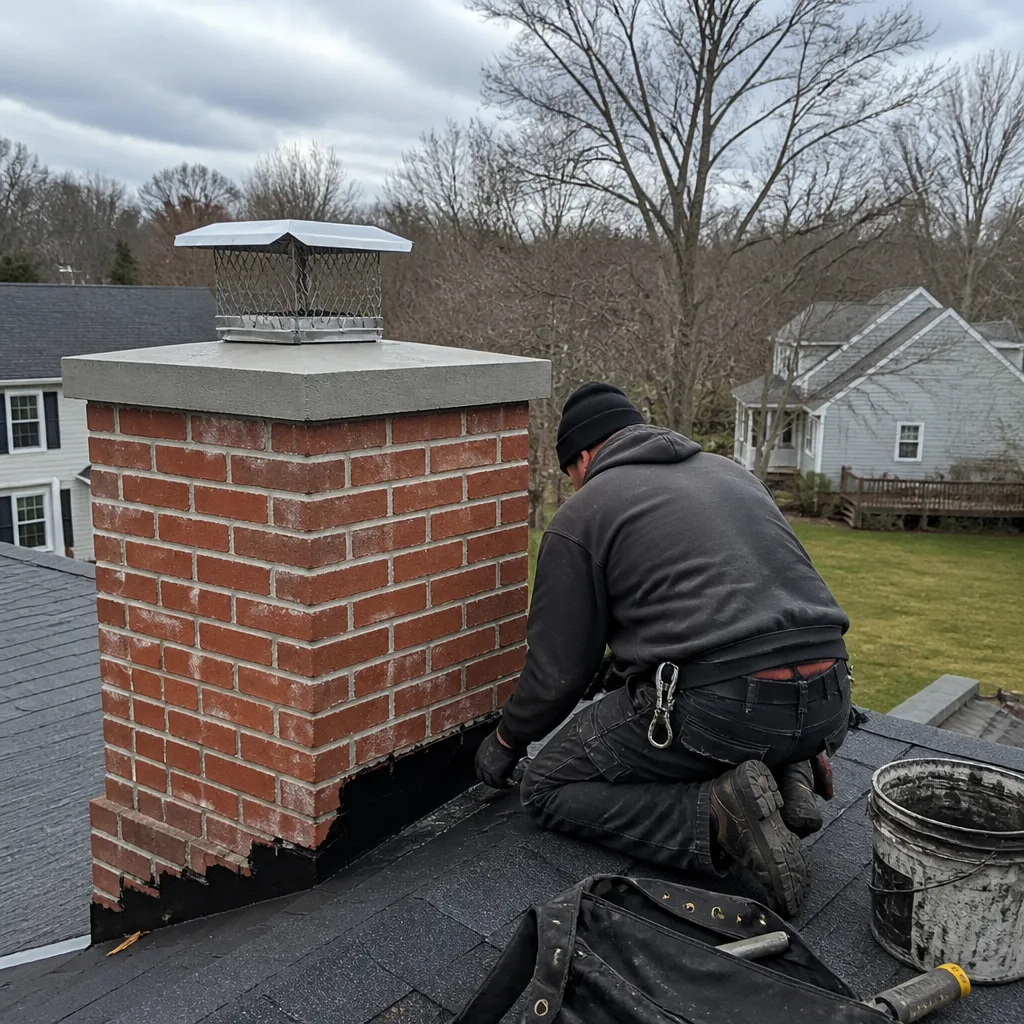 After
After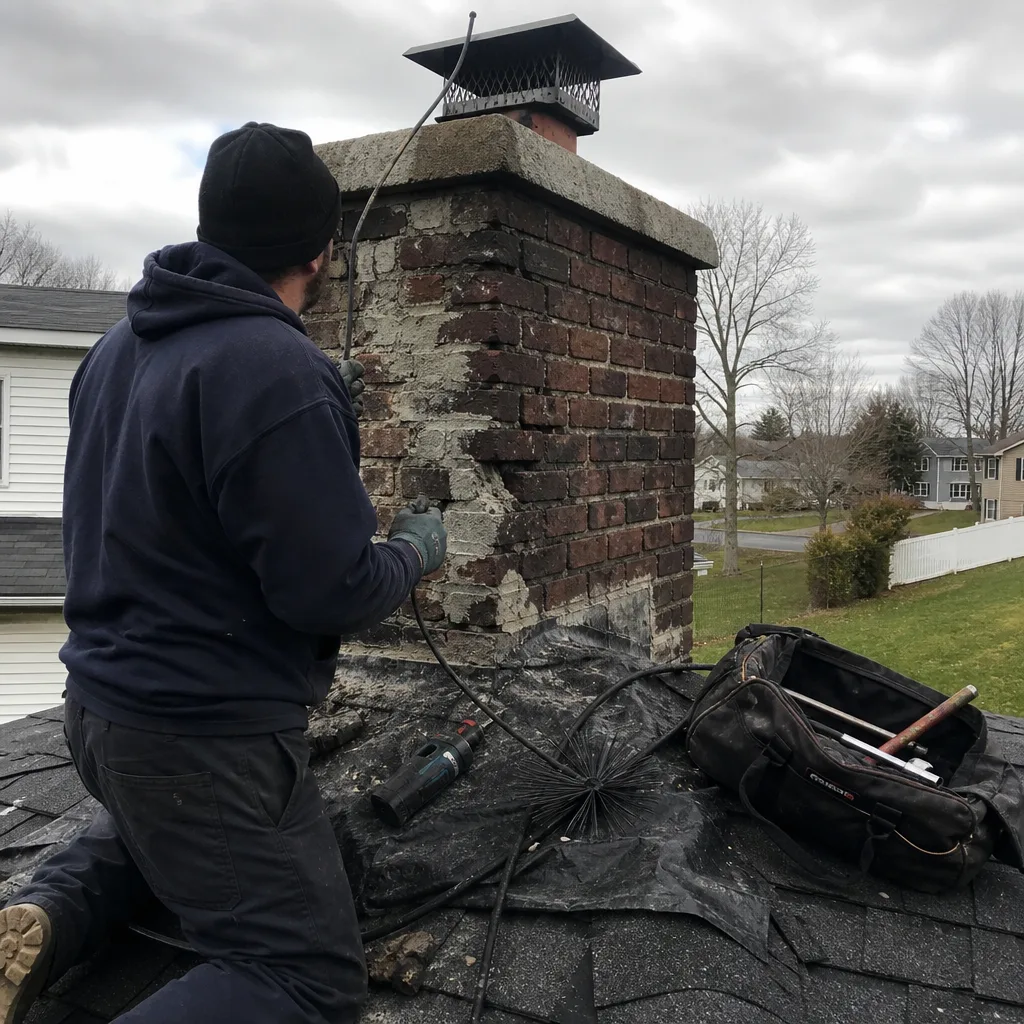 Before
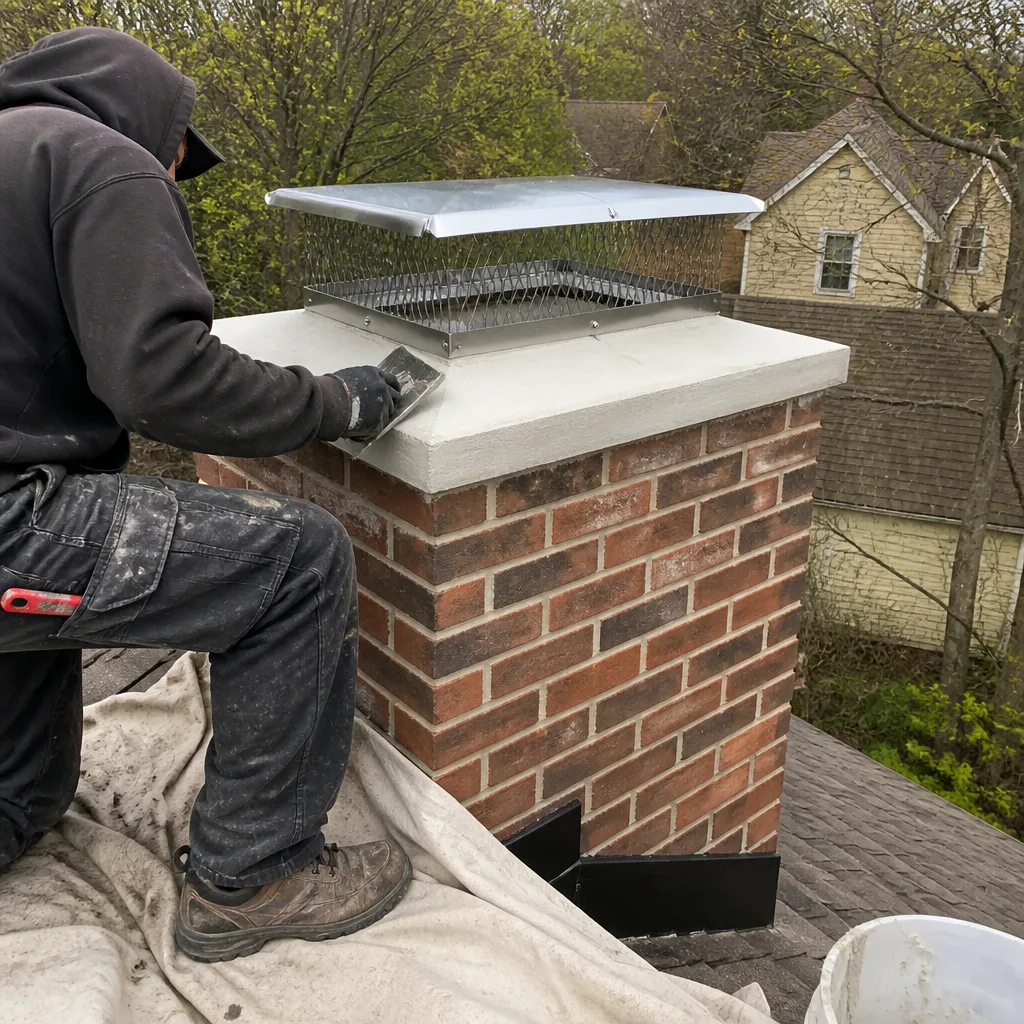 After
After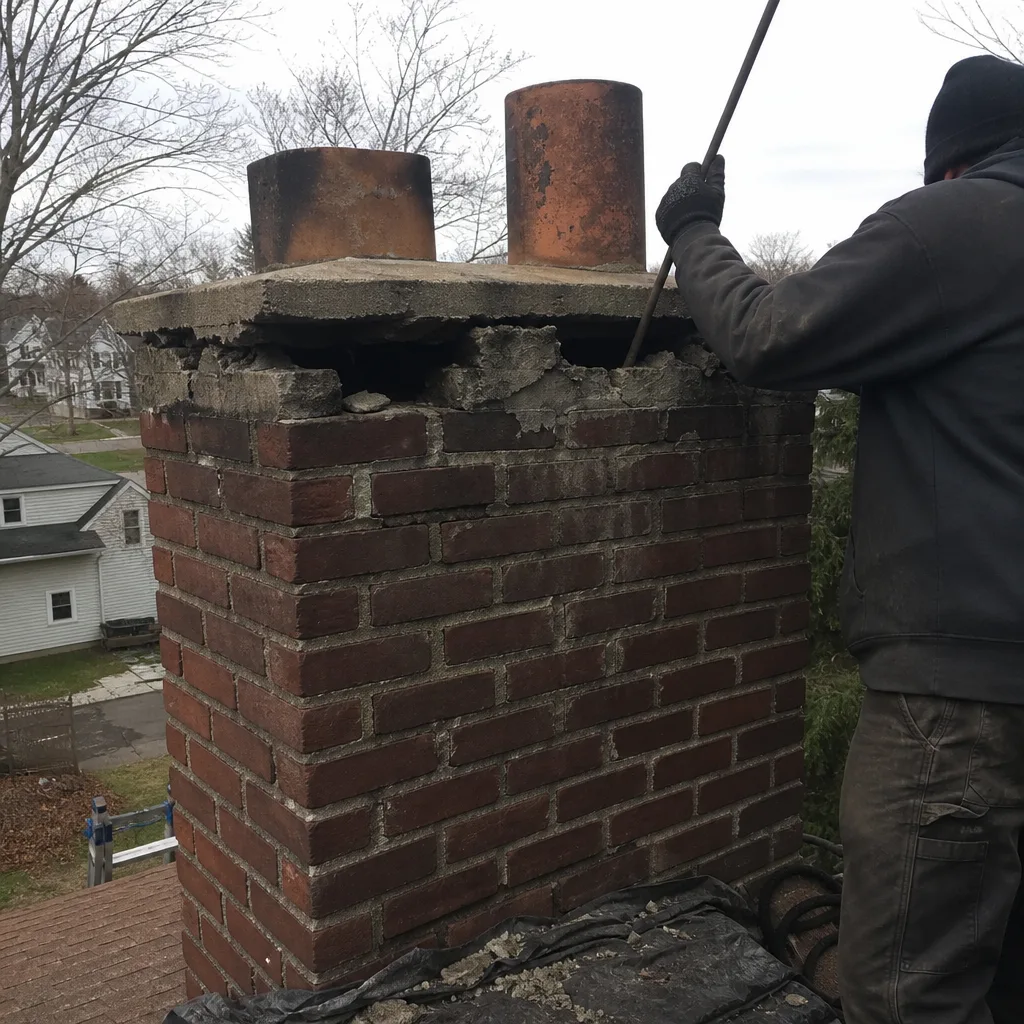 Before
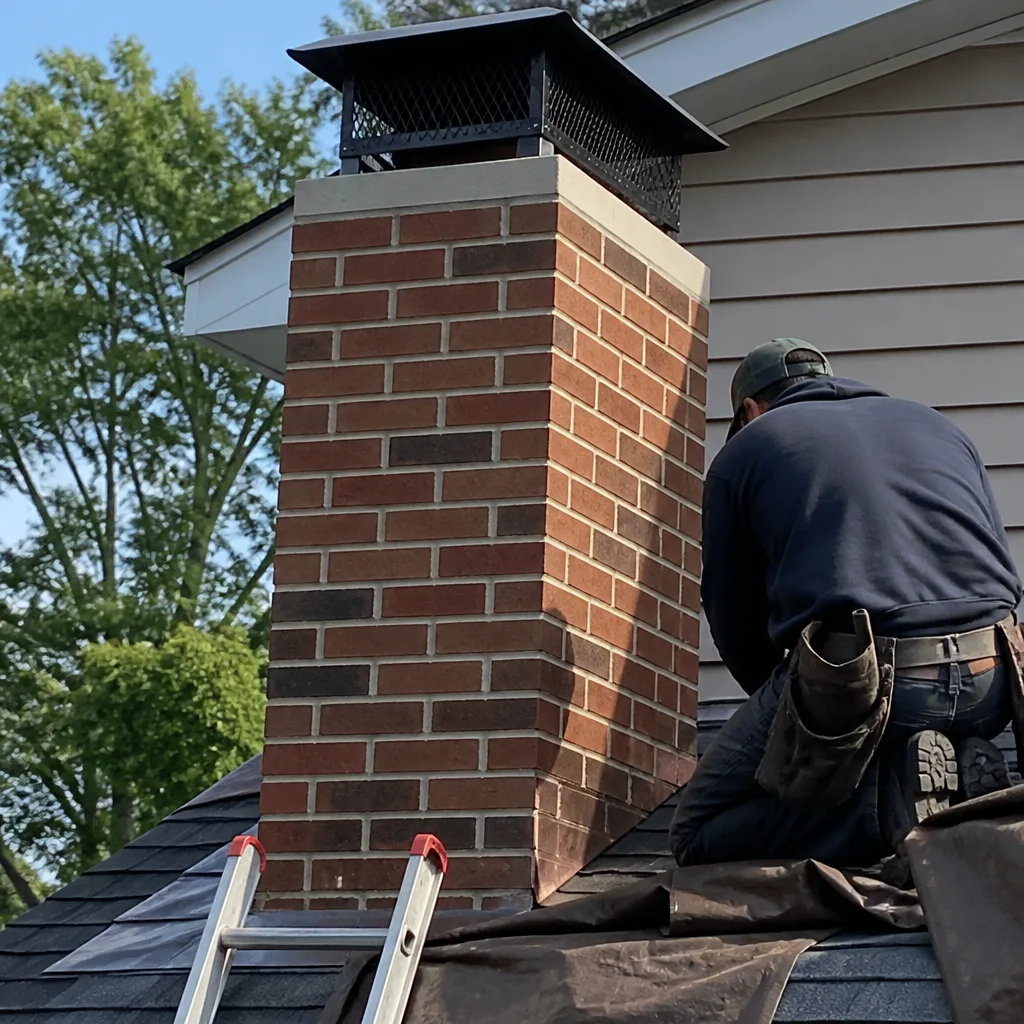 After
AfterWhy Bristol Homeowners Choose HeatShield Chimney Cleaning
We provide Bristol Heatshield service as an independent HeatShield chimney cleaning and repair company throughout Bristol, CT, on flues originally resurfaced with HeatShield Cerfractory or fitted with CeCure sleeves. What separates our HeatShield work from a standard sweep is the camera work: we inspect every HeatShield-coated flue with a Level 2 scan before we touch it, because the coating can look fine from the top yet be debonded in voids behind the clay tile where you can’t see it. Top Hat Chimney is not a HeatShield-authorized installer. We’re an independent service company, which means our loyalty sits with the homeowner, not a manufacturer’s warranty department. If your HeatShield liner is sound, we’ll sweep it and send you on your way. If it’s failing, we’ll show you the footage. Call (860) 743-7743 and Wendell or one of the crew will walk you through what we found.
HeatShield has a real following in Bristol because the product addresses exactly what this city’s housing stock throws at a chimney. More on that below, but here’s the quick version: Bristol is full of century-old masonry stacks built for coal, converted to oil, and now venting gas appliances. Those flues have cracks, missing mortar, and clay tile offsets that a brush alone will never fix. HeatShield’s Cerfractory coating and Joint Repair System were designed specifically for that kind of deteriorated flue. We’ve worked on hundreds of them across Forestville, Federal Hill, and the older streets off Farmington Avenue, and we know what holds up and what doesn’t.
Why Trust Top Hat Chimney for Your HeatShield Chimney Cleaning?
Because we’ve been inside more HeatShield-resurfaced flues in Bristol than any national outfit that rolls through with a coupon. Wendell Pike founded Top Hat Chimney in 1999, and he’s spent the better part of two decades driving Bristol roads and getting into fireboxes and attics all over town, including plenty of older homes near Lake Compounce where the flues tell their own story about freeze-thaw cycles and coal-to-oil conversions. He learned the trade at Southwestern College outside San Diego, then put in years of hands-on work before Top Hat Chimney became what it is today.
The crew knows HeatShield products by their failure modes, not just their marketing brochures. We know what a hairline crack in Cerfractory looks like on camera at 20 feet of flue. We know the sound a debonded section makes when you tap it with a masonry hammer. And we know the difference between a joint seal that needs targeted repair and a coating that’s beyond saving. That’s the kind of knowledge you only get from doing the work year after year in the same climate.
We also know our limits. We’re an independent HeatShield service provider, not an authorized installer, and we’ll say so plainly. If a HeatShield resurfacing is too far gone, we won’t patch it to buy another season. We’ll recommend a full CeCure sleeve or stainless reline and explain why. Wendell’s known around Bristol for being straight with people. If the chimney doesn’t need sweeping yet, he’ll tell you, and he’ll tell you why. If it needs doing, we’ll do it right. If it does not, I will tell you that instead.
Common HeatShield Chimney Cleaning Problems We Fix in Bristol
HeatShield products are well engineered, but Bristol’s climate punishes every liner material eventually. Here’s what we actually find when we get a camera into a HeatShield flue in this city:
- Hairline cracks in the original Cerfractory coating from freeze-thaw cycling. Bristol averages 45 to 50 inches of snow a year and sits inland with no maritime buffering, so the freeze-thaw count is brutal. Water gets into tiny surface imperfections, freezes, expands, and eventually opens hairline cracks that let flue gases escape into the chimney chase. These cracks are rarely visible from the top. The camera finds them.
- Debonding of the Cerfractory from the masonry substrate. This is the failure mode that scares us most, because the flue can look sound on a visual inspection while hollow voids hide behind the coating. Only a Level 2 scan picks it up. Left alone, those voids become paths for carbon monoxide to find its way into wall cavities. In Bristol’s older worker cottages, where the chimney runs through the center of the house, this is a real safety issue.
- Erosion of the ceramic top coat from acidic creosote in wood-burning flues. First-degree creosote is a brush job. Third-degree is a glaze. What people don’t realize is that even second-degree creosote, left over multiple burning seasons, produces acidic compounds that slowly eat at the ceramic top coat. We see this most often in Bristol homes where a wood stove gets used hard from October through March and the flue only gets swept every few years. Once a year, burn or no burn. Chimneys break in the off-season too.
- Failed HeatShield joint seals at clay tile offsets. HeatShield’s Joint Repair System works well when installed correctly, but clay tiles expand and contract at different rates during Bristol’s hard freezes. Over time, thermal expansion shears the repair material at the tile joints and reopens gaps. We find this repeatedly on the taller three-story stacks in Forestville where the flue runs 35 feet or more and temperature differentials are extreme.
- Seam splits in CeCure sleeve installations. The CeCure Sleeve Relining System is a good product, but we’ve seen seams split when the original installer didn’t properly prep the flue or when the sleeve was undersized for the appliance it’s venting. A split seam lets condensation and flue gases escape, and it’s not a DIY fix. The camera shows exactly where the split is and how far it runs.
HeatShield Parts & Our Repair-vs-Replace Approach
We source genuine HeatShield Cerfractory and CeCure materials from authorized distributors because generic refractory mixes don’t have the same expansion coefficient. That matters in Bristol, where a flue can swing 80 degrees between a January night and a hot fire the next morning. A generic mix that doesn’t expand and contract at the same rate as the original HeatShield coating will crack within a single season. That’s not theory. We’ve pulled failed patches from flues where someone tried to save a few dollars.
That said, we’re honest about repair versus replace. If a HeatShield resurfacing has less than 30 percent damaged surface and the tile beneath is still sound, we’ll do targeted HeatShield joint and crack repair. It works, it holds, and it costs a fraction of a reline. But if the coating is extensively debonded, or if the flue has structural problems beyond the HeatShield layer, we’ll tell you to stop throwing money at a failing resurfacing and recommend a full stainless steel or CeCure sleeve reline instead. Your flue doesn’t care how the fire looks. It cares how it breathes. We’d rather lose a repair job than send you into another winter with a liner that’s pretending to be sound.
We stock common HeatShield joint repair materials and Cerfractory patch kits on the truck, which means most targeted repairs in Bristol happen same-visit. Bigger jobs get materials ordered in, and we’ll give you a straight answer on timing before we leave your driveway. Call (860) 743-7743 if you have a repair estimate from another company and want a second opinion. It’s free, and we’ll show you the camera footage either way.
Our HeatShield Service Process - Step by Step
- 1
Diagnosis. We start with a Level 2 camera inspection of the entire flue, top to bottom. For HeatShield-coated flues, we’re specifically looking for hairline cracks, debonding voids, failed joint seals, and erosion of the ceramic top coat. You’ll see the footage yourself, and we’ll give you a plain-English verdict on what we found. Every time, no exceptions.
- 2
Repair or reline. If the damage is repairable, we prep the surface, apply genuine HeatShield joint repair or Cerfractory patch material, and match it to the existing coating. If the flue is beyond repair, we’ll recommend a full CeCure sleeve or stainless steel reline and walk you through the options. No pressure. The camera doesn’t lie, and neither do we.
- 3
Test and verify. After any HeatShield repair or reline, we run a smoke test and draft check to confirm the flue is sealed and drawing properly. On wood-burning systems, we’ll run the stove or fireplace at full draft and verify zero leakage before we pack up.
- 4
Warranty in writing. Every HeatShield repair we complete in Bristol carries the 90-Day Done Right Promise. If it’s not done right, we make it right, in writing, on every single job. One call brings Wendell back, at no additional cost. That’s not a punchline. That’s how we’ve done business since 1999.
HeatShield Products We Service & Install in Bristol
We service and install the full range of HeatShield residential products common in Bristol homes: the Cerfractory Flue Sealant system for repairing cracked or deteriorating clay tile liners, the Joint Repair System for sealing failed clay tile joints, the CeCure Sleeve Relining System for full flue relining when the original structure is compromised, and the EcoLiner for smaller flues and specialized applications. In our experience, Cerfractory and Joint Repair are the workhorses for this city’s older masonry chimneys, while CeCure sleeves make sense on flues that are structurally sound but leaking at multiple points. We keep a working inventory of Cerfractory patch kits and joint repair compounds on the truck for same-visit repairs throughout Bristol.
We Also Service These Brands
HeatShield isn’t the only product we’re comfortable putting our name on. We install and service DuraFlex stainless steel liner systems and Gelco chimney products as well, plus a handful of other trusted industry brands like Olympia Chimney, Famco, and Copperfield. That matters because the right fix for your Bristol chimney might not be a HeatShield product at all. We’ll recommend what actually fits the flue, not what’s easiest to sell that week.
FAQs - HeatShield Chimney Cleaning Service in Bristol
No. We are an independent HeatShield service provider, not an authorized installer or warranty center. That independence is by choice. It means we can tell you plainly when a HeatShield liner is beyond saving without worrying about losing a manufacturer relationship. We recommend HeatShield products when they’re the right tool for the job, and we say so when they’re not.
We source genuine HeatShield Cerfractory and CeCure materials from authorized distributors because generic refractory mixes lack the proper expansion coefficient for New England’s freeze-thaw cycling. Knockoff patch material cracks within a season. We won’t install it on your flue, and we won’t pretend it’s equivalent.
Not necessarily. A single crack in an otherwise sound HeatShield coating can often be repaired with targeted joint repair material, without a full reline. But you need a camera inspection to know for sure. If the coating is debonded behind the crack or the tile beneath has shifted, the repair won’t hold, and a reline is the honest answer. Call (860) 743-7743 and we’ll put a camera in the flue and show you exactly what’s there.
Only if the glaze is fully removed first, down to the original masonry surface. Cerfractory needs clean, sound substrate to bond properly. If creosote glaze remains, the coating will debond within months, and you’ll be right back where you started. This is exactly the kind of situation where a cheap contractor skips the prep work and the homeowner pays twice. We do the prep right or we don’t do the job.
It depends on the extent of the split and the condition of the sleeve around it. A short, contained seam split can sometimes be sealed with HeatShield joint repair material. A long split, or one that runs through multiple seams, usually means the sleeve was improperly sized or installed, and the right fix is a new sleeve. We’ll show you the camera footage and explain why we’re recommending one path over the other. You make the call with the evidence in front of you.
It means the Cerfractory coating has debonded from the masonry behind it, creating empty spaces between the liner and the chimney structure. These voids are serious because flue gases, including carbon monoxide, can collect in them and find paths into your home. Voids can’t be fixed with a brush or a patch from the top. They require removing the loose material and recoating, or, if the damage is extensive, a full reline. This is a safety issue, not a cosmetic one. If you’ve been told you have voids, call (860) 743-7743 and we’ll do a Level 2 scan to confirm the extent and give you a straight answer on repair versus replace.
Yes, you need to let the material cure before firing. HeatShield Cerfractory and joint repair materials need time to set and cure properly, usually 24 to 48 hours depending on temperature and humidity. In Bristol’s colder months, we often recommend waiting a full 48 hours before the first fire. We’ll give you a specific timeline based on the conditions on the day of the repair. After that, start with a small fire and build up gradually. Jumping straight to a full blaze on fresh repair material can crack it, and you’ll be calling us back under the 90-Day Done Right Promise, which is fine with us, but you’d rather not have the headache.
A standard our Chimney Cleaning & Sweep services for a HeatShield-coated flue in Bristol typically runs between $180 and $300, depending on flue height, accessibility, and creosote buildup. If we find damage during the sweep that needs repair, a targeted HeatShield joint repair typically starts around $350 to $600, while a full CeCure sleeve reline runs significantly more depending on flue length and condition. You’ll get an upfront price before any tool comes off the truck, and the number we quote is the number on the invoice. Call (860) 743-7743 for an exact quote. Estimates are free, and seniors and veterans always get 10 percent off.
Book Your HeatShield Service in Bristol, CT
If you’ve got a HeatShield-lined chimney in Bristol and it’s been a while since a camera’s been in the flue, it’s time to call. Wendell and his crew will show up on time, put eyes on the whole system, and tell you straight what needs doing and what can wait. Call (860) 743-7743 for a free estimate. Ask anyone on your street.
Written by Wendell Pike, Owner at Top Hat Chimney, serving Bristol since 1999.