
Last updated September 10, 2026
Level 1 sweep and inspection to the NFPA 211 annual standard - flue, crown, cap, and flashing checked and photographed
Chimney sweep logs do not sweep chimneys. They loosen some creosote - which then falls where a brush and vacuum still have to collect it.
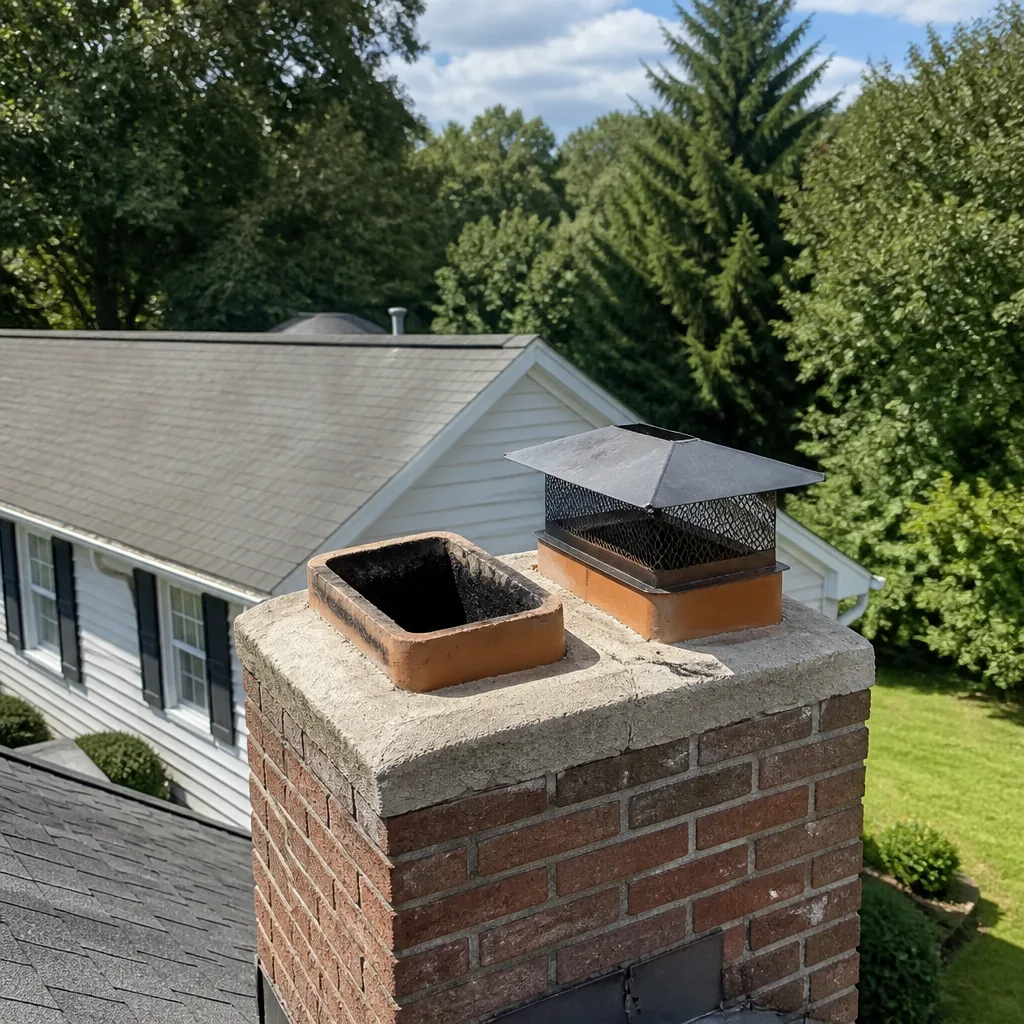
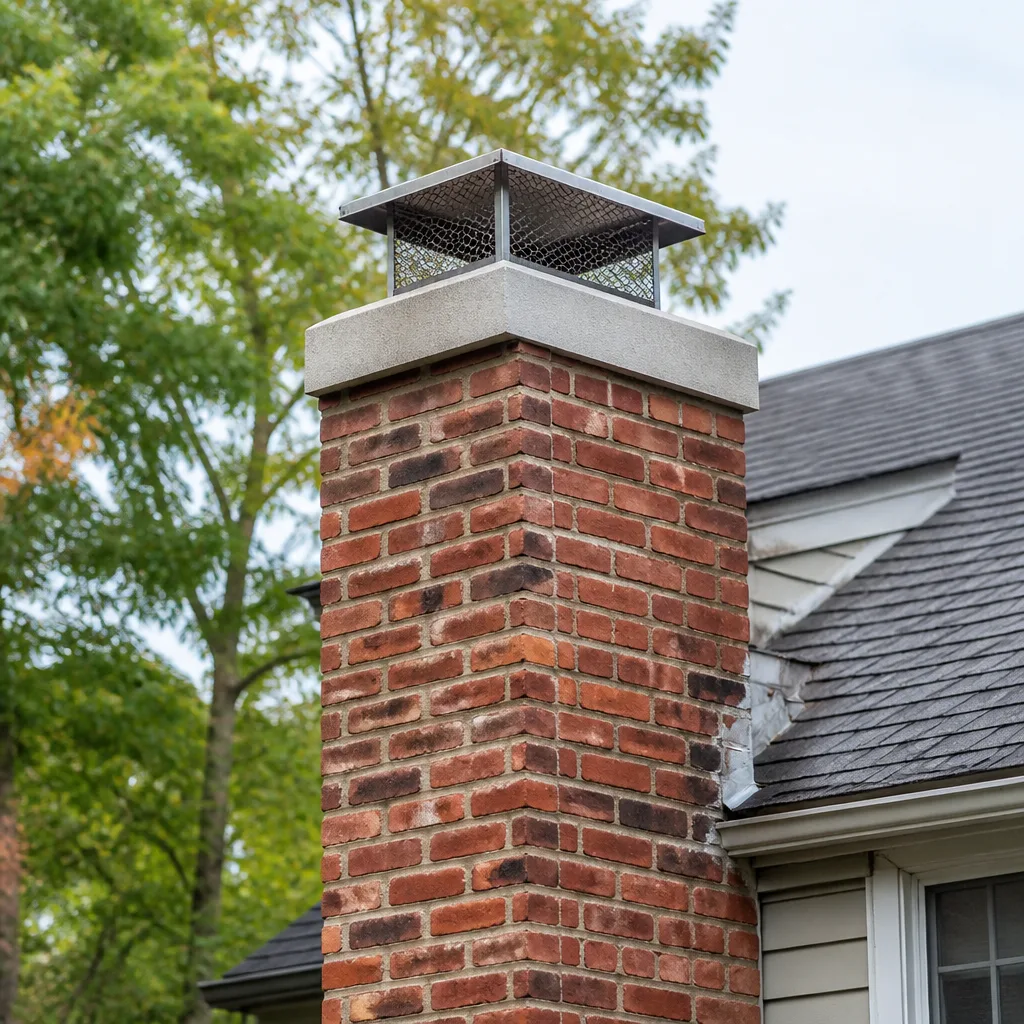
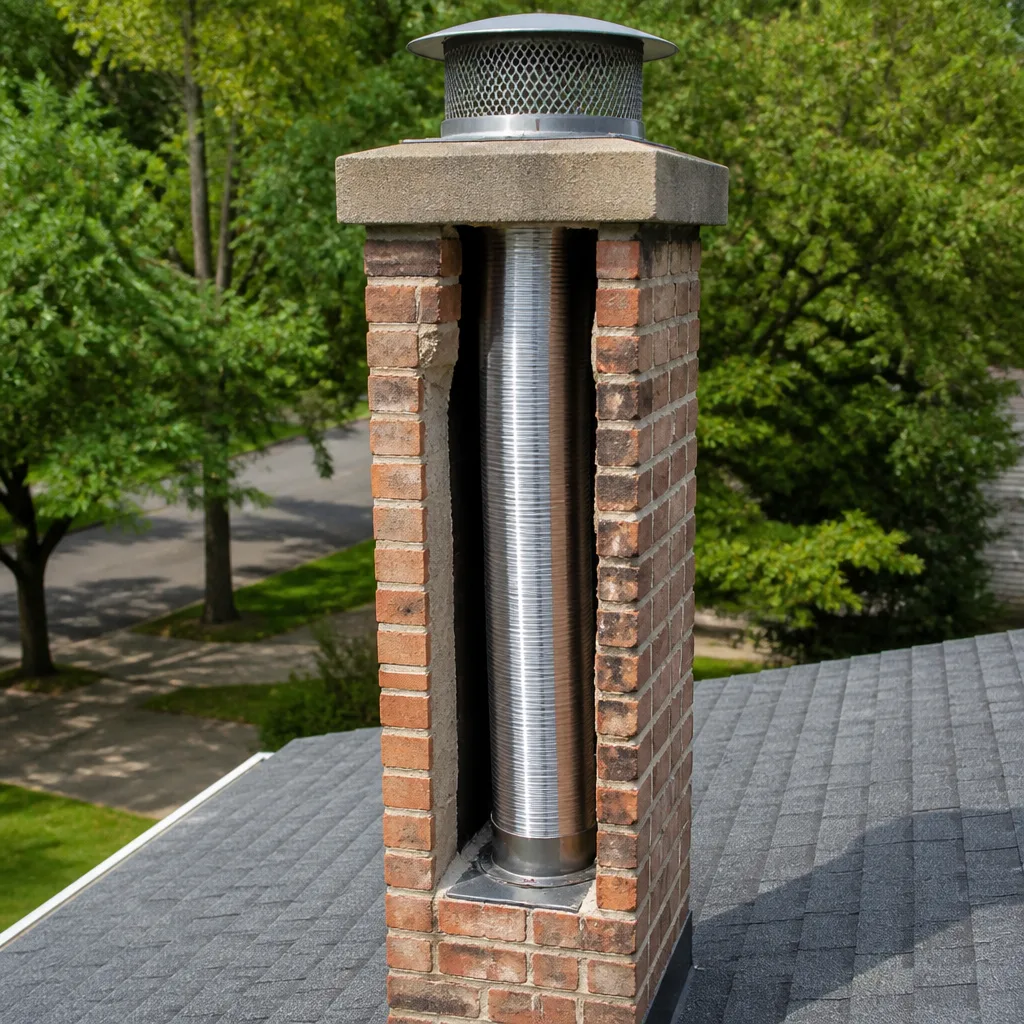
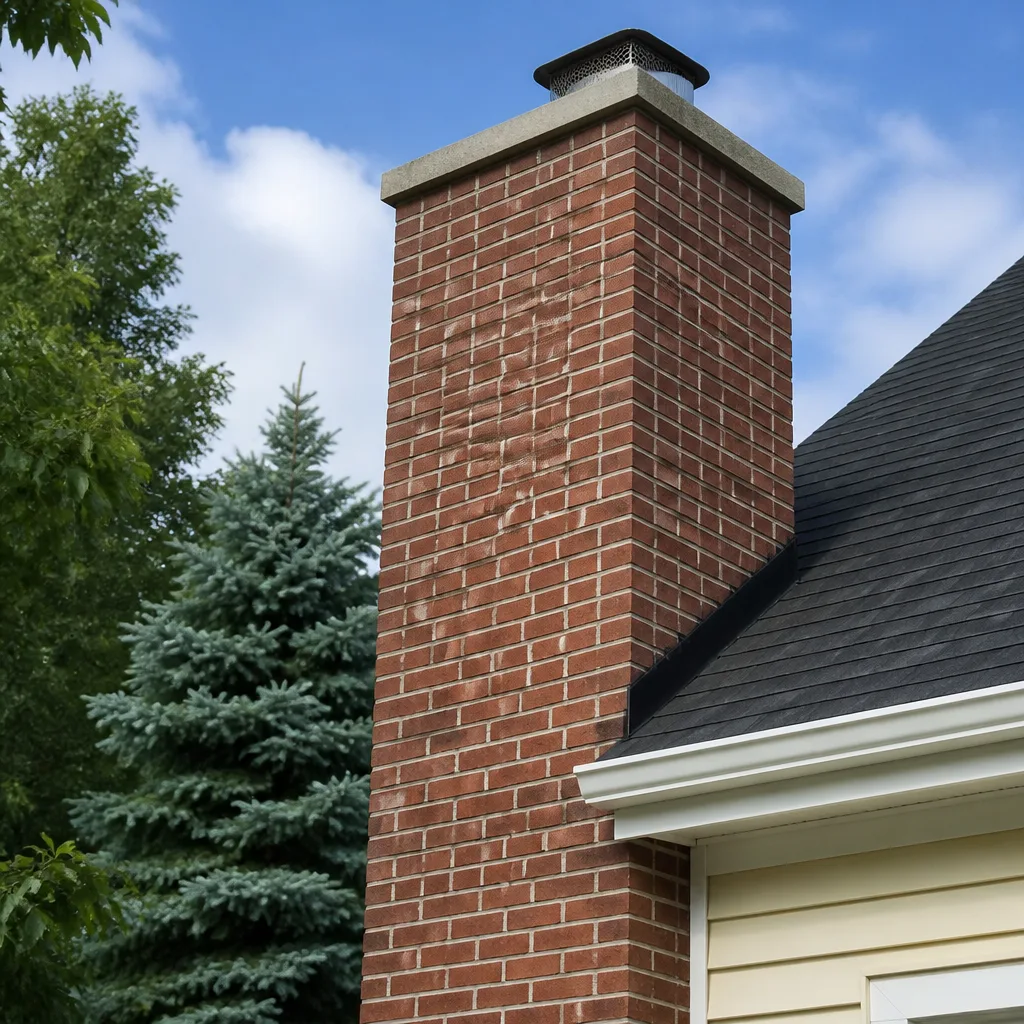
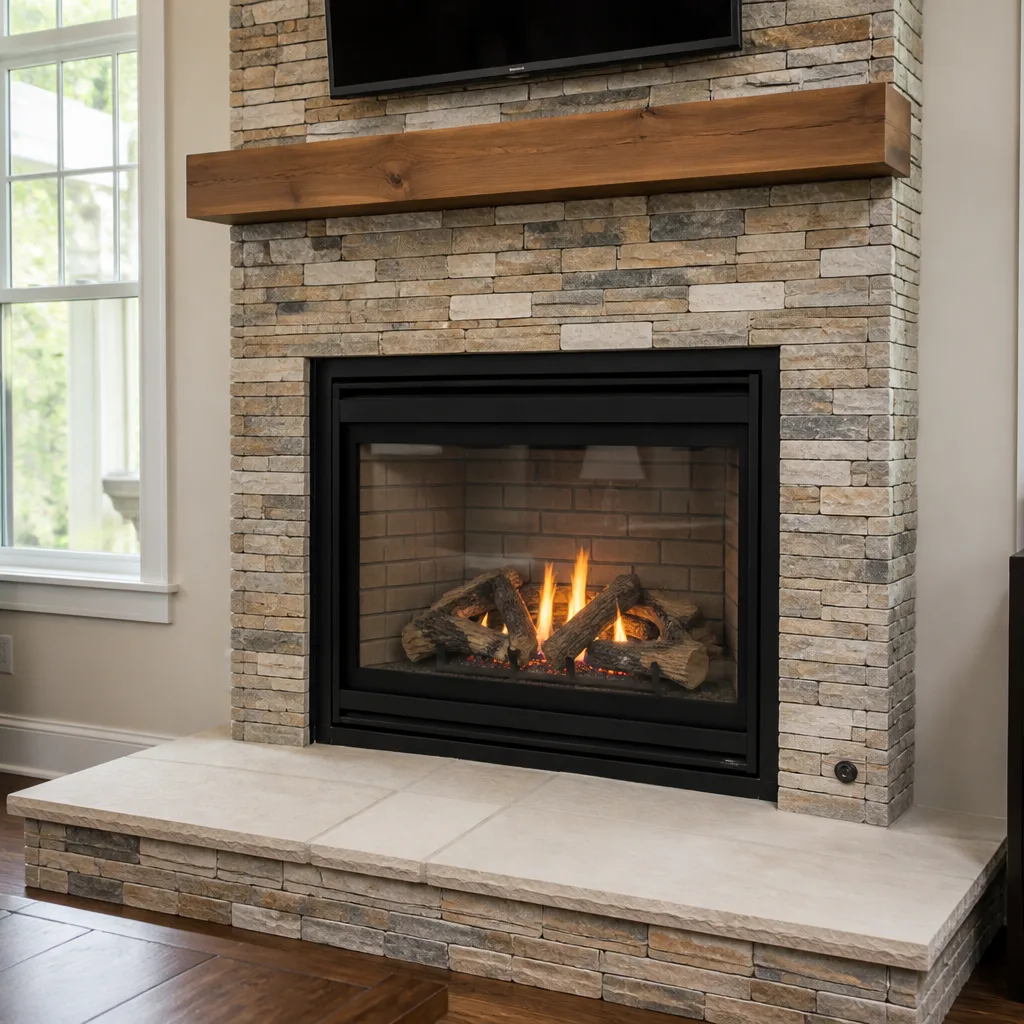
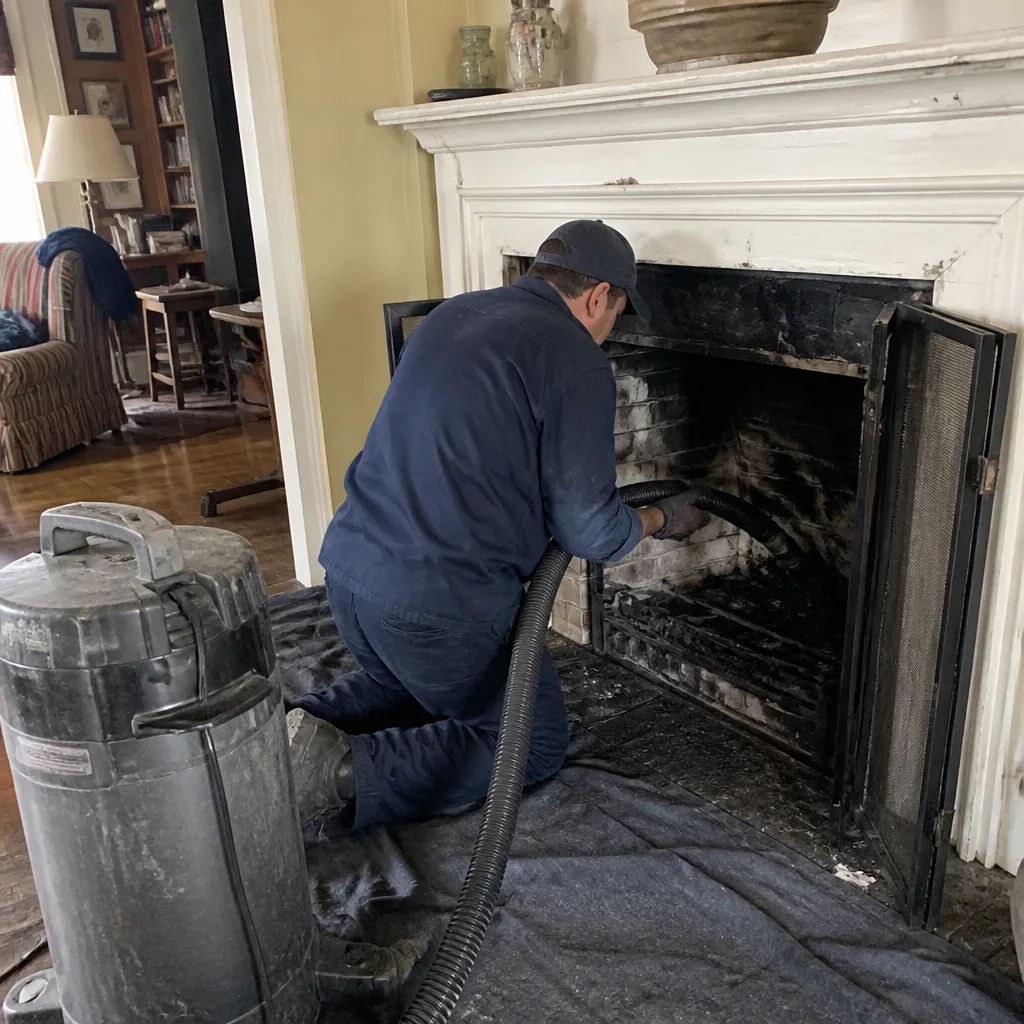 Before
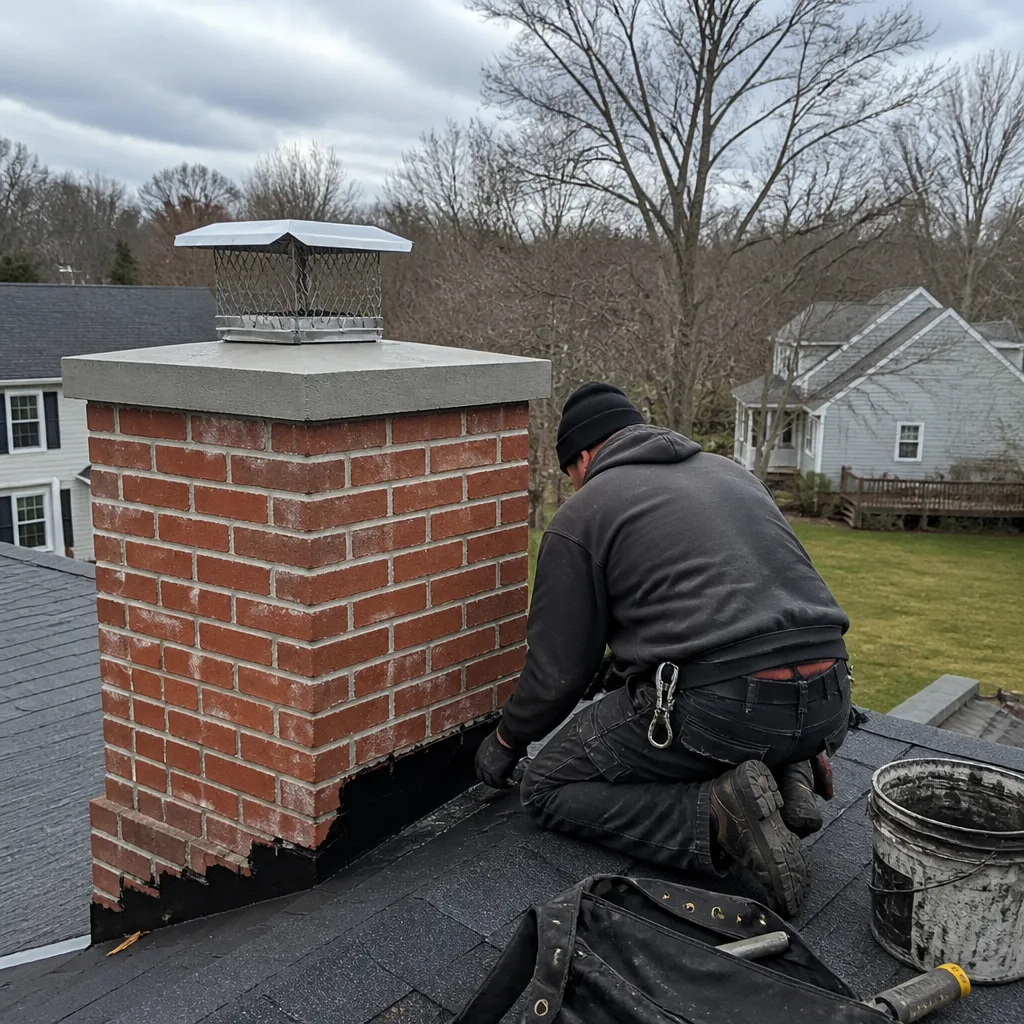 After
After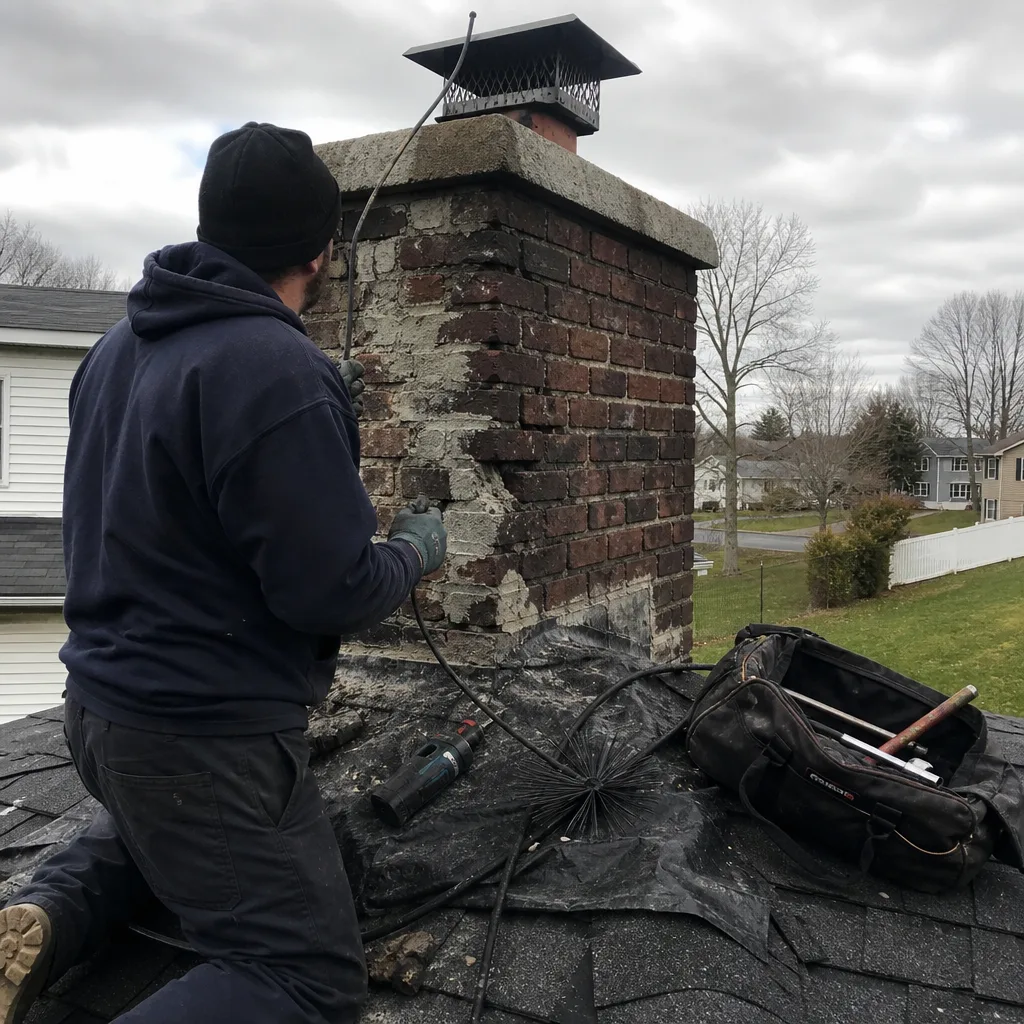 Before
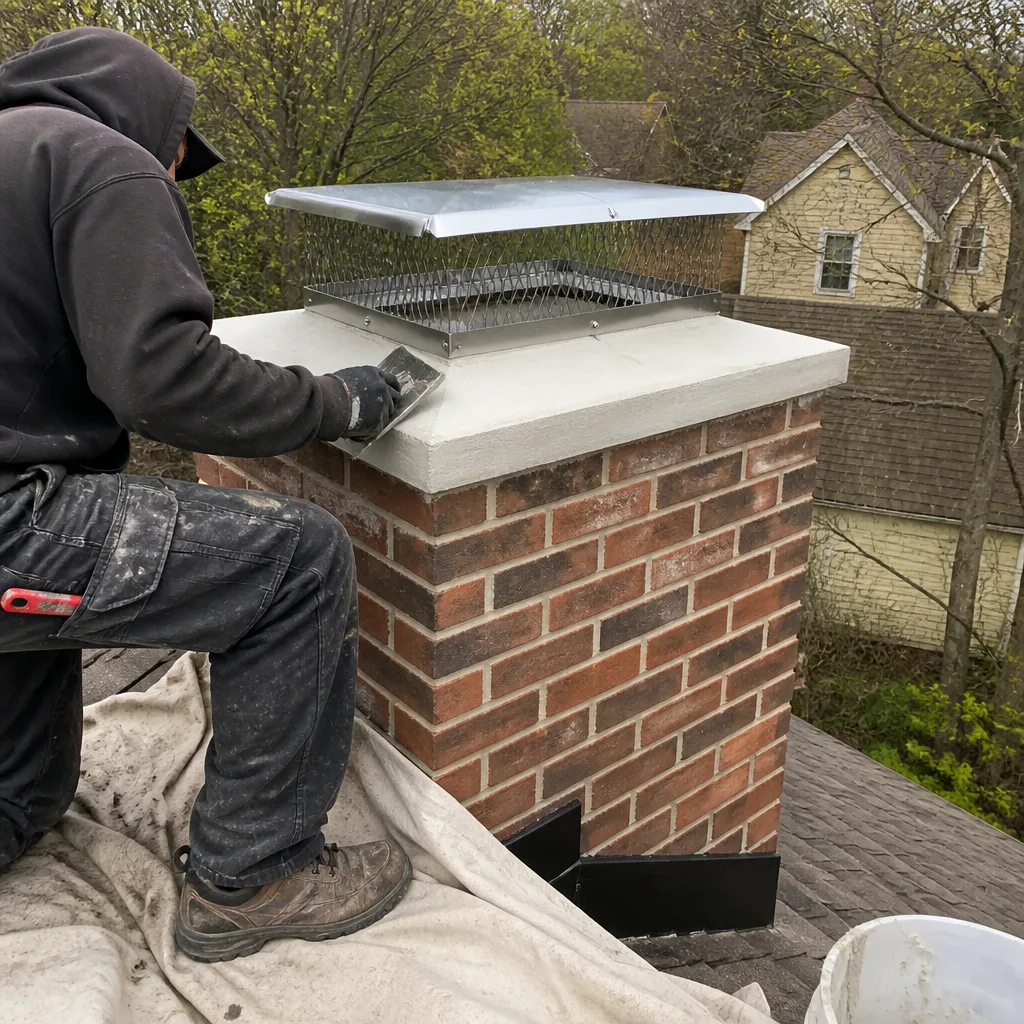 After
After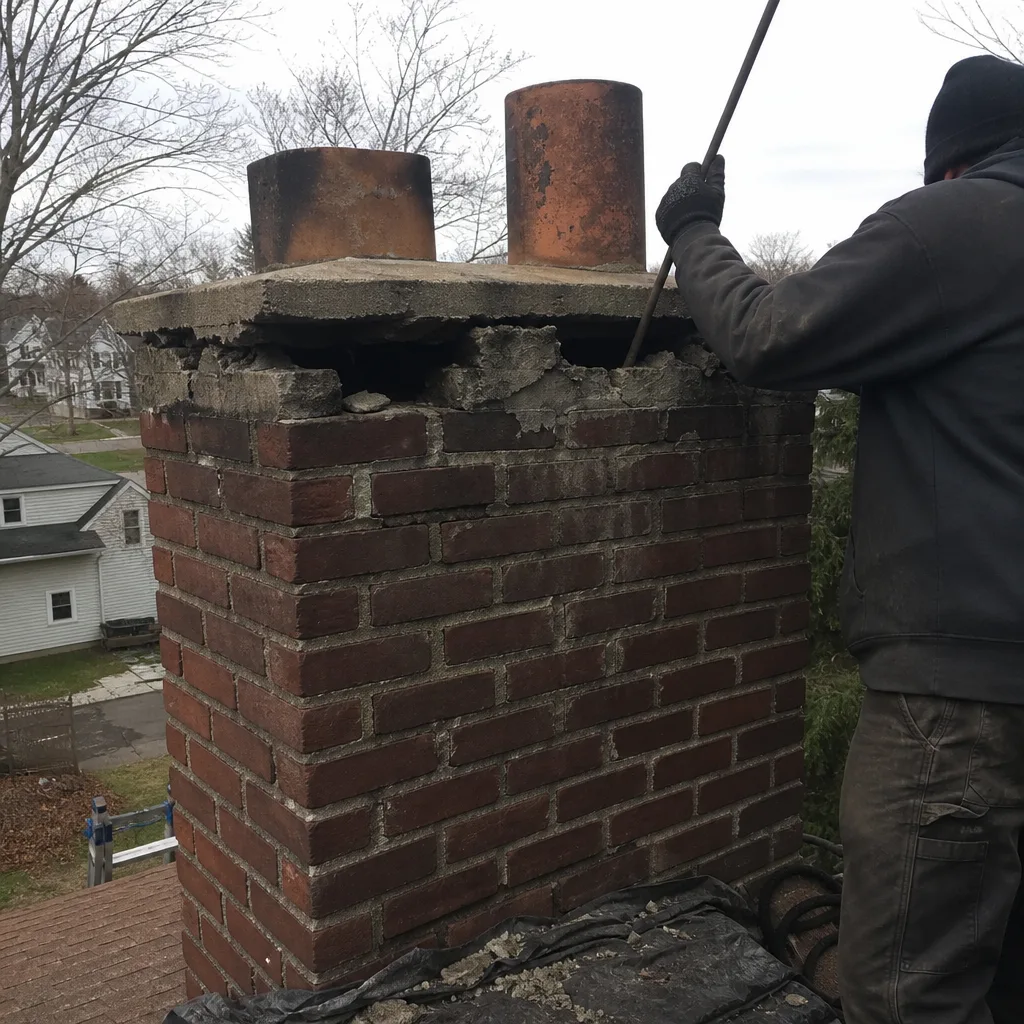 Before
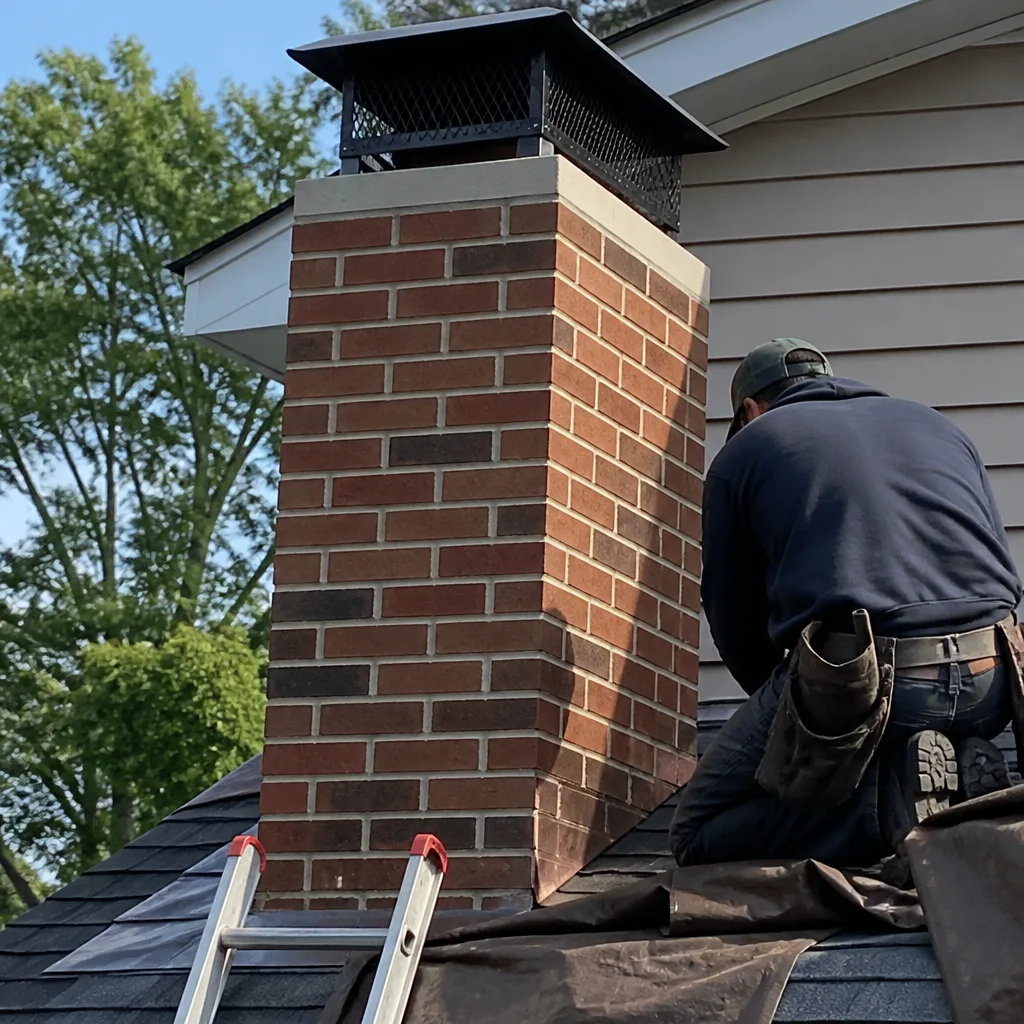 After
AfterChimney Cleaning Cost Breakdown: The Bristol Homeowner’s Reference for 2026
Here’s a number most Bristol homeowners never hear: the difference between the cheapest chimney sweep in Hartford County and the most expensive one is rarely about greed. It’s about what actually happens when the truck pulls away. A $79 special and a $299 cleaning can both leave your flue looking clean from the top. One of them leaves with a camera report, a written inspection, and someone who answers the phone if smoke backs up three weeks later. The other leaves with a receipt and a hope. This guide walks through every line item in a legitimate chimney cleaning in Bristol, what each piece costs the contractor to deliver honestly, and how to read a quote so you’re comparing the same job instead of just the same words. For Chimney Cleaning Warning Signs: A Bristol Homeowner’s Reference Guide, see our companion post.
Quick Answer
Chimney cleaning in Bristol, CT typically costs $189 to $350 for a standard one-flue sweep with a basic inspection, while a full Level 2 camera inspection adds $150 to $300 depending on the house. Most Bristol homes with clay-tile liners, offset flues, or chimneys over 25 feet tall land in the $250 to $350 range. The $79 and $99 specials you see advertised almost always cover a brush-and-vacuum pass only, with no inspection, no written report, and no warranty on the work.
Table of Contents
- What a Legitimate Chimney Cleaning Actually Includes
- Line-Item Breakdown: What You’re Actually Paying For
- Why Bristol Homes Cost a Little More Than Average
- The Difference Between a Sweep, an Inspection, and a Level 2
- Add-Ons You Need vs. Add-Ons You Don’t
- How to Read a Written Quote Before You Sign
- How Often Should You Actually Sweep?
- Common Mistakes to Avoid
- When to Call a Professional
- Frequently Asked Questions
- The Bottom Line
What a Legitimate Chimney Cleaning Actually Includes
Before anyone can explain what a fair price is, you need to know what the job actually is. A real chimney cleaning is not one task. It’s four or five, and each one takes time, training, and equipment that cost the contractor real money before a single tool comes off the truck.
Here’s what should happen on every legitimate sweep, in order:
- Setup and floor protection. Drop cloths around the hearth, a vacuum with a HEPA filter running, and a sweep who takes his boots off or wears covers before he walks across your living room. This takes 10 to 20 minutes and it’s the first thing skipped on a cheap job.
- The mechanical sweep. Brushes sized to your flue, run from the top down or the bottom up, with enough passes to actually remove creosote rather than just knock it loose. A 25-foot chimney takes longer than a 15-foot one. An offset flue takes longer than a straight one. This is the core of the work and it’s 45 minutes to an hour on a typical Bristol home.
- Visual inspection with a light. The sweep looks down the flue, at the damper, at the smoke shelf, and at the firebox. He’s checking for cracks in the clay tiles, gaps in the mortar joints, animal nests, and signs of water entry. This is where a trained eye spots the $80 problem before it becomes the $3,000 problem.
- Documentation. Photos, a written condition report, and a record of what was found and what was done. If you ever sell the house or file an insurance claim after a chimney fire, this paperwork is the difference between “swept regularly” and “homeowner’s word.”
- Cleanup and verification. The ash and soot go into the vacuum, not onto your rug. The sweep does a final check that the damper opens and closes correctly and that the firebox is clean. Ten to fifteen minutes, and it’s the second thing skipped on a cheap job.
Wendell has been doing this since 1999, and he’ll tell you the same thing he tells every homeowner when he walks in the door: your flue doesn’t care how the fire looks. It cares how it breathes. A brush that’s too small for your liner, a sweep who doesn’t check the smoke shelf, a report that never gets written. Each one saves the contractor 20 minutes. Each one leaves you exactly where you were before the truck arrived.
Line-Item Breakdown: What You’re Actually Paying For
Here’s the honest math behind a chimney cleaning in Bristol, and why the number on the invoice lands where it does. This is the part competitors never put in writing, because it’s harder to justify a $79 special when you see what the real costs are.
| Line Item | What It Costs the Contractor | Time | Why It Matters |
|---|---|---|---|
| Travel and setup | $25-$45 in fuel, vehicle wear, and labor | 30-45 min | Someone has to get to your house in Bristol, unload, and protect your floors. |
| Mechanical sweep | $40-$80 in labor and brush wear | 45-70 min | The core job. Brushes wear out and get replaced. Labor is paid. |
| Visual inspection | $30-$50 in trained labor | 20-30 min | This is where experience pays. A fast sweep and a thorough one look the same until something fails. |
| Documentation | $15-$25 in time and equipment | 10-15 min | Photos, written report, record keeping. It’s part of the job, not an add-on. |
| Insurance, licensing, continuing ed | $8-$15 per job | Ongoing | Legitimate contractors carry liability insurance and keep their license current. Fly-by-night sweeps don’t. |
| Equipment maintenance | $10-$20 per job | Ongoing | Vacuums, brushes, rods, cameras, ladders. All of it wears, and all of it gets maintained or replaced. |
Add it up and a legitimate one-flue cleaning costs a legitimate contractor between $128 and $235 just to deliver. Charge less than that with any consistency and something is being skipped: insurance, training, time, or all three. That’s the unvarnished truth behind chimney cleaning and sweep pricing in Bristol, and it’s why the guy who charges $79 is either losing money on every job or doing half a job.
A fair market price in Bristol for that same one-flue cleaning, with a reasonable margin for a company that stands behind its work, is $189 to $350. The range accounts for chimney height, liner type, accessibility, and how much creosote has built up since the last sweep.
Why Bristol Homes Cost a Little More Than Average
National averages for chimney cleaning get quoted at $150 to $200, but Bristol’s housing stock doesn’t match the national average. The city’s core is full of homes built between 1880 and 1960, and those homes have chimneys that were designed for coal and converted to oil, gas, or wood. That history shows up in the price.
- Taller chimneys. A center-hall colonial from the 1920s has a flue that runs 25 to 35 feet from firebox to cap. A 12-foot cape has a chimney half that height. The taller the flue, the more rod sections, the more brush passes, and the more time it takes. On Federal Hill and in the neighborhoods around Page Park, tall chimneys are the rule, not the exception.
- Clay tile liners. Most older Bristol homes still have their original terra cotta flue liners. These clean up well when they’re in good shape, but they need to be checked carefully for cracked tiles and eroded mortar joints. A stainless liner is smooth and quick to sweep. A 90-year-old tile liner takes patience and a lighter touch.
- Offset flues. Many of the older homes in Bristol have chimneys that jog to one side to avoid a beam or a stairwell. Every offset adds a throat, a elbow, or a transition that catches creosote and takes extra time to clean properly. A straight flue is a 20-minute brush job. The same height flue with two offsets can take twice as long.
- New England weather. Bristol sits in a freeze-thaw zone that punishes masonry. Water gets into a hairline crack in October, freezes in January, and by March the crack is a spall. That’s why chimney repair in Bristol is a year-round conversation, and why the inspection part of a cleaning matters more here than it does in, say, Phoenix.
None of this makes Bristol unusual. Most of Connecticut’s older cities have the same profile. But it does explain why a flat “$99 chimney sweep” advertised on a mailer from a national franchise doesn’t reflect the reality of the house it’s being sold to. First-degree creosote is a brush job. Third-degree is a glaze – catch it early, and the bill stays small.
The Difference Between a Sweep, an Inspection, and a Level 2
Most homeowners use “chimney cleaning” and “chimney inspection” as if they’re the same thing. They’re not, and the difference has real money attached to it.
A Level 1 inspection is the visual check that happens during a routine cleaning, when nothing has changed since the last sweep. The technician looks at the accessible parts of the fireplace, the flue, and the exterior of the chimney with a flashlight. It’s included in most legitimate cleanings and it catches the obvious problems: heavy creosote, visible cracks, animal nests, damaged caps.
A Level 2 inspection is a different product. It involves a camera run down the full length of the flue, an inspection of the attic, crawlspace, and roof, and a written evaluation of the entire system. It’s required by the National Fire Protection Association code (NFPA 211) when you buy or sell a home, when you change fuel types, after a chimney fire, or after any event that might have damaged the flue, like a lightning strike or a tree hitting the house. See Chimney Cleaning Permits, Codes & Inspections in CT: What You Need to Know for the full regulatory picture.
In Bristol, a standalone Level 2 inspection costs between $150 and $300 depending on the chimney. Bundled with a cleaning, it’s often $100 to $200 on top of the sweep price, because the sweep is already there with the equipment set up.
Here’s when the bundled option is worth asking about:
- You just bought the house. Even if the seller had it inspected, a flue that hasn’t been swept in years hides problems behind the creosote. A Level 2 after a cleaning gives you a baseline.
- You switched from oil to gas or had a liner installed. Any change to the system means the old inspection is out of date. A camera run confirms the new setup is right.
- You had a chimney fire. Even a small one. The heat can crack tiles in ways a visual check won’t catch. A camera is the only way to know the flue is still safe.
- It’s been more than five years since anyone looked with a camera. Mortar joints erode, tiles shift, and animals move in. A camera finds it before the fire does.
Top Hat Chimney includes a Level 1 inspection with every cleaning, and we run a camera whenever the situation calls for it. The camera footage and a plain-English verdict – every time, no exceptions. You should expect the same from any sweep you invite into your home.
Add-Ons You Need vs. Add-Ons You Don’t
Every chimney cleaning comes with a conversation about “additional findings.” Some of those findings are real. Some are manufactured. Knowing which is which saves you hundreds.
Legitimate Add-Ons
- Chimney cap replacement. Bristol’s freeze-thaw cycles and the local raccoon population are both hard on caps. A rusted or missing cap lets rain into the flue, and rain plus creosote equals a smell that drives people out of the house. A new cap from Gelco or Olympia Chimney runs $150 to $400 installed, depending on the size and material. It’s a legitimate fix when the old one is compromised.
- Chimney crown repair. The concrete crown at the top of the chimney cracks over time, and water gets into the masonry. A simple crown seal is $200 to $500. A full crown rebuild can run $800 to $1,500. This work is real, and it prevents much more expensive repairs later.
- Liner repair or replacement. A cracked clay tile or a failed mortar joint in the flue puts heat and gas where they don’t belong. Minor repairs with a product like HeatShield run $1,500 to $3,000. Full stainless relining with DuraFlex runs $3,500 to $7,000. It’s the biggest bill in the chimney business, and it’s also the one most likely to be oversold.
- Waterproofing the masonry. New England chimneys are in a constant fight with water. A quality waterproofing treatment runs $200 to $500 and can add 10 to 15 years to the masonry. This is legitimate work, especially on older Bristol homes with soft 1920s brick.
Add-Ons That Smell Like a Script
- “Your damper is unsafe and must be replaced today.” Dampers do fail, but it’s rarely an emergency. A damper that’s a little sticky or slightly warped can often be cleaned and adjusted. Some national companies use damper replacement as a standard upsell, quoting $400 to $800 for a part that costs $60 and takes 20 minutes to install. Ask to see the problem before you agree to fix it.
- “You need a new liner” on a chimney that’s been used three times a season. A flue that sees two fires a month is not the same as one that sees three fires a week. If the camera shows hairline cracks but no smoke leakage, the chimney may not need a $5,000 liner. Ask for the camera footage and a plain-English explanation of what could actually go wrong if you wait.
- Fireplace glass door installations on every visit. Glass doors are a preference, not a safety requirement. They run $400 to $1,200. If you didn’t ask about them, and the sweep recommends them on a routine cleaning, that’s a sales presentation, not an inspection.
- Chimney “sealing” packages with a 20-year warranty from a company with a 2-year track record. Any company can write a warranty. The question is whether they’ll still be around in Bristol when you need to call on it. A company that’s been serving local communities since 1999 can stand behind what it writes.
Wendell’s approach is simple: the camera footage comes first, and the recommendation follows from what the footage actually shows. No camera evidence, no liner recommendation. No exception. That’s not a sales tactic. It’s how fireplace service in Bristol should work.
How to Read a Written Quote Before You Sign
A phone estimate is a guess. A written quote is a commitment. Here’s how to make sure the paper in front of you is worth the ink.
- Scope of work, spelled out in plain words. “Sweep flue, inspect firebox and smoke shelf, check cap and crown from roof, document findings with photos.” If the quote says “chimney service” without saying what the service is, send it back.
- The exact price, not a range. “Between $200 and $400” is a phone estimate with a buffer. A written quote should say “$285 for one-flue sweep with Level 1 inspection, including all labor, materials, and cleanup.” No “subject to site conditions” clause unless it’s spelled out precisely what conditions would change it.
- The name and license number of the contractor. In Connecticut, chimney sweeps don’t have a separate state license category, but legitimate companies carry a Home Improvement Contractor (HIC) registration. If the quote doesn’t have a business name, an address, and a registration number, you’re dealing with a vehicle and a phone number, not a business.
- A schedule. “We’ll be there Thursday, between 9 and 11.” Not “sometime next week.” A company that can’t commit to an arrival window on a quote can’t commit to one on the job.
- What happens if something goes wrong. The warranty language, in writing. Top Hat Chimney puts a 90-Day Done Right Promise on every single job: if it’s not done right, one call brings Wendell back. No phone tree, no “we’ll see what we can do.” If the quote doesn’t say what happens when work fails, you’re betting on the contractor’s good mood.
Ask anyone on your street. The homeowners in Bristol who’ve been burned are the ones who signed a one-line quote and then watched the price change when the truck showed up. The ones who get a fair shake are the ones who asked for the details up front.
How Often Should You Actually Sweep?
The standard answer is once a year, and for most Bristol homes that’s right. But the real answer is: it depends on what you burn and how much.
- Wood-burning fireplace, used weekly during heating season: sweep every year. Creosote builds up faster than you think, especially with softwoods like pine. Once a year, burn or no burn. Chimneys break in the off-season too.
- Wood stove, used as a primary heat source: sweep every year, or twice a year if you burn more than four cords. A wood stove running 18 hours a day is a creosote factory.
- Gas fireplace, occasional use: sweep every two to three years, but inspect yearly. Gas is clean, but it still produces soot over time, and the vents and logs need a once-over.
- Fireplace that never gets used: inspect every two years. Unused chimneys are where birds nest, raccoons move in, and water does its worst work without anyone noticing.
- After a chimney fire, no matter how small: sweep and Level 2 inspection immediately. Don’t light another fire until someone has looked.
The age of your house matters too. A 100-year-old chimney with original clay tiles deserves a look every year, even in a light-burn household, because the mortar joints in older Bristol homes were mixed by hand and they erode on their own schedule. If you’re unsure where your chimney falls, call and ask. The answer doesn’t cost anything, and it beats guessing wrong.
Common Mistakes to Avoid
- Chasing the lowest number. The $79 special is not the same product as a $250 cleaning. If the price doesn’t cover the contractor’s cost to do the job honestly, the job is not being done honestly.
- Skipping the written report. Without documentation, a chimney fire claim is your word against the insurance company’s file. Get the report, keep it, and put it with the house papers.
- Waiting until October to book. Every chimney sweep in Bristol is booked solid from September through December. March and April are the smart months, when the burning season is over and the schedule is open. Chimneys break in the off-season too.
- Ignoring the chimney cap. A missing or damaged cap is a $150 fix that prevents a $2,000 masonry repair. In Bristol, where rain and freeze-thaw are a constant, the cap is the first line of defense.
- Trusting a phone estimate over a written quote. The number a stranger gives you over the phone is not a contract. Get it in writing, with a name and a license number on the page.
- Assuming gas fireplaces don’t need service. They do. Less often than wood, but they still need a look. Vent-free gas logs produce acidic soot that corrodes the firebox over time.
- Hiring a handyman to do a sweep’s job. Chimney work involves carbon monoxide risk, fire risk, and structural risk. A general handyman with a brush from the hardware store is not a chimney sweep, and the savings disappear the first time you need a real diagnosis.
When to Call a Professional
Some things you can put off and some things you shouldn’t. Call a sweep if you smell smoke in the house when the fire isn’t lit, which means the flue isn’t drafting and you’re breathing what should be going up the chimney. Call if you see black, tar-like glaze on the walls of the firebox, which means the creosote has reached third-degree and a brush won’t handle it. Call if you hear animals in the chimney, see water stains on the ceiling near the fireplace, or notice crumbling mortar on the exterior of the chimney. Carbon monoxide is odorless and colorless, and a blocked or cracked flue is exactly how it gets into the house. Top Hat Chimney offers free estimates in Bristol, call (860) 743-7743. If it’s not urgent, Wendell will tell you so.
Frequently Asked Questions
A standard one-flue chimney cleaning in Bristol costs $189 to $350, with most homes landing between $250 and $300 after height, liner type, and accessibility are factored in. A Level 2 camera inspection adds $150 to $300 if ordered separately, or $100 to $200 if bundled with a cleaning. Call (860) 743-7743 for an exact quote on your chimney. Estimates are free.
The $99 sweep is a brush-and-vacuum pass: no inspection, no written report, no warranty, and often no liability if something gets missed. The $299 sweep includes full floor protection, a properly sized mechanical sweep, a Level 1 visual inspection, photo documentation, and a written condition report. One of these leaves you with a receipt. The other leaves you with a record and someone to call if a problem shows up.
Not always. Hairline cracks in a rarely used chimney may be safe to monitor, while the same cracks in a heavily used flue can leak heat and gas into the house. The only way to make an honest decision is to see the camera footage and hear a plain-English explanation of the actual risk. Top Hat Chimney never recommends a liner without camera evidence, and we’re happy to walk you through what the footage shows. For a free second opinion, call (860) 743-7743.
Once a year for a wood-burning fireplace used regularly, once a year or more for a wood stove used as primary heat, and every two to three years for a gas fireplace with occasional use. Even an unused chimney should be inspected every two years, because that’s when animals move in and water does its damage. The best time to book in Bristol is March or April, before the fall rush.
Creosote keeps building up. First-degree creosote is a brush job. Third-degree is a glaze, and at that point you’re looking at chemical treatments or a professional re-lining rather than a simple sweep. The chimney fire risk rises with every fire, and the carbon monoxide risk rises if a blocked flue starts pushing exhaust back into the house. The $250 cleaning is cheap compared to either outcome.
Chimney sweeps in Connecticut are not required to hold a separate sweep-specific license, but legitimate companies carry a Home Improvement Contractor registration with the state. Always ask for the registration number and the business address before booking. A company that’s locally owned and owner-operated, with a published address and a name on the work, is a different thing entirely from a phone number on a flyer.
The Bottom Line
Chimney cleaning in Bristol costs between $189 and $350 for a legitimate one-flue sweep, and the homes in this city tend toward the upper half of that range because the chimneys are taller, older, and more complicated than the national average. The low-ball specials that show up in the mail every fall are a different product: fewer steps, less time, no documentation, and no one to call when the smoke backs up. A fair quote comes in writing, with a name, a license number, and a scope of work on the page. If the camera footage doesn’t back it up, the recommendation doesn’t stand. Call (860) 743-7743, ask for Wendell, and get an honest answer before the burning season fills the calendar. Browse our more guides & resources for year-round chimney care.
Written by Wendell Pike, Owner at Top Hat Chimney, serving Bristol since 1999. Learn more about our returning to the Top Hat Chimney home approach, or reach us directly at (860) 743-7743.